
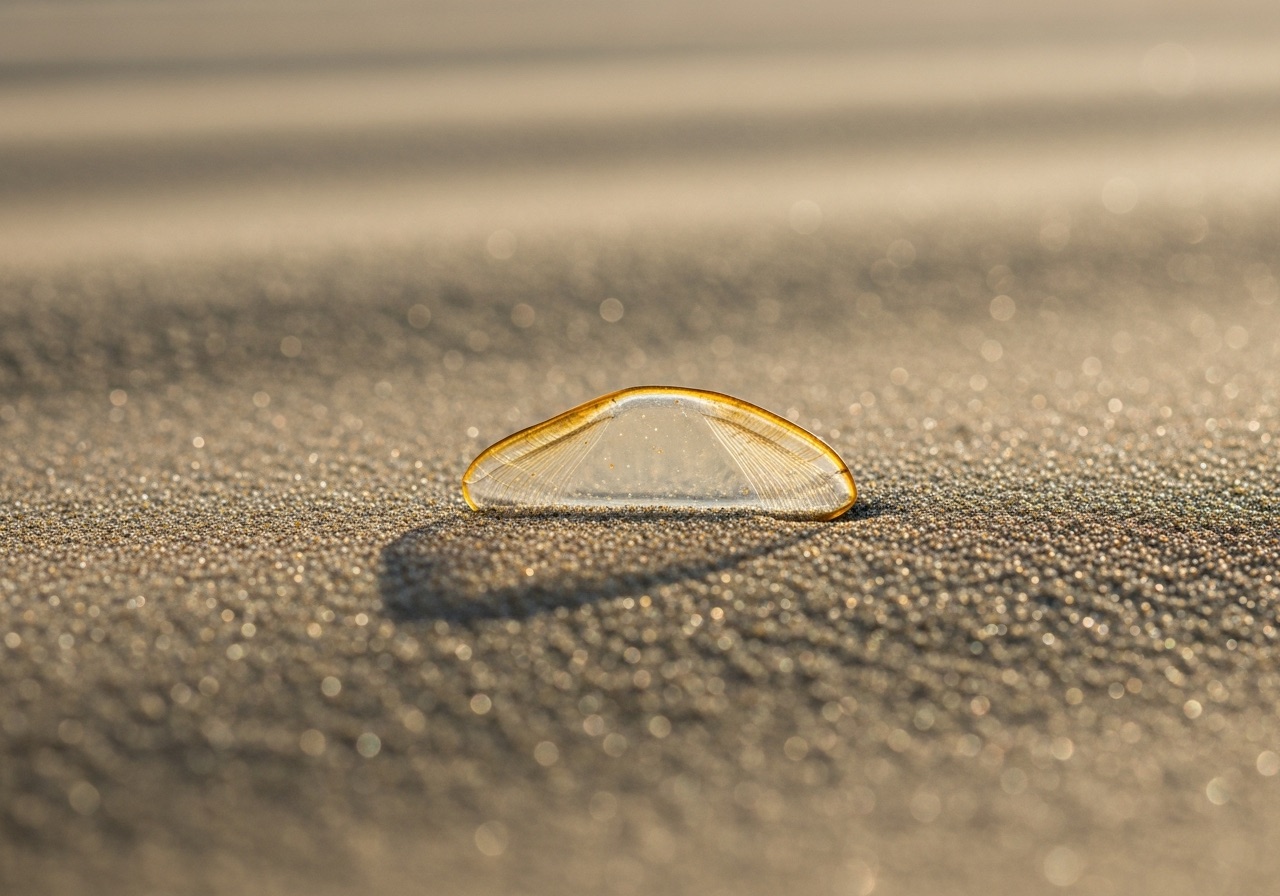
🐚 At a glance
- Scientific name
- Anomia simplex
- Size
- Usually about 1–2 in — thin and lightweight
- Tell-tale
- Translucent, glossy gold/silver/peach; curved like a toenail
- Nicknames
- Mermaid's toenail; jingle shell (it chimes when strung)
- Rule
- Empty shells only in Collier & Lee
How to identify a jingle shell
Light is your best test. A jingle shell is thin enough to glow when you hold it up to the sun, with a high gloss and a slightly wavy, dished shape that curves like a toenail. Colors run from rich gold and brassy silver to soft peach, lemon and translucent white. They're delicate and lightweight, so they pile up in the high wrack line and in tide pockets where the surf can't crush them.
You'll usually find the shiny top valve; the flatter bottom valve has a hole near the hinge where the animal once anchored itself to a rock or another shell. They're easy to tell from heavier finds like the coquina clam or a calico scallop — nothing else on the beach is this thin and glassy.
Why they chime
The name is literal. Because the shells are so thin and hard, a handful tossed together — or strung on a line as a wind chime — rings with a soft, glassy tinkle. That's why jingle shells are one of the most-used craft shells on the Gulf coast, turning up in chimes, ornaments, frames and jars on half the porches in Old Naples. They're abundant and pretty, which makes them a perfect first shell for kids learning to comb the wrack line.
Where to find them
Jingle shells wash up all along the Gulf, but the best, brightest, least-broken ones collect on the quieter boat-only beaches where fewer feet have trampled them. We scoop them by the handful on Keewaydin Island and the sandbars of the Ten Thousand Islands, especially in the soft shell piles near the high-tide line after a calm spell. Our shelling tours drop you right on those stretches with time and a bag. Keep the empties, leave anything alive, and remember Collier County is empty-shells-only.
From the Helm: Working the wrack line at Cape Romano Shoals after a nor’wester
Whether we swing the boat toward Cape Romano Shoals on a given morning comes down to one question we ask before we even leave the dock: has there been a real nor’wester in the last day or two? Jingle shells are thin and light enough that a stiff blow pushes them into deep, ropy wrack lines high on the beach, and without that wind event the shoals just don’t concentrate them the same way. No front, no wrack — we’ll pick a different stop and save the jingle-shell hunt for a day the weather actually set it up. A weak, short-lived breeze rarely does the job; it usually takes a real multi-day blow to pile that wrack thick enough to be worth the stop.
When the wrack’s there, we don’t send people down to the waterline — jingles collect higher up, tangled into that dark ribbon of grass, small shell hash and drift debris the tide leaves at its highest reach. We’ll kneel right in it with guests and show them how to sift by hand rather than dig, since jingles are thin enough to snap if you go at the wrack with a rake or a shovel.
A fresh jingle shell still carries real color — gold, silver, even a pale coppery orange — and a glassy shine that catches the sun almost like foil. Leave a handful loose in a pocket for a few weeks and that shine dulls fast; the color washes toward a flat cream. We tell guests to handle them like the thin glass they basically are, since the same delicacy that makes a handful chime when strung together makes them the easiest shell on the boat to crack in a tight fist. We ask guests to lay finds flat across an open palm rather than closing a fist around a handful, since that’s usually the moment a promising pile turns into shards before it ever reaches the boat.
We keep a small tin aboard specifically for jingle shells, separate from the mesh bags handed out for heavier finds, because tossing a fistful of jingles in with fighting conchs and whelks is the fastest way to come home with a bag of broken hinges instead of the bright little discs you started with. It’s a small habit, but it’s the difference between a jar that chimes and a jar of shell dust.
If a wrack line hasn’t built up recently, we’ll still work the beach for other finds and simply skip the jingle hunt rather than send guests digging through bare sand for something that isn’t there yet. Curious which of our stops tend to build the heaviest wrack lines after a front? The shelling beaches guide covers that island by island, and our shelling tours can time a trip around the next real weather event instead of guessing.