
🐚 At a glance
- Scientific name
- Macrostrombus costatus
- Size
- Commonly 3–5 in; thick and heavy for its size
- Tell-tale
- Flared, thickened lip; creamy milk-white interior
- Where
- South/SE Florida & the Caribbean — uncommon on the upper Gulf
- Rule
- Empty shells only in Collier & Lee
How to identify a milk conch
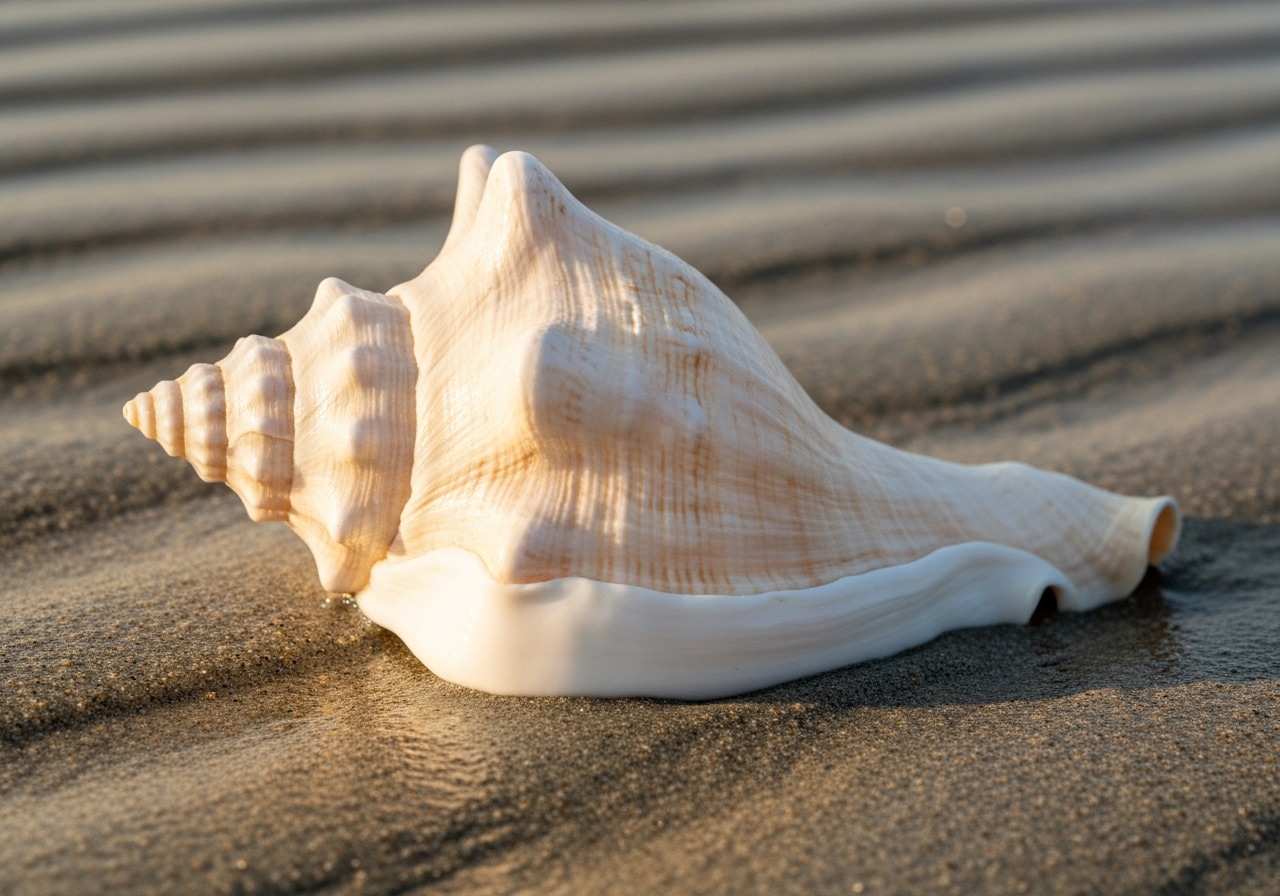
Pick one up and the weight tells you first — it's a dense, solid shell. The grown-up giveaway is the lip: a true conch like this thickens and flares its outer lip into a broad, rolled edge as it matures, and the inside glows a soft, creamy milk-white, which is exactly where the name comes from. The outer shell is usually a mottled cream-to-tan with low knobs around the shoulder, often weathered pale on a beach find.
Because it's a true Strombus-family conch, it shares the family's hopping foot and that classic flared-lip silhouette — useful for telling true conchs from the whelks, which is a split we walk through in our whelk-vs-conch guide.
Where it really lives (the honest version)
Here's the straight talk. The milk conch's stronghold is warmer, clearer water — the Florida Keys, the Bahamas and the broader Caribbean — on shallow grass flats and sandy bottoms. Around Naples and Marco Island it does turn up, but it's an occasional find, not a shell we'd ever promise you. The conch you'll actually fill a hand with out here is the Florida fighting conch, which is genuinely common on our shelling tours to the boat-only islands. If a captain tells you milk conchs litter the local beaches, be skeptical — and remember it's empty shells only in Collier County either way.
Milk conch vs. fighting conch
These two true conchs get mixed up most often, so here's the quick sort.
| Feature | Milk conch | Fighting conch |
|---|---|---|
| Interior | Creamy milk-white | Orange to purple-brown |
| Lip | Broad, thick, flared | Flared but thinner |
| Local odds | Uncommon up here | Common on our islands |
If the inside is clean milk-white, you may have something special. If it's flushed orange or brown, you've got the everyday fighting conch — still a beautiful keeper.
From the Helm: Checking the grass flats near Coon Key Pass for a stray milk conch
Milk conch isn’t a shell we plan a stop around, and we tell guests that up front rather than oversell a maybe. When we do work water that might hold one, it’s usually a short detour into the seagrass flats tucked behind Coon Key Pass, where the bottom stays soft and grassy instead of open sand — the kind of habitat this shell actually favors, wherever it happens to turn up.
What we usually find in that same grass is fighting conch, not milk conch, and we say so rather than let a similar silhouette get mistaken for the rarer shell. The habitat overlap is real, which is why we still glance at every heavy conch shape we pass, but the odds favor the common cousin nearly every time we’re out there. We’d rather guests know that going in than build up a find that genuinely doesn’t come easy up here.
If a milk conch does turn up, it’s heavier in the hand than a fighting conch of similar size, with a thick, flared lip and that distinctive milky-white glow inside the opening instead of the pink or orange a fighting conch usually shows. We hold it up to the light for guests so they can see that inner color clearly — it’s the fastest way to confirm it on the spot instead of guessing from the outside alone.
Calm water matters more than tide stage for this one, since we’re looking down into grass rather than walking an exposed bar. A choppy morning turns that grass into a blur, so we’ll often push this detour to later in the trip once the wind has laid down some, rather than force it early against a bumpy surface where nothing’s visible past a foot down.
It’s a bonus, not a promise, on a shelling tour through the back country, and our full seashell guide covers the more dependable finds we build the rest of the stop around. Anything we do pull from that grass stays an empty shell, same as everywhere else in Collier County.
We’ll often hand a guest a glass-bottom bucket for this stretch instead of having everyone wade straight through the grass, since it lets you scan the bottom without stirring silt that would ruin the visibility for the next ten minutes. It’s a small piece of gear, but on a grass flat it does more good than any amount of walking around half-blind ever could. We’ll pass the bucket hand to hand along the rail so everyone gets a look at the same patch of grass before we idle on, rather than one person hogging the view while the rest of the boat waits on a report of what they missed.