
🐚 At a glance
- Scientific name
- Crepidula spp.
- Size
- Usually ½–1½ in
- Tell-tale
- Internal half-deck shelf under an arched, boat-shaped shell
- Where & when
- Wrack line & on top of other shells; Keewaydin, Kice, Marco
- Rule
- Empty shells only in Collier & Lee
How to identify a slipper shell
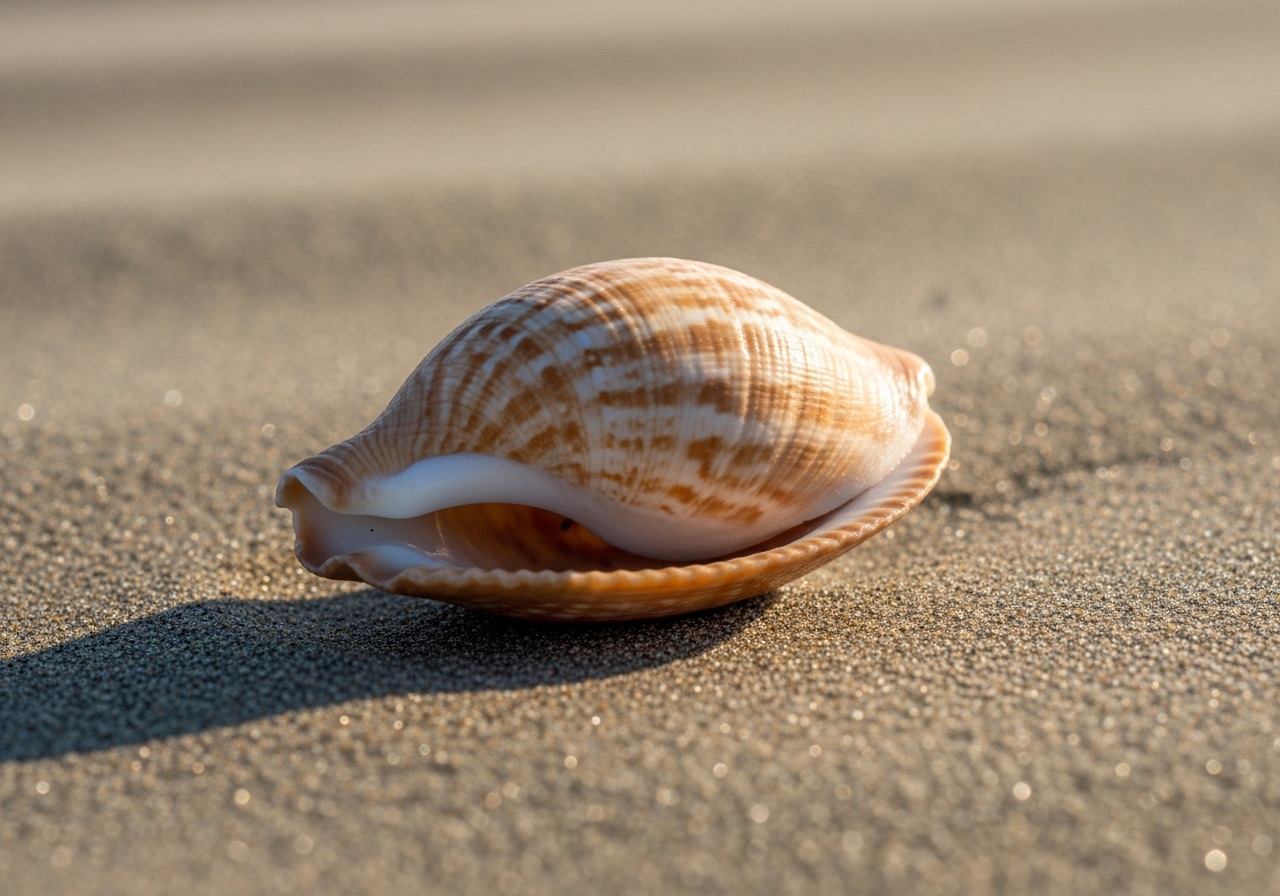
From the top, a slipper shell looks like a smooth, low, oval dome — sometimes called a boat shell or a quarterdeck shell — in shades of white, tan, pink or brown, often with faint reddish streaks. But the real ID is on the underside. Turn it over and you'll see the inner cavity is partly roofed by a thin shelf, the “deck,” that covers roughly the back third of the opening. Nothing else on a Gulf beach has that built-in bench. Slide your fingernail under it and you can feel the little ledge. That internal deck is the single decisive tell.
Why slipper shells stack on each other
Here's the fun bit: slipper shells live their lives piled into towers, one perched on the back of the next, sometimes a stack of half a dozen. There's a biological reason — the snails change sex as they grow, with larger older ones on the bottom — but for a sheller it just means you'll often find them clumped together or cemented onto a bigger shell like a crown conch. If you spot a knot of little arched shells riding on a larger one, you've found a slipper-shell stack.
| Feature | Slipper shell | Look-alike limpet/jingle |
|---|---|---|
| Internal deck | Yes — a half-shelf inside | No shelf |
| Shape | Arched boat / footprint | Simple cap or flat disc |
| Habit | Often stacked on other shells | Single, attached flat |
Where we find them
Slipper shells are common and easy, which makes them a great teaching shell on our shelling tours — everyone can find the deck. They wash up all along the wrack line on the boat-only barrier islands like Keewaydin and Kice Island, often riding on bigger shells, so it pays to inspect whelks and conchs for hitchhikers. They clean up beautifully too; see our how to clean seashells guide before you display them. As always in Collier County, it's empty shells only.
From the Helm: Hunting slipper-shell stacks on Gordon Pass’s oyster structure at low tide
When the tide’s dropped enough to expose the oyster rubble tucked into the calmer water off Gordon Pass, we cut the engine well short and pole the last stretch in ourselves. That bar is our slipper-shell water — not the open sand flats guests picture, but crusty, barnacle-studded structure where something hard already sits on the bottom for a slipper to grab onto and build a colony. We nose the bow up, guests string out along the exposed ridge, and the technique isn’t digging, it’s turning things over. Every whelk husk, every dead oyster clump, every old horseshoe crab shell gets flipped, because that’s where the stacks like to hide from the sun.
A slipper straight off a live oyster clump still carries a faint bay smell, and its shelf is glassy white, almost wet-looking, with a warm tan sheen across the outer curve. Leave that same shell sitting up on a sand flat for a season and the color bleaches to chalky gray, the shelf edge goes brittle and starts to flake at the rim first. We like handing guests one of each, a fresh find and an old bleached one, and letting them feel the weight and texture change for themselves rather than just telling them about it.
We keep a mesh dive bag clipped to the console for this exact stop, since oyster rubble shreds a pocket and a coral-cut finger ruins an afternoon faster than any sunburn ever could. Guests get a quick brief before they step off the ladder: mind your footing on the shell hash, and every stack we turn up gets admired and set back rather than pocketed, because the bar itself is living habitat we’d rather not grind underfoot chasing a single shell for a photo.
Timing matters more here than at most stops: too early and the bar’s still under too much water to walk safely, too late and it’s baked dry and the stacks have gone brittle in the sun for hours. If the wind’s wrong and that stretch turns too choppy to hold a drift, we’ll swing the plan to a quieter lee-side patch instead and work the exact same technique there without losing the stop entirely. Either way, it folds into one of our regular shelling tours rather than standing alone as a special add-on booked separately.
Most guests leave this stop having handled more shells in twenty minutes than they expected for the whole day, simply because the stacks concentrate finds into one small footprint instead of scattering them down a mile of open beach. If slipper shells turn into a bigger interest by the time we’re back aboard, our seashell guide covers everything else that turns up on the same kind of structure, tide after tide, season after season.