
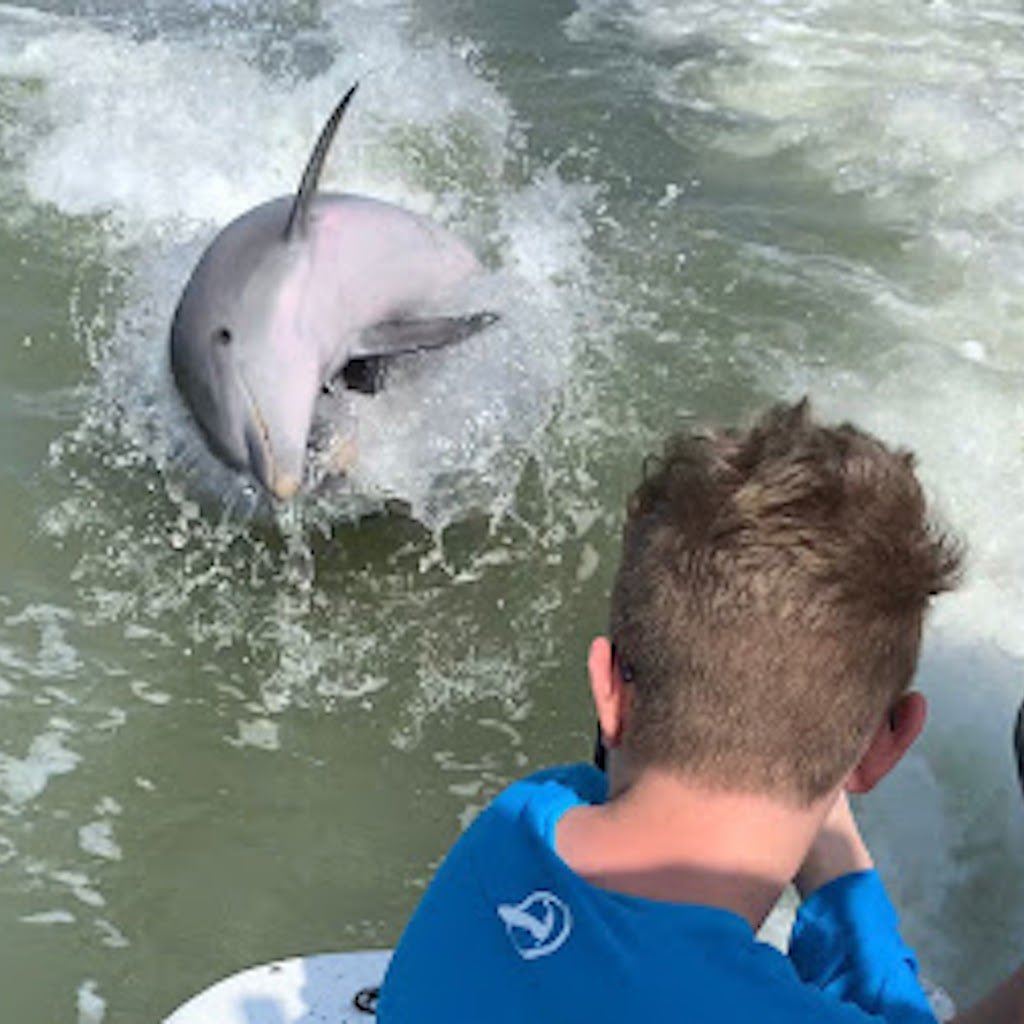
🐬 At a glance
- Bottlenose
- Solid gray, stocky, ~8–12 ft; the inshore reliable
- Atlantic spotted
- Smaller, develops spots with age; offshore wildcard
- On our tours
- Bottlenose is the one you'll see; spotted is rare inshore
- Where
- Bottlenose in bays/passes; spotted over deeper offshore water
- Honest note
- We set real expectations — no overpromising a spotted sighting
Telling them apart
Start with color and spots. An adult Atlantic spotted dolphin earns its name as it ages, building a freckled pattern of light and dark spots across its body. A bottlenose dolphin stays a clean, solid gray that pales on the belly — no spots, ever. Size is the next clue: bottlenose are the bigger, stockier animal, while spotted dolphins are sleeker and a touch smaller.
The beak helps too. Bottlenose have the short, thick “bottle” snout that gives them their name. Spotted dolphins tend to have a slimmer beak and a more streamlined head. Honestly, though, most guests never face this puzzle inshore — if a dolphin surfaces in the bay near Marco, it's a bottlenose almost every time.
What's realistic to see on a tour
We believe in telling you straight. Our shelling, sunset and dolphin and wildlife tours run the inshore waters — bays, passes and the edges of the Ten Thousand Islands — and that's bottlenose country. We see bottlenose dolphins year-round, on the large majority of trips. Atlantic spotted dolphins favor deeper offshore water beyond where inshore tours go, so they're a genuine wildcard, not something we'll promise.
That's the right way to think about it: come for the bottlenose, the backwaters and the birds, and treat anything offshore-style as a lucky bonus. To see how dolphin sightings shift through the year, our wildlife-by-season guide lays it out.
| Trait | Bottlenose | Atlantic spotted |
|---|---|---|
| Color | Solid gray | Spotted (with age) |
| Size | Larger, stocky | Smaller, sleek |
| Beak | Short, thick | Slimmer |
| Habitat | Inshore bays & passes | Deeper offshore water |
| On inshore tours | Reliable | Rare wildcard |
Where each one lives
Bottlenose dolphins are true locals of the shallow stuff. They hunt the grass flats, slip through Gordon Pass and Capri Pass on the tide, and patrol Naples Bay and the Marco backwaters all year. Atlantic spotted dolphins live the offshore life over deeper Gulf bottom, often in bigger, faster-moving groups. The two ranges overlap only at the edges, which is exactly why an inshore boat almost always meets bottlenose. Whichever you spot, watch from a respectful distance and let curious dolphins come to the boat on their own terms.
From the Helm: Bottlenose at the rail, spotted dolphin only past the Cape Romano shoals
Before we ever leave the dock, the wind and the water color decide which dolphin is even in play. Inside Gordon Pass and across the bay, the water runs a soft tannic green and bottlenose dolphin are the every-day fin you’ll see riding the bow wake. Push out past the edge of the Cape Romano shoals, where that green water clears and drops into deeper Gulf blue, and you’re in territory where an Atlantic spotted dolphin could show — though we treat that as a bonus, not a plan, since our routes stay inshore on most charters.
At the rail, the tell is size and skin. A bottlenose looks solid gray all the way down, with a tall, hooked dorsal fin that clears the surface even in a light chop. A spotted dolphin runs smaller and, past a certain age, shows a faint constellation of pale spots along its flanks — though young ones stay plain gray and are easy to mistake for a small bottlenose at a distance. We tell guests to check the size of the group first: bottlenose often travel in twos and threes inshore, while spotted dolphin tend to run in bigger, busier pods offshore.
Bottlenose are the ones that will find your bow wake on their own and hold position there for a minute or two, which is the moment we cut back the throttle and let guests lean over the rail. We don’t chase after either species — we ease off plane, settle onto a slow idle, and let the animal decide whether to come to us. Most mornings inside the passes, that patience pays off in bottlenose sooner than anything else, which is exactly why we built our dolphin tours around the inshore water rather than a run offshore.
If you’re set on telling the two apart on sight, it helps to already know the moves each one makes at the surface — a bottlenose logging flat and still reads very differently than a spotted dolphin porpoising along in a hurry, and we walk guests through both in our dolphin behavior glossary. On any given trip we can’t promise which one crosses our path, or that either shows at all, but the inshore odds favor bottlenose so heavily that it’s fair to call them the reliable one and the spotted dolphin the wildcard.
None of this is a guarantee either way — a bottlenose can duck under and disappear for a stretch just as easily as a spotted dolphin can surprise us by turning up closer to shore than usual on a clear, calm day. What we can tell you honestly is which one is the safer bet on any given route, and we plan our inshore trips around the animal that shows up reliably rather than the one that would make for a better story.