
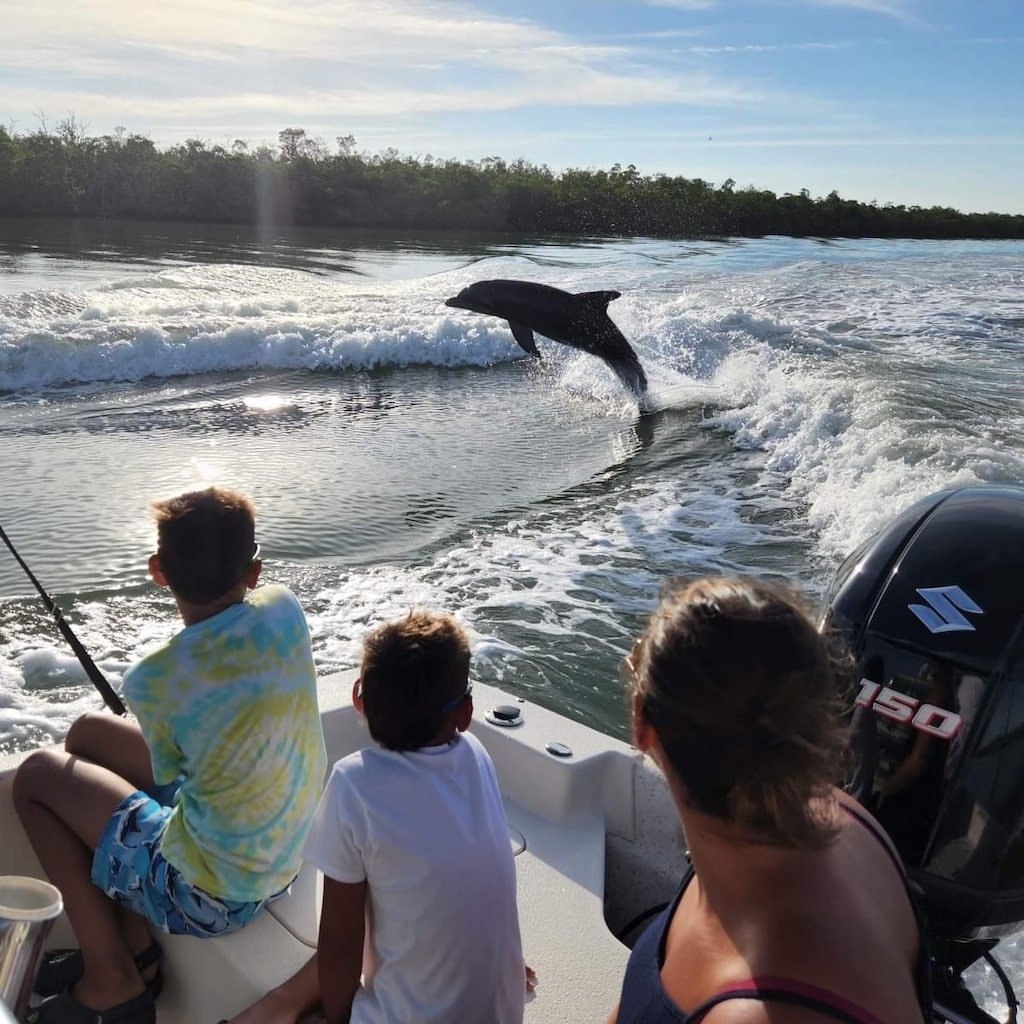
🐬 At a glance
- Resident?
- Yes — bottlenose dolphins live here in every season
- Do they migrate?
- No — unlike cold-season manatees, they stay year-round
- Best conditions
- Calm, glassy mornings make fins easiest to spot
- Where
- Naples Bay, the passes & the Ten Thousand Islands
- Guaranteed?
- No — very likely, but they're wild animals
Yes — and here's why
Bottlenose dolphins are a resident species in Southwest Florida's bays, passes and backwaters. They're built for this brackish estuary life, with plenty of food and protected water all year, so there's no seasonal departure to wait out. That's a real planning advantage: book a trip in January or July and the dolphins are equally at home. It's a different story from the West Indian manatee, which moves into our warm backwaters mainly when the Gulf chills below about 68°F — more on that contrast below.
If you're new to telling who's who out here, start with our bottlenose dolphin profile, then the quick manatee vs. dolphin comparison.
A month-by-month feel
The dolphins are always here; what changes is the water around them. We won't pretend to hand you population counts — nobody honest does — but here's the honest texture of each season.
| Season | Dolphins present? | What to expect |
|---|---|---|
| Winter (Dec–Feb) | Yes, resident | Crisp, calm mornings; great visibility; manatees also gather now |
| Spring (Mar–May) | Yes, resident | Mild, glassy days; active bait in the passes |
| Summer (Jun–Aug) | Yes, resident | Warm, often calm at dawn; afternoon storms can build |
| Fall (Sep–Nov) | Yes, resident | Bait runs through the passes; lively feeding |
For the full picture across all our critters, our wildlife-by-season guide lays out what's most likely month to month.
Best conditions, any time of year
Since the dolphins don't pick a season, you get to. The single biggest factor in spotting fins is calm water: a glassy morning before the sea breeze fills in is gold, because a curved gray fin pops against a flat surface. Moving tides in the passes — Capri Pass, Gordon Pass and the mouth of Naples Bay — concentrate bait and bring dolphins in to feed. We chase those conditions on every dolphin & wildlife tour, in every season.
What we will and won't promise
Here's our honest line: dolphins are resident and we see them on the large majority of trips, but they're wild animals and we never guarantee a sighting or quote a made-up number of them. What we can promise is a captain who knows where the tide pushes the bait and the patience to find them. Combine year-round residency with that local read of the water, and your odds are about as good as wildlife watching gets.
From the Helm: Shifting the dolphin watch: Caxambas Pass in winter, Gullivan Bay in summer
A guest at the rail in August will sometimes ask if it’s even worth watching for dolphins during the slow season — a question that misreads how this water actually works. We’ll usually answer while still scanning, because the honest response is that we’re simply watching a different stretch of water than we would in January. Where we point the bow to find them shifts with the season far more than whether they’re out there at all, and that shift is really about tide and bait movement more than the calendar on the wall.
In the cooler months our captains lean on the passes hard, especially Caxambas Pass on a strong outgoing tide, because winter cold fronts push bait out of the backwaters and dolphins follow it through the cuts in tight, fast-moving groups. That’s often our best read on a January or February morning — less time spent searching open water, more time holding near the pass mouth and letting the tide bring the action to us. It’s efficient, though it does mean winter sightings tend to be quicker passes rather than lingering ones.
By summer the passes quiet down and we shift attention to the calmer, glassier mornings inside Gullivan Bay, before the afternoon sea-breeze buildup turns the water choppy and pushes us toward shorter routes anyway. Dolphins here tend to work the shallow grass flats at a slower pace in the heat, resting more and feeding in shorter bursts, so a summer sighting often feels less dramatic but can last longer if we find a pod willing to hang near the boat a while.
This is part of why our captains adjust departure times and routes by season rather than running the same line every morning regardless of conditions. An early departure in July buys us calmer water and a cooler crowd; a slightly later one in December lets the morning fog burn off the passes first. Guests rarely notice these small schedule shifts, but they’re a direct response to where we expect both the dolphins and the conditions to cooperate best that particular week.
Wherever the season points us, a sighting is never something we hand out on request — these are wild animals following bait and temperature, not our itinerary. What we can promise is a captain adjusting the plan to the season instead of running a fixed route regardless of what the water’s doing. For more on how we handle the boat once we’re close to a pod, see our page on dolphins and boats, or book a dolphin tour to see the current pattern for yourself.