
🐬 At a glance
- What to look for
- Brown body, oversized bill & throat pouch
- vs. white pelican
- Smaller, brown, dives head-first (white ones don't)
- In flight
- Glides low in single-file lines just over the water
- Hunting
- Folds and crashes head-first; scoops fish & water
- When
- Year-round along passes, docks & markers
Brown pelican vs. white pelican
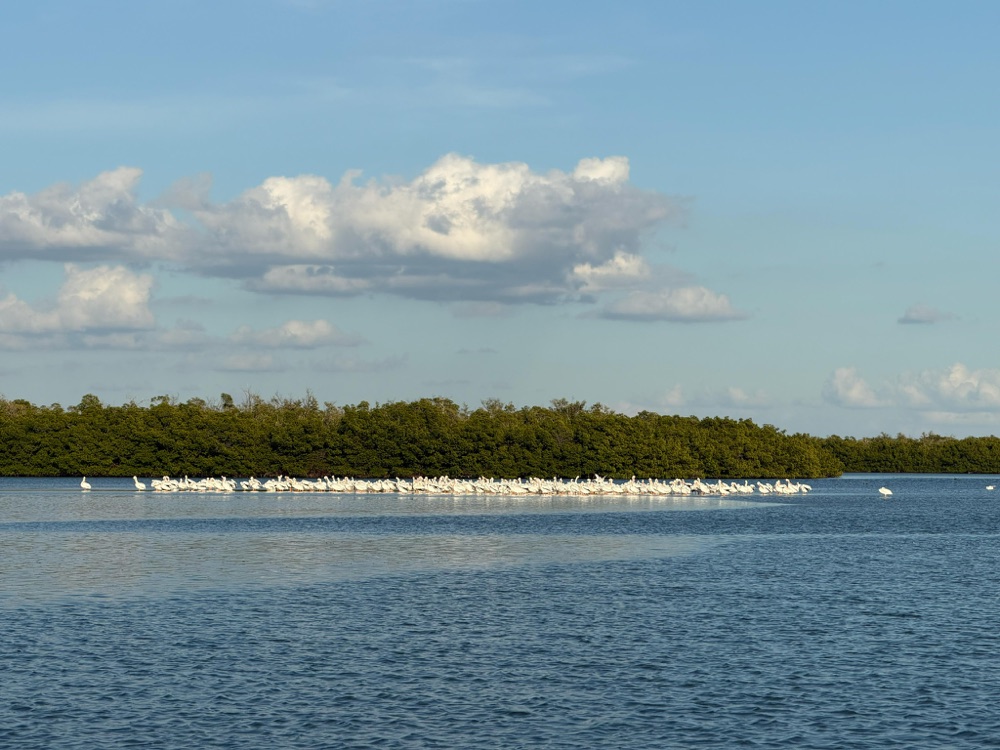
Almost every pelican you see riding our boats and docks is a brown pelican: a heavy gray-brown body, a long hooked bill, and that famous stretchy throat pouch. Breeding adults dress up with a creamy-yellow head and a chestnut neck, but the everyday bird is just plain brown — which is exactly how you tell it from the much larger American white pelican that sometimes winters inland. The white one is bright white with black wing-tips, fishes by swimming and dipping in groups, and never plunge-dives. The brown one is smaller, coastal, and dives like a missile.
On the water you'll often see them strung out in single file, gliding inches above the surface, riding the cushion of air off the waves — one of the most relaxing sights on a wildlife tour.
The head-first plunge-dive
This is the brown pelican's headline act. It spots a fish from up high, twists, and folds into a steep head-first dive, smashing into the water bill-first and scooping up as much as a couple gallons of water along with its catch. Then it bobs to the surface, drains the water out the sides of its bill, tips its head back, and swallows. Sometimes a sneaky gull lands right on its head trying to steal the fish. It's the only pelican on Earth that hunts this way, and it never gets old to watch.
Compare that to the osprey, which dives feet-first, or the terns that hit smaller and faster — the pelican's full-body belly-flop is in a class of its own.
Where and when to see them
Brown pelicans are here every single day of the year, no season required. They favor the passes and inlets where bait fish funnel through — Gordon Pass, the mouth of the bay, the channel markers and the dock pilings around Naples and Marco. Wherever a charter is cleaning fish or a school of bait is balled up, you'll find pelicans staging nearby. We pass them constantly on dolphin and wildlife tours, and they're a guaranteed crowd-pleaser for kids, who love their cartoonish faces.
| Feature | Brown pelican | White pelican |
|---|---|---|
| Color | Gray-brown | White, black wing-tips |
| Size | Smaller, coastal | Larger, often inland |
| How it fishes | Head-first plunge-dive | Swims & dips in groups |
| When here | Year-round | Mostly winter, less common on the coast |
Because they're around all year, any trip works — check our wildlife-by-season guide to pair pelicans with whatever else is moving, then come watch a dive or two.
From the Helm: Watching the pelican line stack up at Caxambas Pass on a push tide
Somebody at the rail always spots the pelican line first — a single-file row of brown pelicans skimming so low over the chop that their wingtips nearly clip the water, then one peeling off to fold its wings and drop. We like to idle down right there rather than push past, because that low, straight-line glide usually means a bait pod is being pushed up tight against the pilings at Caxambas Pass, and the birds are working it before anyone on deck has even noticed the bait.
The water sign we watch for is smaller than the birds themselves: a nervous, dimpled patch on the surface where small fish are getting pushed up from below, sometimes with a flicker of silver breaking through. That patch is what pulls the pelican line in tight, and it’s usually there before the first plunge-dive happens. Our captains slow to a crawl and drift toward it rather than motor straight at it, since gunning the engine scatters the bait and sends the birds off looking for the next push somewhere else.
The dive itself is worth the idle time: a pelican folds its wings flat against its body about ten feet up and drops like a dropped stone, hitting the water hard enough that you can hear the smack over the engine. It surfaces a beat later, throat pouch stretched tight around a mouthful of water and, usually, a fish. We time our approach so the boat drifts broadside to the line instead of bow-on, which keeps every dive in clear view of the rail instead of hidden behind the bow.
Pelicans and the guides running our fishing charters are chasing the same signs, honestly — wherever the birds are working, there’s usually bait, and wherever there’s bait, there’s a decent shot at redfish or snook holding underneath. We treat the pelican line as a free scouting report more than a photo op, though it’s usually both. On a slow-moving push tide against a channel marker or a set of pilings, that line can hold in one spot working the same pod of bait for the better part of an hour, and a captain who knows to idle rather than motor through gets to watch the whole show unfold twice as long as one who doesn’t.
Not every pass through Caxambas turns up a working line, and some mornings the pelicans are scattered along the mangroves instead, sitting it out until the tide turns back in their favor. When the line is working, though, it can hold in that same stretch a good while, diving the same push of bait over and over, which gives us plenty of time to bring the boat in close, cut the engine, and let everyone at the rail watch as many drops as they want.