
🦪 At a glance
- Oyster bars
- Reefs exposed at low tide; dolphins forage the edges
- Seagrass
- Submerged meadows that feed manatees and seatrout
- Job
- Filter water, build structure, grow food
- Where & when
- Estuary flats near Marco & Rookery Bay; bars show at low tide
- Rule
- Protected habitat — oyster bars are off-limits to walk on
Oyster bars: the reefs that build the bay
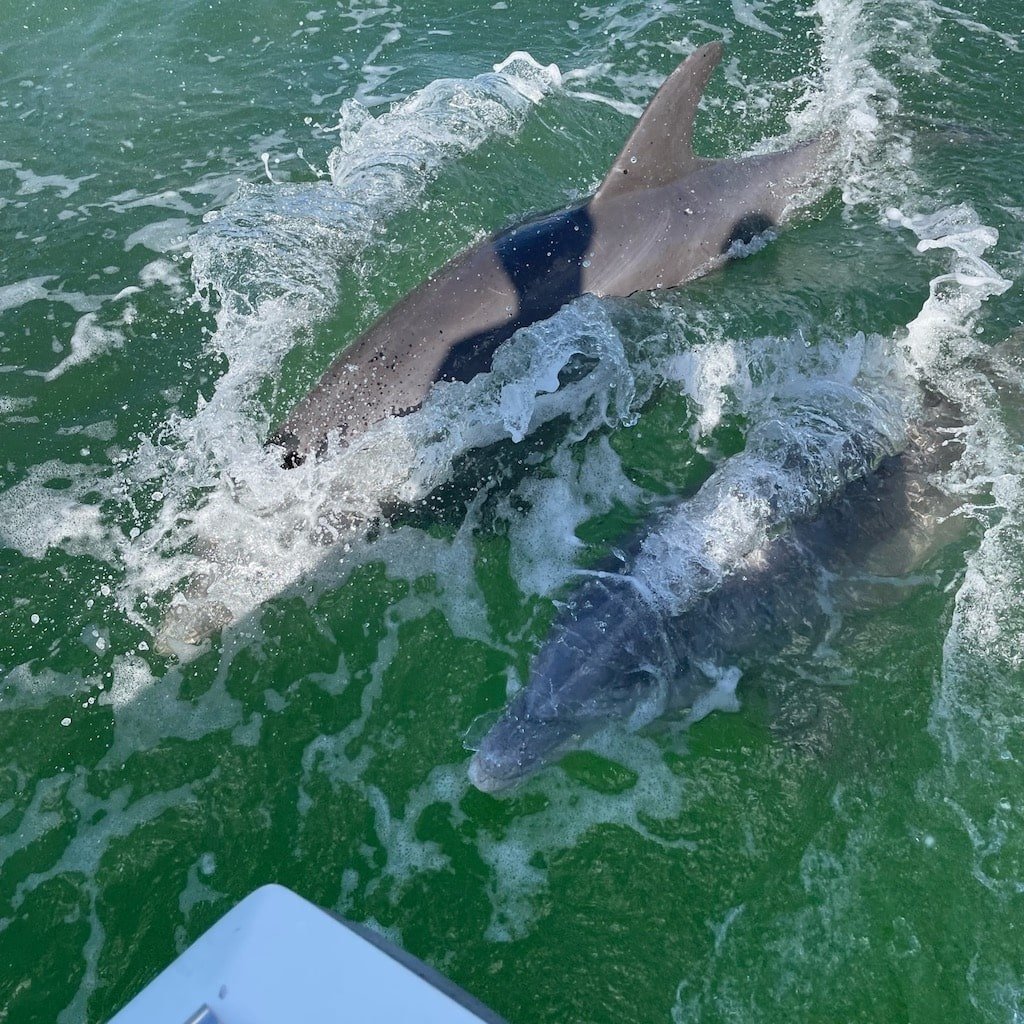
An oyster bar doesn't look like much — a dark, crusty hump that rises out of the water as the tide drops — but it's one of the busiest spots in the estuary. Eastern oysters cement themselves to each other generation after generation until they form a hard reef in a sea of mud. That structure does three jobs at once: each oyster filters gallons of water a day, the reef knocks down wave energy and stabilizes the shoreline, and the nooks between shells shelter tiny crabs, shrimp and baitfish. That last part is why dolphins love them. As the tide falls and a bottlenose dolphin cruises the flats, it works the edges of the bars where fish get pinned in shrinking water — you'll often see one rooting and rolling right along a bar's rim. Sheepshead and black drum crowd the same edges to crunch barnacles and crabs.
Seagrass: the underwater pasture
Where the bottom is sand instead of oyster, you'll find the other engine: seagrass. These aren't seaweeds — they're true flowering plants (turtle grass, shoal grass, manatee grass) that root in the shallows and grow in waving green meadows you can see from the boat in clear water. Seagrass is a pasture in the most literal sense: it's the main food of the West Indian manatee, which mows through hundreds of pounds of it. The blades also shelter shrimp, crabs and juvenile fish, and they're the home turf of spotted seatrout, which is exactly why anglers call grass flats the bread and butter of inshore fishing. Healthy seagrass even tells you the water's clear and clean, since the grass needs sunlight to grow.
How they make the flats productive
Neither habitat works alone — together with the mangrove roots they turn a featureless flat into a layered feeding ground. Oysters filter and clean, seagrass feeds and shelters, mangroves nurse the young, and the tide ties it all together by delivering water and food on schedule. That's the productivity our captains are really reading when we set a course.
| Habitat | What it is | Main job | Who feeds there |
|---|---|---|---|
| Oyster bar | Reef of clumped oysters | Filter & structure | Dolphins, sheepshead, drum |
| Seagrass | Submerged flowering meadow | Food & shelter | Manatees, seatrout, crabs |
Spotting them on a tour
Reading these habitats is half the fun on the water. As the tide falls, the oyster bars surface as dark ridges — that's your cue to watch for dolphins working the edges and for the low-tide birds picking the exposed flats. Over the grass beds, scan for the swirl of a tailing fish or, in the cooler months, the round back of a manatee grazing. Our dolphin and wildlife tours out of Goodland time the route around the tide so you're over the right habitat at the right moment. Just remember the rule of the estuary: look, don't trample — oyster bars are sharp and protected, and seagrass tears up easily.
From the Helm: Cutting the Motor at a Round Key Oyster Bar on the Last of the Falling Tide
On the last hour of a falling tide near Round Key, we’ll cut the engine a solid boat-length off the bar rather than idling right up to it, because oyster clumps at that stage sit just inches under a thin skim of water and a lower unit doesn’t forgive the mistake twice. Drifting the last stretch on momentum alone also means we’re not pushing a wake over structure that’s doing real work — every clump we ease past is filtering water and giving small fish somewhere to hide, and a wake that stirs the bottom undoes some of that in seconds. The same caution applies coming back off the bar; we’ll pole away from the shallowest edge before ever touching the throttle again.
The tell that a bar’s worth stopping at isn’t the oysters themselves, it’s the disturbance around the edge. A cloudy boil surfacing off the drop-off, or a scatter of small mullet skittering across the exposed shell, usually means a redfish or a small shark is working the bar’s edge where the current concentrates bait against structure. We’ll hold position there with the engine off and let the boat swing on the current rather than repositioning with the motor, since restarting it now is exactly the kind of noise that ends the show early.
A hundred yards off the bar, the seagrass meadow reads completely differently — no exposed structure, just a darker patch under the surface rippling slightly different than the sand around it. We slow to idle well before crossing it instead of running the prop straight through, since a grass bed sheared by a lower unit takes seasons to grow back, and it’s the same grass a manatee grazing nearby depends on for every bite. Guests are often surprised the two habitats sit so close together yet get such different treatment from the helm.
We often see a small ray glide along the sand edge where the grass thins out, and occasionally a wading bird working the exposed bar if the tide’s timed right, though neither shows up on every pass. What we can count on is the pattern itself: engine off well before the bar, idle-only across the grass, and enough patience at both to let whatever’s using them settle back into a rhythm instead of scattering the moment we arrive. Guests who slow down enough to notice the pattern usually end up watching the water even after we’ve moved on to the next stop.
If you’d rather see how a manatee actually works a grass bed like this one, our manatee vs dolphin guide breaks down exactly what to watch for at the surface, and our fishing charters spend real time working the same oyster edges for the redfish and snook that stack up on them.