
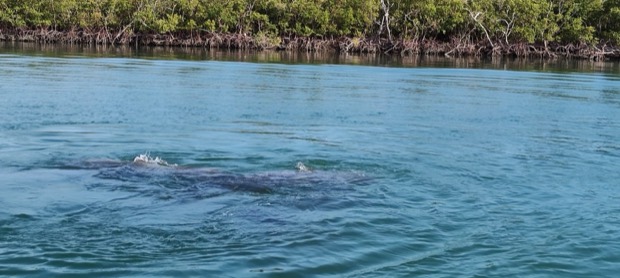
Dolphins — year-round
Wild bottlenose dolphins live in these waters every month of the year, so you can see them in any season. They’re especially reliable around Gordon Pass in Naples and in the island cuts off Marco. (More in our guide to the best places to see dolphins.)
Manatees — cooler months (late fall–early spring)
You can spot manatees year-round, but they’re most reliable from roughly November through March, when the Gulf cools and they gather in warm, sheltered back bays and near warmer inflows. Winter is prime manatee time.
Birds & spoonbills — winter into spring
The mangrove rookeries are active all year, but winter and spring bring nesting season and migratory species, making it peak bird watching. Look for pink roseate spoonbills, ospreys, herons, egrets and pelicans through the Ten Thousand Islands and Rookery Bay.
Best shelling — after winter cold fronts & on low tides
Shelling is good year-round on our remote barrier islands, but it peaks in winter, when cold fronts churn the Gulf and push fresh shells ashore. Any season, the best shelling is on a low or falling tide. Our captains time shelling tours to the tide — see the best time of year to shell.
Stone crab season — October 15 to May 1
A delicious local milestone: Florida stone crab season runs from October 15 to early May. It’s not something you catch on a tour, but it’s the perfect reason to pair a fall or winter waterfront-dining cruise with fresh claws at a Goodland or Naples seafood spot.
From the Helm: Why we time trips to Gulf fronts and the summer sea-breeze clock more than the calendar page
We don’t actually run our week off this calendar the way it reads on a page — we run it off what the last front did three or four days ago. A cold front that stalls out over the Gulf for a day changes the water more than the date on it ever will, shifting shelling, birds, and even where manatees pool for a week or more past when the calendar says the season should be easing. The months below are a real pattern, but the days inside them are decided by weather, not by the printed range, and we’ll happily swap a planned route the morning of if the last few days on the water told us something different.
One season this calendar doesn’t cover is nesting: loggerhead sea turtles come up onto the undeveloped stretches of barrier islands like Kice from roughly May through October to lay. We don’t run trips to disturb nests or hatchlings, and we won’t approach a marked one, but we’ll often point out a nest site from a respectful distance if we pass one on a shelling run, since it’s one more thing this stretch of coast does quietly all summer while most visitors are focused on the water instead of the sand above the tide line.
Summer runs on its own clock more than any other season: mornings tend to be calm and clear, and by early-to-mid afternoon a sea-breeze thunderstorm cell can build up fast over the mangroves. We bias our summer trips earlier in the day for that reason, not because the wildlife or the shelling is better at sunrise, but because the weather window closes on a predictable schedule that has nothing to do with tide or fish. Winter flips that logic entirely — the risk shifts to cold fronts and wind, not afternoon storms.
The shoulder months — the stretch between one pattern fully ending and the next taking over — are the hardest to plan on paper and the ones we adjust for most on the water. Water clarity, wind direction, and which species are actually showing up can shift week to week rather than transitioning smoothly, so we’ll often change our plan for the day based on what we saw the trip before, not what the month suggests we should expect. It’s the part of running this water year-round that a calendar can only approximate.
If shelling is the piece you’re most interested in timing, our shelling beaches guide breaks down specific islands and how each fishes on different tides. For the fuller list of what shares these waters with us across the year, our wildlife guide covers the birds, rays, and other regulars this calendar only summarizes.