
📖 At a glance
- The grail
- Junonia (Scaphella junonia)
- Why so rare
- Lives ~100–425 ft deep — rarely reaches shore
- When it shows
- After storms & strong fronts that stir the seafloor
- The look
- Cream shell with rows of brown squares
- Rule
- Empty shells only in Collier & Lee
What makes a shell a “holy grail”
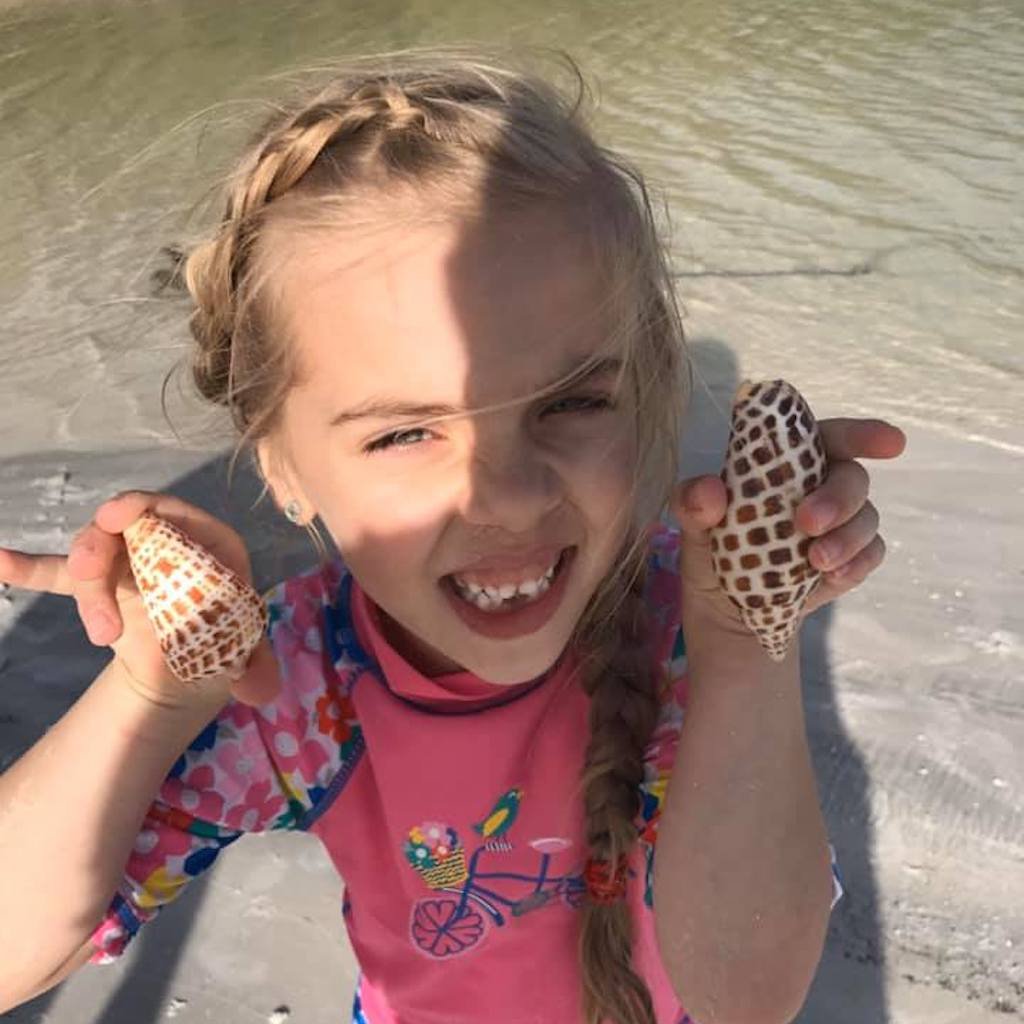
A shell earns grail status not just by being pretty, but by being maddeningly hard to find. The junonia checks every box. Its spotted pattern is unmistakable and gorgeous — rows of cocoa-brown squares marching down a clean cream shell, like nature playing checkers. But the real reason it's legendary is simple: the animal lives far offshore in deep water where no sheller can reach it. You can't go find a junonia. You can only hope one finds its way to you. That gap between “wanted by everyone” and “reachable by no one” is exactly what creates a holy grail.
Why the junonia is so hard to find
Here's the honest geography. Junonias don't live in the surf zone with the cockles and whelks — they live on the deep Gulf floor, roughly 100 to 425 feet down, well past where waves do their sorting. For an empty junonia shell to reach a beach, a powerful storm or a strong winter cold front has to churn the seafloor hard enough to roll that shell shoreward across miles of bottom, intact. Most never make it. The ones that do tend to land on Gulf-facing barrier islands. That's why a junonia find is a story people tell for years — it required deep water, a big storm, perfect drift and you, standing on the right sand at the right hour.
| Everyday shell | Junonia | |
|---|---|---|
| Where it lives | Shallow surf & flats | Deep Gulf, ~100–425 ft |
| How it reaches shore | Normal tides | Only after big storms |
| How often found | Every trip | Once in a blue moon |
| Bragging rights | None | Front page material |
How to actually chase one
You can't guarantee a junonia, but you can stack the deck. Time your hunt for right after a storm or a hard cold front, when the Gulf has been stirred up and is just settling. Get to a Gulf-facing barrier island beach at low tide, before the early-bird crowd, and walk the freshly deposited wrack line slowly. Our deep dive on how to find a junonia breaks down the timing, and our best beaches for junonia guide points you to the spots that have produced them. Remember the local rule: Collier and Lee County are empty-shells-only, so a junonia you keep must be vacant.
Why a boat gives you the edge
The best junonia odds are on the boat-only barrier islands, plain and simple. The Gulf-facing beaches of Keewaydin and Kice get a fraction of the foot traffic of the drive-up beaches, which means the shells the storm delivered overnight are still lying there waiting when you arrive. Our captains time shelling tours to the low tides after big weather and run you to the islands the storm just refilled. We can't promise the grail — nobody honest can — but if you want a real shot at one, this is how you take it.
From the Helm: Junonia luck along the Round Key bar after a fall cold front
When a fall cold front finally rolls off the Gulf and the wind clocks around out of the west for a day or two, our captains start checking the tide charts differently than we do all summer. That wind direction is the one that stacks water and stirs bottom sediment along the outside bars, and it’s the window when a junonia is most likely to tumble up onto sand instead of staying buried a hundred feet down. We don’t chase the storm itself — we chase the calm morning right after it, before anyone else gets there first.
We run past the usual stops toward the outside bar off Round Key, a stretch most walk-in shellers never reach and one our captains favor precisely because it isn’t worked over by noon. Nobody promises a junonia there — we’ve gone whole seasons without one crossing the rail — but a thick wrack line of lettered olives, augers and coquina after a front tells us the bottom got stirred enough to be worth the walk. A mesh bag beats a bucket here; wet shells breathe better, and you can feel a good one through the mesh before you even look.
Almost every trip that runs this window, someone waves us over holding a lettered olive up like they’ve found the prize, and we have to gently break the news. The lettered olive shares that creamy background and dark markings, but it runs glossy where a junonia stays porcelain-matte, and its shape is long and cylindrical rather than that classic spindle taper. When we’re lucky enough to have a reference shell aboard, we let guests hold both side by side, because the difference clicks the moment you feel the weight and shine in your own hand.
If the front stalls offshore and the wind never really pushes onto the bar, we adjust the plan rather than force it — a slower back-bay drift for lightning whelks and horse conchs still fills a cooler with honest finds. That flexibility is part of why we like running shelling tours instead of a fixed beach walk; the boat lets us follow the wind instead of hoping the wind follows us. For the full rundown on everything else that fills the basket while you wait on a junonia, our shell guide covers the rest of the cast.
On the rare morning someone does turn up a shell that looks right, we ask them to hold off celebrating until we’ve checked the aperture and spire count together, because misidentifications happen even to us. A living junonia making it to shore is close to unheard of given how deep it lives, so nine times out of ten what’s in your hand is already empty and yours to keep — the same empty-shell rule we hold to for every find along these islands. That’s the honest shape of the hunt: mostly quiet mornings, the occasional false alarm, and every so often, a shell that stops the whole boat.