
📖 At a glance
- The shell
- Scaphella junonia — cream with spiral rows of brown spots
- Why rare
- Lives ~100–425 ft deep; washes up only after storms
- Best timing
- Low tide, right after a storm or winter front
- Best place
- Remote, boat-only outer islands & sandbars
- Rule
- Empty shells only in Collier & Lee
Why a junonia is so hard to find
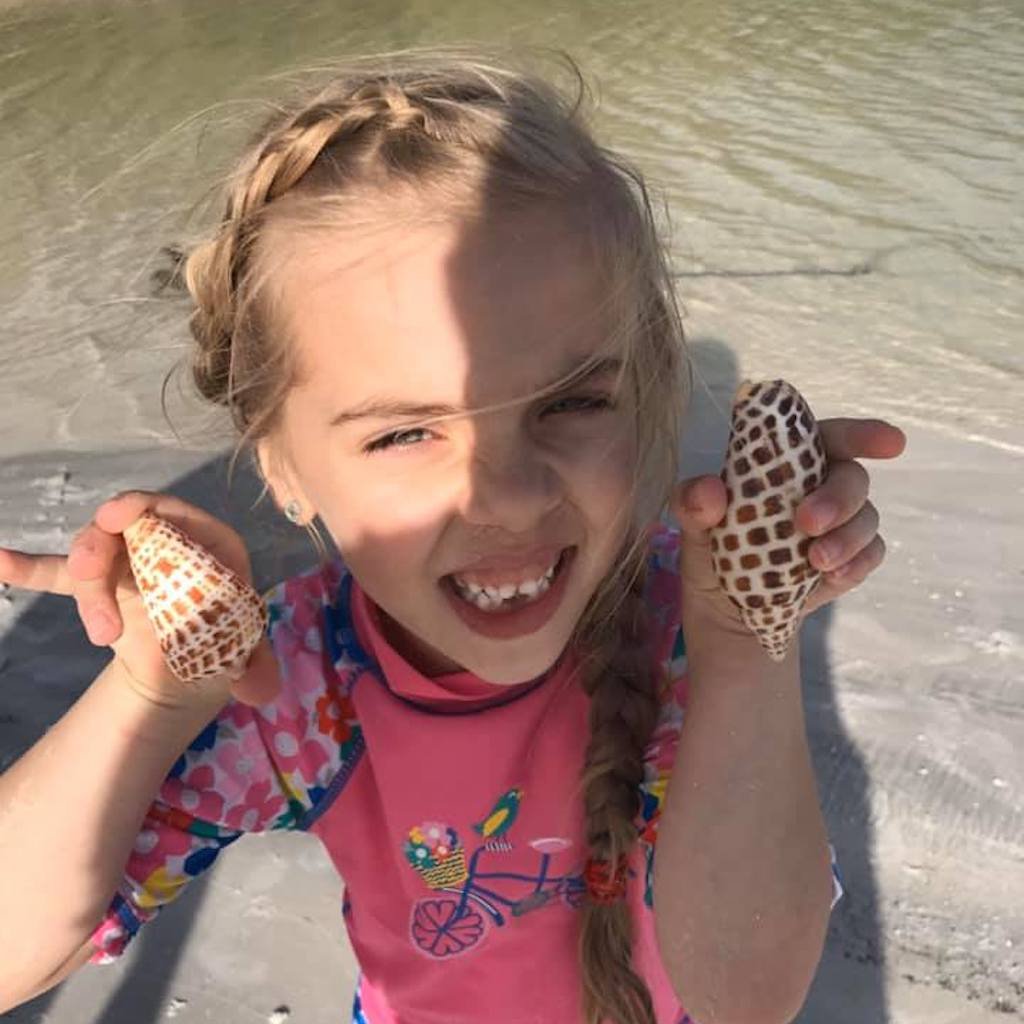
The junonia isn’t rare because there are few of them — it’s rare because it lives where you can’t walk. The living animal spends its whole life in deep Gulf water, well offshore and far below the surf, roughly 100 to 425 feet down. An empty shell only reaches a beach when a powerful storm or a strong winter cold front churns the bottom and carries it shoreward. That’s a lot of dominoes that have to fall in a row, which is why a single junonia find earns a photo at the shell shop and sometimes the local paper. Learn the full story on our junonia species page.
What you're actually looking for
Know it cold so you don’t walk past one. A junonia is a smooth, glossy, slightly cylindrical shell, usually three to five inches long, in a creamy white-to-tan base color covered in tidy spiral rows of square chocolate-brown spots — like a leopard print laid out in neat lines. Nothing else on a Gulf beach looks like it. The moment you spot those rows of spots, you’ll know. It sits near the top of our rarest shells list for good reason.
How to stack the odds
You can’t make a junonia appear, but you can be in the right place at the right moment. The formula: wild beach + fresh weather + low tide + few footprints. Get to the least-walked outer islands and sandbars right after rough weather, when new material is still arriving and nobody’s beaten you to it. That means the boat-only beaches of the Ten Thousand Islands, Kice Island and Cape Romano — not the combed-over mainland. The dedicated hunters even check our best junonia beaches roundup before a trip.
| Helps your odds | Hurts your odds |
|---|---|
| Going right after a storm or front | Calm, settled weather |
| Remote, boat-only beaches | Busy, easy-access mainland sand |
| Low tide, early, first footprints | Midday after the crowds |
| Slow, patient scanning | Rushing the tide line |
The honest truth
No captain who’s straight with you will ever promise a junonia — anyone who does is selling something. What a good guided trip actually does is put you on the wildest, freshest, least-picked beach at the perfect tide after the right weather, which is the only real way to improve your shot. Some of our shellers have found one; plenty haven’t, and they still came home with a bag of beauties. That’s the deal with a holy grail. Chase it with us on a shelling tour, and keep it empty-shells-only.
From the Helm: Reading a Post-Front Morning Before We Run Out Past Dismal Key
The morning after a strong cold front pushes through, our captains check three things before deciding where to run: wind direction, how hard the Gulf is still churned up, and whether the pass out past Dismal Key is even runnable yet. A junonia doesn’t wash up on a calm, pretty day — it takes real energy stirring the deep Gulf bottom to kick one loose, so paradoxically the mornings that make for the roughest ride out are often the ones worth the extra chop. If the pass is running too rough to cross safely, we’ll hold off and pick a calmer stretch instead, because no shell is worth a bad crossing.
What we hand guests before stepping onto the sand isn’t much: a mesh bag, and a specific instruction — walk slow, and work the freshest part of the wrack line first, the debris that clearly washed up within the last tide cycle rather than the older stuff already picked through. Junonia shells are small relative to the effort of finding one, mottled brown-on-cream, and easy to walk right past if you’re scanning at normal beachcombing speed. We’ll often trade off with a guest partway down the beach, taking the seaward edge ourselves while they work the dry sand, just to cover both bands of the wrack at once.
Pace is the one thing we find ourselves correcting most. Guests hear “holy grail” and start moving fast, covering ground, when the better approach is the opposite — slow, low, eyes six feet ahead rather than scanning the whole beach at once. We’ll walk alongside a guest for the first few minutes of a stop just to recalibrate that speed, because a junonia hiding in a scatter of broken coquina looks like nothing at a normal walking pace and looks like everything once you slow down.
We’re honest with everyone before their boots hit the sand: most trips end without one, us included, and we’re not going to pretend otherwise just to build excitement before a stop. What we can control is putting you on the stretch of island that saw the least foot traffic overnight and caught the freshest wash off the front — that’s the real lever available to us. Beyond that, it’s the Gulf’s call, not ours, and treating it as a guarantee would be dishonest.
If the front hasn’t come through yet, or conditions look flat and calm, we won’t oversell the stop — we’ll still run it, because the barrier islands are worth seeing regardless of what’s in the wrack line that day, but we’ll set expectations accordingly before anyone climbs down the ladder. Our sand dollar guide covers a different small find people often confuse with shell hunting, while our shelling tours page outlines how these stops actually run.