
🎣 At a glance
- Also called
- Little tunny, false albacore, “fat albert”
- Family
- True tuna (Scombridae) — not a real bonito
- Tell-tale
- Wavy worm-like lines on the back; dark belly spots
- Where & when
- Nearshore Gulf off Naples & Marco; bait-school blitzes, often fall
- Eating
- Dark, oily, strong — great fun, poor plate
How to ID a little tunny
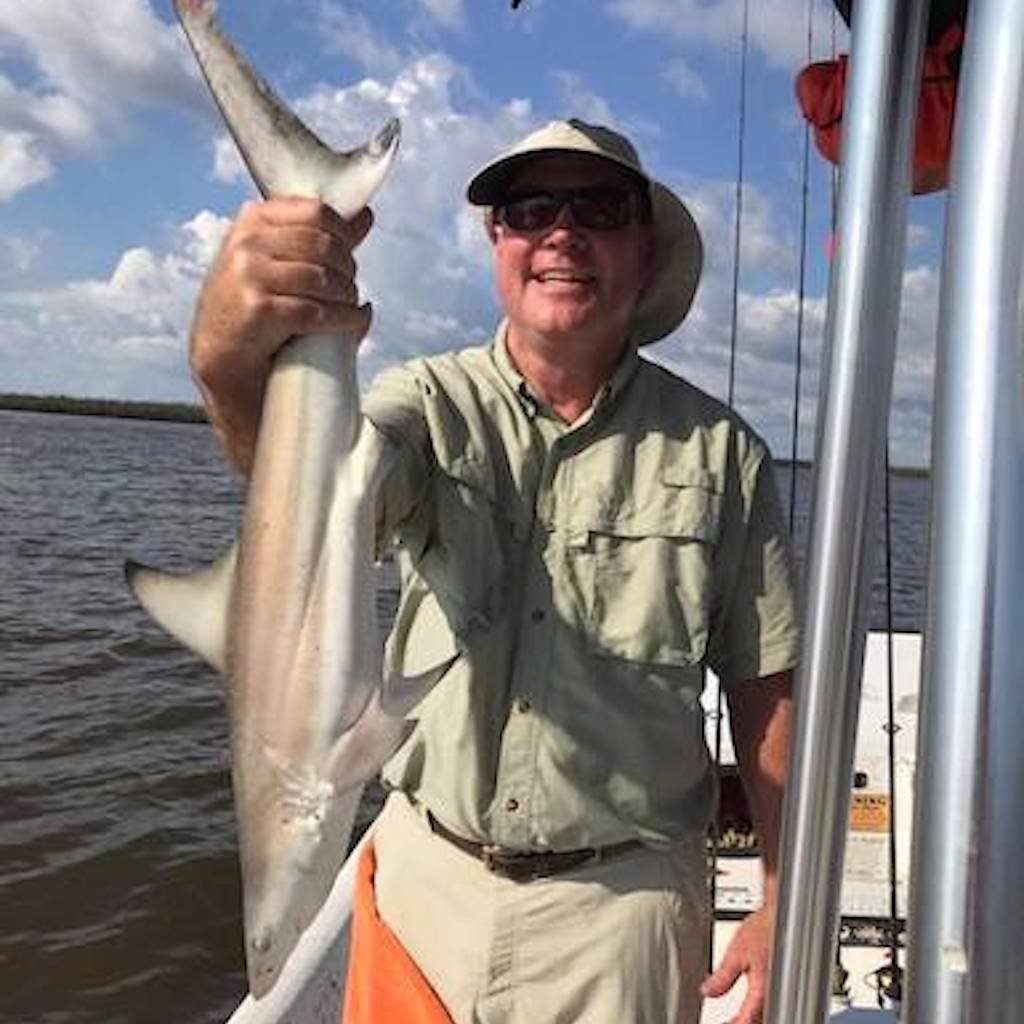
Flip one over the rail and you'll know it instantly. A little tunny is built like a small American football — thick through the middle, tapering hard to a stiff, crescent tail. The back is steel-blue with a scribble of wavy, worm-like lines toward the tail, and there's a scatter of small dark spots low on the side, just under and behind the pectoral fin. The body is scaleless and smooth except for a band of scales up front. People mix it up with the Spanish mackerel and the king mackerel, but the mackerels are long and slim with toothy mouths, while the tunny is a compact little torpedo with tiny teeth and that football shape.
Where & when you'll find them off Naples
This is a nearshore-Gulf fish for us, not a backwater one. When little tunny show up, they show up loud: a flock of terns and pelicans diving on a patch of nervous bait, the water boiling underneath. Our captains run out of the passes and look for that bird activity over the nearshore reefs and wrecks — the same broken bottom we cover on our nearshore wreck and reef trips. Fall is a classic window, when the mullet run stacks bait along the beaches and predators go on the hunt, though you can bump into roaming schools on a calm nearshore day in other seasons too. They're a Gulf fish, not a mangrove one — you won't tangle with them up in the Ten Thousand Islands creeks.
What it takes to catch one
Little tunny have sharp eyes and a need for speed, so the game is light line, small flashy lures, and a fast retrieve. A small silver spoon, a slim jig, or a glass minnow fly worked through a feeding school is the ticket. When they're keyed on tiny bait you'll need to “match the hatch” with something small — that's exactly the puzzle our light-tackle trips are built for. The hookup is the whole show: the first run is long, hot, and dead-honest, peeling drag in a way few inshore fish can. It's a blast for kids old enough to hang on, and a perfect “bonus” fish on a nearshore charter.
| Fish | Body shape | Quick tell |
|---|---|---|
| Little tunny (bonito) | Football, thick | Wavy worm lines + belly spots |
| Spanish mackerel | Long, slim | Yellow-gold spots, sharp teeth |
| King mackerel | Long, large | Dipped lateral line, big teeth |
Catch one and the right move is usually a quick photo and a clean release — the meat is dark, oily and strong, so few anglers keep them. Want the screaming-drag experience for yourself? Come hunt the birds with us on a Naples fishing charter and let your captain put you on the blitz.
From the Helm: Running light tackle to the nearshore ledges when bonito show off Naples
Bonito dictate the tackle before we ever clear the channel markers — spinning gear instead of conventional, a long fluorocarbon leader instead of anything stouter, because a bonito nosing bait in clear water refuses anything it can see or feel. That decision costs us the occasional fish to a frayed leader over a season, but it multiplies the number of strikes on a good morning, and a bonito trip is entirely a numbers game. We’d rather lose a fish now and then than fish heavy gear that barely gets bit at all.
Our run usually takes us a couple of miles off the beach to the first hard-bottom ledge past the sea buoy, where bait stacks up over structure that barely shows on a plain depth finder. We look for diving frigate birds working a tight circle over nervous water — that’s usually bonito pushing bait to the surface from below rather than birds finding it on their own. A light north wind that lays the Gulf down flat makes that surface commotion visible from well over a mile out, and on a morning like that the fish practically find themselves.
Small chrome jigs and narrow metal spoons get the nod over anything bulky, since bonito hit fast, flashy profiles and tend to ignore a slow-moving bait entirely. We work the retrieve fast and steady rather than jerky, letting the jig’s own wobble do the selling, and we cast well past the edge of the boil rather than into the thickest part of it, since the calmer fish working the outside of a feeding school are usually the ones actually eating.
The first run off a hooked bonito is the fastest thing most guests feel all season — drag peeling in a continuous scream with no pause, more like a small tuna than anything you’d expect this close to shore. We keep the fish in the water at the rail through the whole release, moving it forward gently to force water across the gills, since bonito burn through oxygen fast and a fish left still in your hands won’t recover well. Most anglers photograph one and let it go rather than keep it, which fits how we run the trip anyway.
When that particular ledge goes quiet, we’ll idle along the depth contour looking for the next patch of nervous water rather than sit and wait, since bonito schools move steadily along the same structure line all morning. Once that morning surface bite settles, several of our fishing charters swing by a piece of nearby structure for cobia, turning a fast bonito run into a mixed morning rather than a one-species trip.