
🎣 At a glance
- Water temp
- Upper 50s to mid-60s°F — the clearest water of the year
- Weather pattern
- A cold front every week or so, then two to four calm, sunny days behind it
- Top targets
- Sheepshead, black drum, pompano & spotted seatrout
- Best tide
- Morning negative lows around the new & full moons
- Crowd level
- Busy on land (snowbird season), quiet on the back bays at sunrise
- Rule
- Regulated seasons, sizes & bags apply — our vessel license covers every paying guest
Is January a good month to fish Naples and Marco Island?
If you’re trying to decide whether to lock in a January date, here’s the honest answer: yes, and it’s one of our favorite months to do it. January drops Gulf and backwater water temperatures into the upper 50s to mid-60s, which sounds cold until you realize what it does to the fishing — it’s the clearest water Southwest Florida sees all year, and it pulls several of our best-eating, most reliable species tight against structure where light tackle can actually reach them. This isn’t the acrobatic, run-and-gun tarpon fishing of late spring. January is finesse fishing: small hooks, light leader, patient anglers, and a bite that rewards precision over power. That makes it one of the most kid-friendly stretches of the whole calendar, since a lot of the best January targets hold in protected water close to the dock rather than out in open Gulf chop. Our fishing charters run this pattern all winter, and if you want the day-by-day read on what’s actually biting right now, our live winter what’s-biting guide tracks it in more detail than any single seasonal page can.
How cold fronts shape a January bite
The single biggest variable in January fishing isn’t the fish — it’s the weather. A cold front rolls through Southwest Florida every five to ten days this time of year, and each one follows the same script: wind swings hard out of the north or northwest, temperatures drop for a day or two, and the water gets pushed around and stirred up. Fishing right on the front, or the day after while the wind is still honking, is usually a fight not worth having. The move — and it’s the move our captains actually plan around — is the calm window that opens up two to four days behind the front, once the wind lays down, the sun comes back out and the water settles and clears. That’s when sheepshead, black drum and seatrout all feed hardest, because a stable barometer and clean water make baitfish and crustaceans easier for them to find, and easier for them to commit to your hook, too. Because that window shifts every week, we don’t run the same January charter twice; departure times and target zones get adjusted to whichever days line up best with the forecast and the tide. If you’re booking ahead, building in a day or two of flexibility around your travel dates gives our captains room to put you on the best window rather than whatever day happens to be on the calendar.
What’s biting: the January lineup
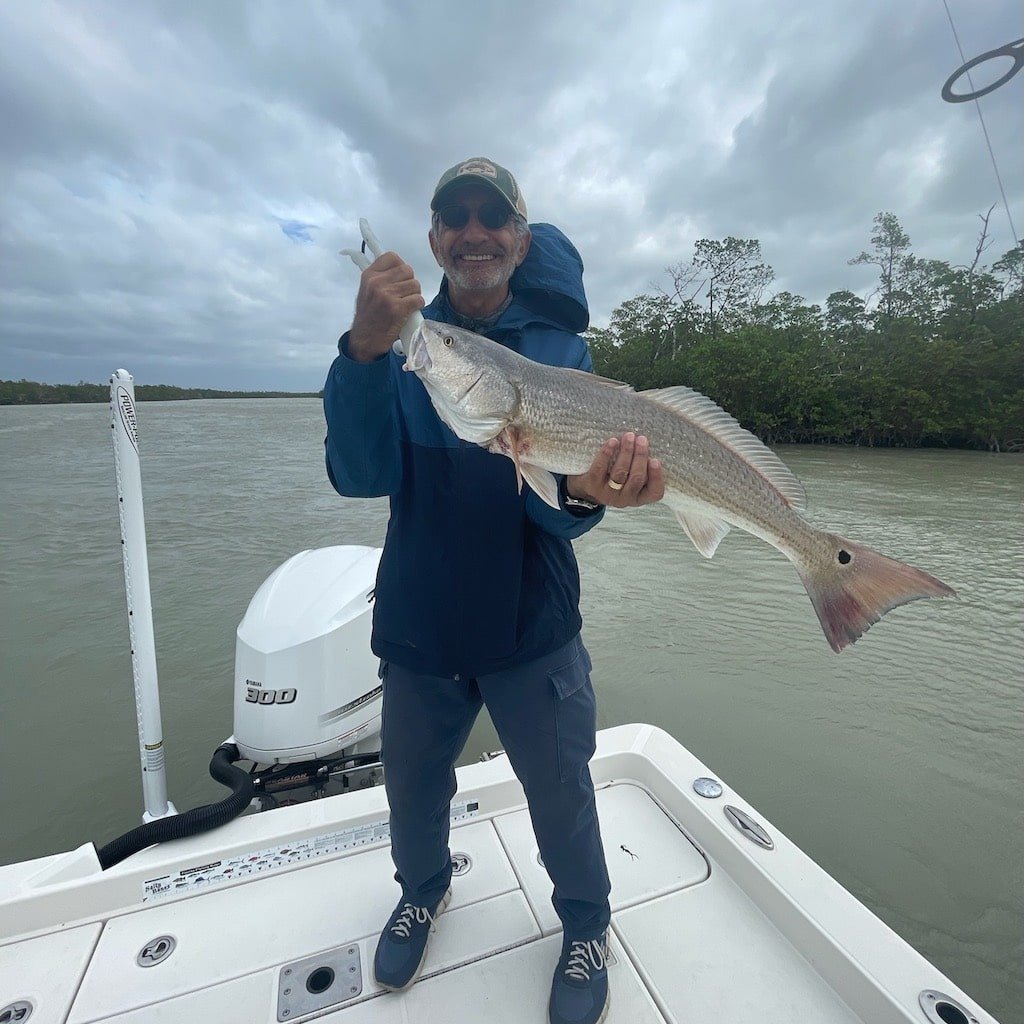
January’s roster is built for structure and patience rather than speed. Sheepshead are the headliner — cold water pulls the biggest, spawning-class fish tight against dock pilings, bridge fenders and nearshore rockpiles around Marco Island and Goodland, and their famous tap-tap bite is as much a game of feel as it is tackle. Black drum often share that same structure, running bigger and pulling harder once hooked, which makes them a favorite when someone in the boat wants a real tug on the line. Out on the sandy Gulf-side flats and troughs, pompano school up and give light-tackle anglers a fast, aggressive bite that’s a lot of fun on small jigs. And back in the protected creeks and bends of the Ten Thousand Islands, spotted seatrout hold in the deeper water where the temperature swings less, making them one of the most dependable January targets when the wind keeps everyone off the open Gulf. Redfish round out the lineup along mangrove edges on the lower stages of the tide. We won’t re-walk every bait and rig choice here — our winter what’s-biting guide is the page we keep current week to week, and it’s the better read once you’ve decided January is your month.
Where our captains fish in January
Location matters as much as timing in January, and the smart move is usually to get out of the wind rather than fight it. On a blustery day behind a front, our captains tuck into the mangrove-lined creeks and bends of the Ten Thousand Islands south of Goodland, where the shoreline breaks the chop and the water stays calmer — exactly where seatrout and redfish are holding anyway. On the calmer days, docks and bridges around Marco Island and the passes near Naples hold sheepshead and black drum tight to structure, and a short run gets you there without burning half the trip in transit. The Gulf-side flats open up for pompano when the wind finally drops enough to fish them comfortably, usually in that same post-front window. Running out of Goodland puts us closer to the backcountry than almost any other departure point in the area, which matters more in January than any other month — less time spent getting to protected water means more lines in the water once you’re there. If you’d rather build a full day around the islands themselves instead of just the fishing, our beach & island tours and the broader boat tour lineup cover the same backcountry from a different angle.
What to expect on board in January
Dress warm for the ride out and light for the middle of the day — January mornings on the water can be genuinely brisk before the sun climbs over the mangroves, especially the first calm morning after a front pushes through, so a jacket you can peel off is the right call. Gulf and backwater temperatures sitting in the 50s and 60s mean the fish aren’t going anywhere fast, which plays in your favor: this is patient, technical fishing rather than a footrace, and it’s genuinely one of the better months to bring kids or first-timers along, since a lot of the action happens close to structure in calm, protected water rather than bouncing around open Gulf swells. One practical note worth knowing before you book: Florida requires a fishing license for most anglers, but our captain’s vessel license covers every paying guest aboard, so there’s no separate license to buy or paperwork to track down — you show up, we handle the rest. Seasons, sizes and bag limits on species like sheepshead, black drum and tarpon are regulated and can shift year to year, so our crew will always tell you on the water exactly what’s legal to keep that day. If you want the exact departure windows and tide details for the month, our January boat tours guide lays out the full picture alongside the fishing.
| Species | Where They Stack Up | Water Type | Typical Approach |
|---|---|---|---|
| Sheepshead | Dock pilings & bridge fenders | Nearshore structure | Live fiddler crab or shrimp, small hook, quick hookset |
| Black drum | Same structure as sheepshead, often deeper holes | Nearshore & backwater | Cut blue crab or shrimp on bottom |
| Pompano | Gulf-side sandy flats & troughs | Open flats | Small jigs or sand fleas worked fast |
| Spotted seatrout | Deeper backwater bends | Protected backwater | Live shrimp under a popping cork |
| Redfish | Mangrove edges on lower tide stages | Shallow backwater | Cut bait or shrimp cast tight to the shoreline |