
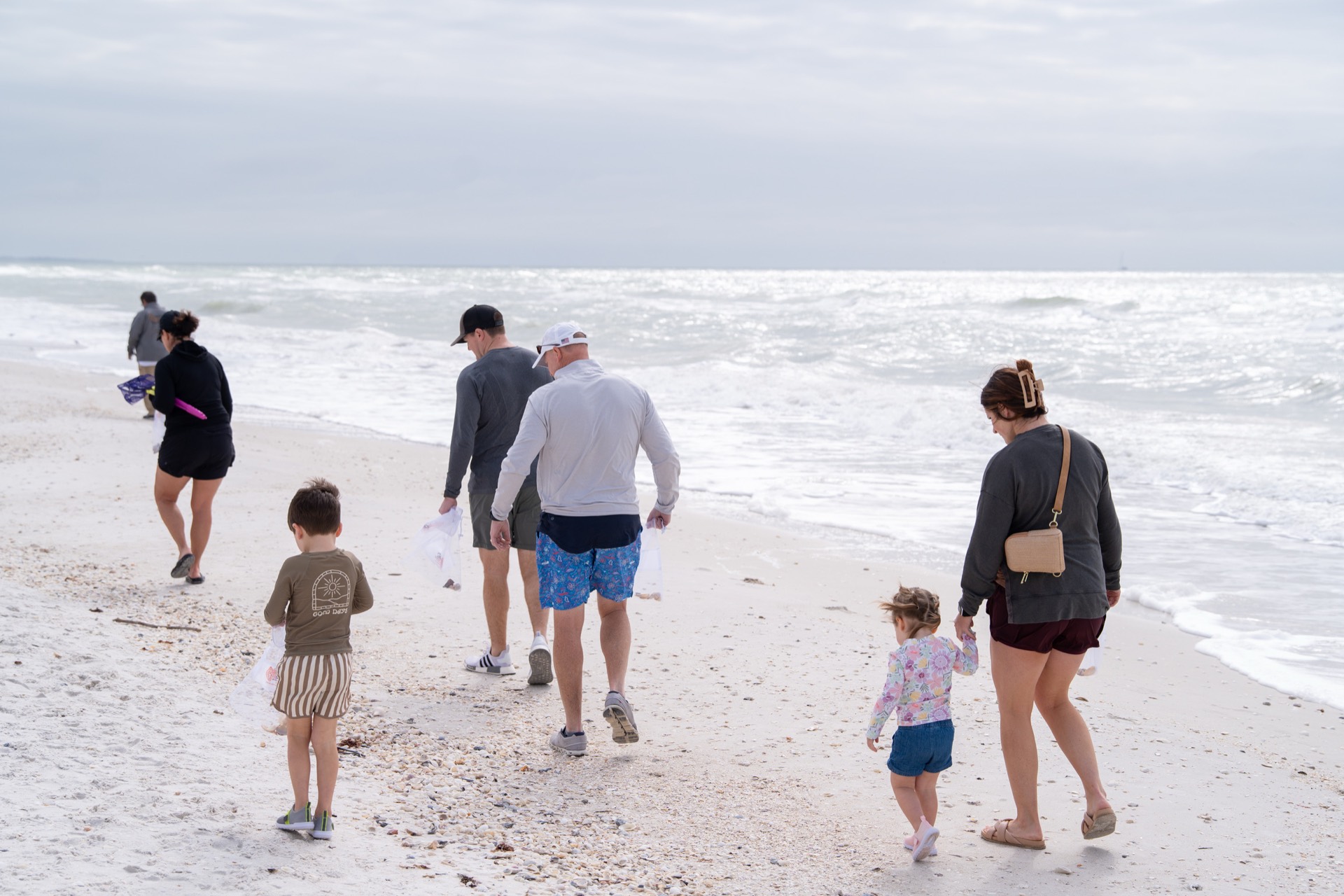
☀️ At a glance
- Tide pattern
- Morning negative lows early in the month, shifting toward evening lows by late April
- Gulf water temp
- Warms into the mid-70s°F — comfortable wading, no wetsuit needed
- Wind & seas
- Some of the year’s calmest water as winter fronts fade
- Best for
- Spotting keyhole urchin sand dollars in clear, shallow water
- Crowds
- Busy around Easter week — book a morning departure early
- Rule
- Empty shells only in Collier & Lee County
Why April Is a Sweet Spot for Shelling
April sits right at the hinge between two very different shelling scripts, and for a few weeks you get to borrow the best of both. Winter and early spring in Southwest Florida run on morning negative low tides — the kind that pull the Gulf back and expose the sandbars off Marco Island and Naples before most visitors have finished breakfast. By June that pattern flips entirely to evening lows. April is the transition: the first half of the month can still deliver a genuine morning low, especially around the new and full moons, while the wind that made January and February feel raw finally starts to lay down. You get the early tide timing of winter with none of the windbreaker weather.
That combination matters more than it sounds. A negative low tide only helps you if you can actually see the bottom, and a stiff cold-front wind chops the water into a milky soup that hides everything under a few inches. April’s calmer air means the same sandbar that looked murky in February can turn glassy-clear a few weeks later — and clear, shallow water is what actually lets you spot a live sand dollar before you step on it, not just a good number on the tide chart.
The Tide Script: Catching the Last Morning Lows
If you’re planning around a specific date, treat the tide chart as your real calendar. Early April still tends to hand you a solid morning negative low, often the lowest tide of the day arriving before mid-morning, which is exactly when our captains like to be idling off a barrier island with the anchor already down. As the month goes on, that morning window narrows and starts sliding later, and by the time May arrives the whole pattern has flipped — the good exposure happens in the evening instead. Booking a morning shelling tour in the first half of April is your best shot at catching both the early tide and the cooler part of the day before the Gulf sun gets serious.
Water temperature plays its own role here. By April the Gulf has usually warmed into the mid-70s°F, which is the difference between wading comfortably in a rash guard and wanting a wetsuit like you might in January. It’s warm enough to spend real time bent over working a sandbar, but not yet the bathwater-warm, algae-prone water that shows up at the height of summer.
What Turns Up on the Bars in April
The headline find in April’s clear, calm shallows is usually the keyhole urchin — the actual local sand dollar, named for the five little slots punched through its shell. In the flatter water this month brings, they’re easier to spot half-buried in the sand than they are when winter chop stirs everything up. Remember that a live keyhole urchin is a soft, fuzzy, olive-brown little animal, not the bleached white disc you picture in a gift shop, and Collier and Lee County law is clear that live ones go straight back in the water — only empty, sun-bleached shells are legal to keep.
Alongside the sand dollars, our captains usually turn up a working mix of whelks, cockles, olives, and the occasional lightning whelk — the big, left-handed Gulf sea snail that opens on the left when you hold it spire-up. It’s a great find, but it isn’t Florida’s state shell; that title belongs to the horse conch, which can grow far larger and turns up less often. The true holy grail, the junonia, lives 100 to 425 feet offshore and only washes ashore after a storm churns the deep Gulf, so April’s calmer seas actually make a junonia less likely, not more — a fair trade for the easier wading. For a full rundown of what you might bring home, our seashell guide covers identification shell by shell.
Where Our Captains Run in April
The best shelling bars near Marco Island aren’t walkable from any parking lot — they’re boat-only barrier islands scattered through the Ten Thousand Islands, and April’s calmer seas make the run out to them a lot more pleasant than a January chop. Keewaydin and Kice Islands are the workhorses, with wide exposed flats at low tide and enough distance from the mainland that they don’t get picked over by foot traffic. Cape Romano, farther south, is worth the trip for the scenery alone: the famous dome houses that used to stand offshore were toppled by Hurricane Ian in 2022 and now sit as half-submerged ruins, a strange and photogenic landmark even if the shelling there is secondary to the view. Our guide to the best beaches for sand dollars breaks down which islands tend to produce on any given tide.
Wildlife to Watch For in April
April is a good month to keep your eyes up as well as down. Bottlenose dolphins live in these waters year-round and our captains see them on the run out to the islands most mornings, though how many and where always depends on the day — there’s no resident pod you can count on like a schedule. Manatees are largely done clustering by April; they gather in numbers below about 68°F from November through March, mostly dispersed near Rookery Bay, and as the Gulf warms past that mark this month they spread back out into open water. Loggerhead sea turtles are just gearing up — their nesting season runs May through October, so April is the quiet stretch right before the beaches start seeing tracks.
Planning Your April Shelling Trip
The one honest downside of April is that everyone else has figured out how good it is, too. Easter week and the tail end of spring break stack up against those good morning tides, and Marco Island’s calendar fills fast. If you’ve got flexible dates, the first couple of weeks of April tend to be a little quieter than the run-up to Easter itself. Either way, book a morning departure — that’s still where the tide math favors you this month. Our shelling tours run right to the barrier islands on the tide, and if you want the fuller picture of what the whole month offers beyond shelling — dolphin-watching, sunset timing, fishing — the April boat tours guide covers the rest of the calendar. For how April stacks up against the months on either side of it, our Seasonal Guide breaks down the whole year, tide pattern by tide pattern.
| Month | Tide Pattern | Gulf Water Temp | Wind & Seas | Crowd Level |
|---|---|---|---|---|
| February | Morning negative lows | Upper 60s–low 70s°F | Frequent cold fronts, choppier | Moderate, snowbird season |
| March | Morning negative lows | Low–mid 70s°F | Still gusty between fronts | Busy, spring break starts |
| April | Morning lows early, shifting later in month | Mid 70s°F | Calming — some of the year’s flattest water | Busy around Easter week |
| May | Flipping to evening lows | Upper 70s–low 80s°F | Warm, generally calm | Easing after Easter |
| June | Evening lows | Low–mid 80s°F | Afternoon thunderstorms build | Summer families arrive |