
☀️ At a glance
- Tide window
- Flips mid-month — morning lows early May, evening lows by late May
- Water temp
- Low 80s°F
- Crowds
- Thinnest of the warm months
- Nesting season
- Loggerheads begin nesting, running May–October
- Rule
- Empty shells only in Collier & Lee County
Is May a Good Month for Shelling on Marco Island?
Short answer: yes, and it might be the year’s best-kept secret. By May, the snowbirds who packed the beaches all winter have flown north, spring break is over, and Marco Island and Naples settle into a quieter rhythm that holds until Memorial Day traffic starts creeping back in. The Gulf is warm enough to wade barefoot, the sky still runs mostly dry — Florida’s official hurricane season doesn’t open until June 1 — and the low tides that expose the best shelling sandbars are still showing up reliably. You’re not fighting a crowd for the good stretch of beach, and you’re not yet fighting the daily afternoon downpours either. It’s the gap between winter’s crowds and summer’s storms, and our captains would argue that gap is exactly why May works so well for shelling. If you’re weighing more than one month, our Seasonal Guide breaks down the tide script and weather for the whole year.
The May Tide Switch: From Morning Lows to Evening Lows
Every Marco Island shelling trip really comes down to one number: what time the tide bottoms out. All winter, the lowest tide of the day lands in the early morning, which is why our shelling tours run at sunrise from November through April. May is the month that flips the script. Early in the month you’ll still catch some of those lingering morning lows, but by the back half of May the tide tables shift and the deepest draw-down of the day starts landing in the afternoon and evening instead. That switch keeps going right through summer.
That mid-month flip is exactly why there is not one blanket morning-or-afternoon answer for May the way there is in January or July. Our captains check the tide tables daily and build the shelling run around whichever low actually exposes the sandbars that day, so book the departure we recommend for your date rather than assuming an early start is automatically best. A strong negative low tide at any hour — morning or evening — beats a mediocre low at your preferred time of day, every time.
| Month | Low-tide window | Gulf water temp | Crowd level |
|---|---|---|---|
| April | Morning lows, winter’s pattern still holding | Upper 70s°F | Spring break tapering off |
| May | Flips mid-month — morning early, evening by month’s end | Low 80s°F | Thinnest of the warm months |
| June | Evening lows settled in | Mid-80s°F | Summer season ramping up |
What’s Washing Up on the Beach in May
May sandbars run true to the Ten Thousand Islands’ usual variety: lightning whelks (the Gulf’s big left-handed sea snail), lettered olives, banded tulips, fighting conchs and king’s crowns all turn up on a normal low tide. You will also spot plenty of empty keyhole urchin tests — Florida’s actual native sand dollar — scattered across the flats; leave any live one exactly where it sits, since Collier and Lee County both prohibit taking live shells, sand dollars and starfish. Browse the full lineup in our seashell guide before you go so you know what you’re looking at the moment you flip it over.
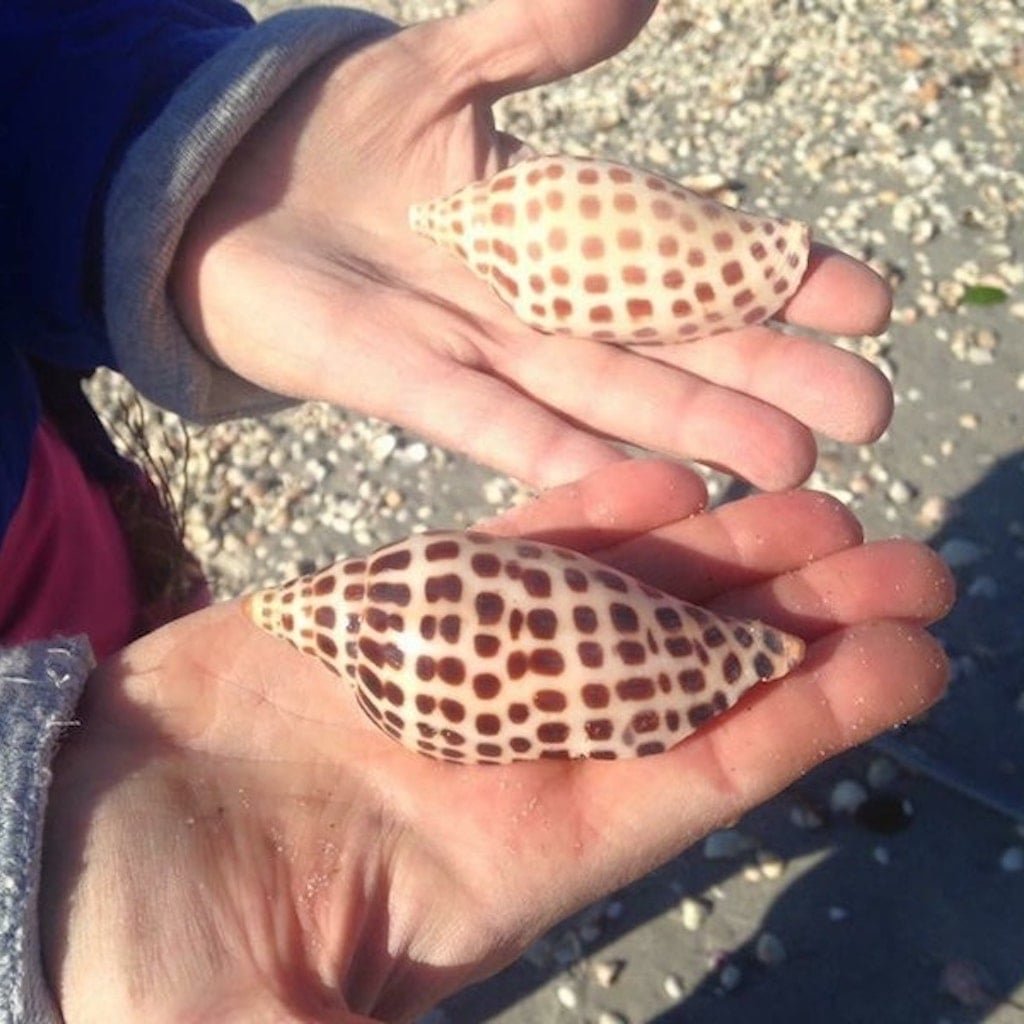
A junonia, the deep-water rarity most shellers dream about, lives 100 to 425 feet offshore and only washes ashore after a real storm churns the bottom. It is never guaranteed in any month, and May’s calmer, storm-free stretch of weather actually makes one less likely to turn up than a stormy fall day would, so treat any sighting as a happy bonus rather than something to plan a trip around.
Loggerhead Nesting Begins — Shell Lightly on the Wrack Line
May is roughly when loggerhead sea turtles start hauling out on Gulf beaches at night to nest, a season that runs into October. You will not see nesting itself on a daytime shelling trip — loggerheads come ashore after dark — but you will start noticing roped-off nest sites appearing on the wider beaches as the month goes on. It is a good reminder to shell the wrack line the way our captains always do: keep a respectful distance from any marked nest, avoid digging in the soft dry sand above the tide line, and take only empty shells, never anything alive. Loggerheads are the main nesting species on these beaches, and the same low-impact habits that protect the nests are exactly the habits that make for good, sustainable shelling anyway. For more on what to watch for, see our sea turtle nesting season guide.
May Weather, Water & Crowds
Air temperatures climb into the upper 80s°F by May, and the Gulf warms right along with it, settling into the low 80s°F — comfortable enough that you will want to wade the sandbars rather than just walk them. That warm water also means the manatees that gather in Rookery Bay’s warmer pockets below about 68°F all winter have long since dispersed back into open water, so May reads more like a dolphin month than a manatee month. Rain holds off more mornings than not; the true afternoon-thunderstorm pattern that defines a Naples summer is just starting to show up by late May, not yet the daily fixture it becomes in July. And the crowds genuinely thin out — with spring break over and most seasonal residents gone, May regularly plays as the least crowded warm month of the year on the water and on the sand.
For the fuller day-by-day picture across every tour type — fishing, dolphins and sunsets alongside the shelling forecast here — our May boating guide covers the whole month.
Best Departures & Islands for May Shelling
Because the tide window is on the move all month, the right island for a May trip depends on which low the day actually delivers. On a morning-low day, our captains lean toward the barrier islands and sandbars nearest the passes, where an early exposed flat means first tracks on shells before anyone else’s footprints show up. On days when the low has already flipped to evening, the run shifts toward islands that hold their sand later in the day. Either way, the boat-only islands through the Ten Thousand Islands stay the most productive pick all month, simply because they do not get walked by beachgoers between tides the way the drive-up beaches do.
Check our shelling beaches guide for the full island-by-island rundown, and when you are ready, book a shelling tour — we will tell you the exact low tide we are chasing on your date before you even step on the boat.