
🏝️ At a glance
- What it really is
- Keyhole urchin, Mellita quinquiesperforata
- Best beaches
- Sand Dollar Spit, Keewaydin flats, sheltered low-tide sand
- Best tide
- The lowest low of the day, calm water
- Keep which?
- White, bleached, empty tests only
- Rule
- Live sand dollars are protected in Collier & Lee
What a Florida sand dollar actually is
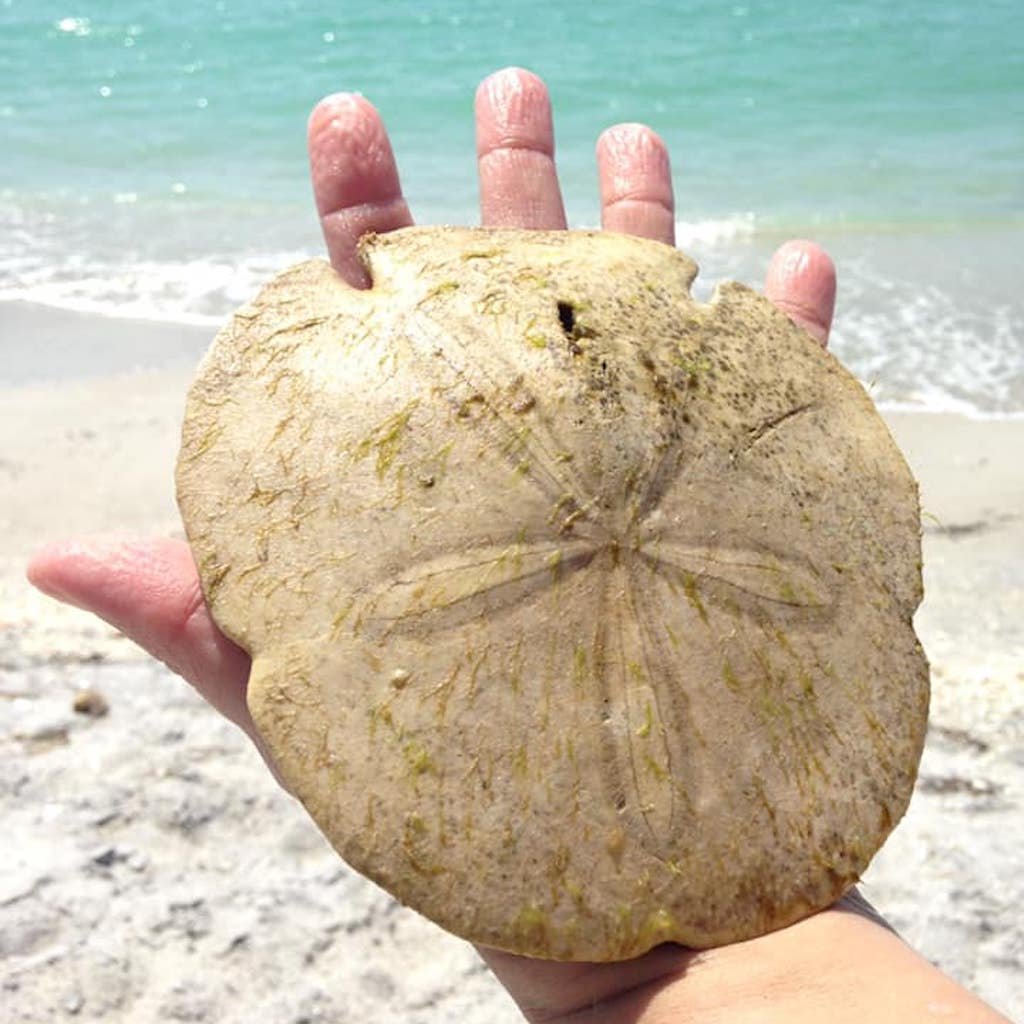
The flat, five-petaled disc everyone calls a sand dollar is the bleached skeleton, or “test,” of a keyhole urchin — Mellita quinquiesperforata, named for the slots punched clean through it. Alive, it's a fuzzy purplish-brown disc covered in tiny moving spines, and it lives just under the surface of sandy flats. When it dies and the tide tumbles it for a while, those spines wear off and it bleaches to the chalk-white star you want. Knowing the difference is the whole game, because the white ones are yours to keep and the living ones are not.
Where to find them: the low-tide flats
Sand dollars don't ride the high-energy surf the way whelks do — they sit on calm, shallow, sandy bottoms, so you find them where a wide flat drains out at low tide. The classic spot is Sand Dollar Island at Tigertail on Marco, where the lagoon empties into acres of walkable sand. The flats off Keewaydin and through the Ten Thousand Islands are loaded too, and because you can only reach them by boat, the bleached tests survive long enough to come home whole. Time it to the lowest low of the day, walk slowly, and scan the wet sand at the waterline — they hide flat and dusted over.
| Live (leave it) | Empty test (keep it) | |
|---|---|---|
| Color | Purplish-brown, gray | Bleached white or pale |
| Surface | Fuzzy, tiny moving spines | Smooth, spineless |
| Underside | Spines may wiggle; yellow stain on your hand | Clean, no color rub-off |
| Legal to keep? | No — protected | Yes |
Keep only the bleached ones — here's how to tell
This matters more for sand dollars than almost any other find, because a living keyhole urchin looks deceptively still. Pick one up and check three things: color (white good, brown alive), the surface (smooth good, fuzzy alive), and a quick rub — if it leaves a yellowish stain on your palm, it's alive and goes straight back to the water. Both Collier and Lee counties protect live sand dollars, full stop. If you want the deeper ID walk-through, our sand dollar identification guide and the post on whether sand dollars are alive cover every tell.
Finding them on a tour
Honestly, the easiest perfect sand dollar you'll ever find comes off a flat the public can't reach on foot. On our shelling tours we read the tide and run to whichever island flat is draining best that day, so you're stepping onto fresh sand instead of leftovers. The captain will show you the live-vs-bleached test in ten seconds flat, and you'll be scanning the waterline like a local by your second one. It beats hunting a picked-over public beach by a mile.
From the Helm: Sand dollars, Dollar Bay flats, and the last of a falling tide
The moment we watch for is almost always a kid at the bow rail going quiet, then pointing at something pale and round sitting just under a few inches of water. That’s usually the first sand dollar of the trip, and it rarely happens where people expect — not right at the beach, but out over the shallow flats we idle across on the way in. Our captains slow the boat well before the obvious sandbar, because the flats themselves hold as many keyhole urchins as the shoreline does, and gunning the throttle across them buries whatever’s sitting just under the surface before anyone gets a look.
One of the stretches we favor for this is the flat water tucked behind Dollar Bay, off the more obvious sand dollar grounds near Tigertail, because the current runs gentler there and disturbed tests don’t get scattered as far before they settle again. We nose in slow with the motor barely above idle, letting the hull’s wake die down before anyone leans over the side to look. A boat moving too fast through skinny water stirs up exactly the sediment that hides what you’re looking for.
We work these flats on the tail end of a falling tide rather than dead low, because that window still has enough water over the sand for the pattern of a live urchin’s five-petal design to show clearly from the rail before anyone gets in the water. Dead low leaves everything high and dry and a lot easier to miss underfoot. Our captains call out the shift in bottom color that usually means a cluster nearby, then cut the motor entirely so the group can look without engine noise underneath it.
The hand-off we walk every guest through is simple: pick it up, check the color and check for movement, and if there’s any doubt, ease it back down exactly where it sat. A living keyhole urchin is usually a darker, softer brown and still has that faint prickle of spines; a keeper test has already bleached out white or cream and is bone-dry to the touch, light enough that you’ll notice the difference in weight before you even flip it over. We’d rather a guest put ten questionable ones back than take home one that shouldn’t have left the water.
It’s a slower, quieter kind of hunting than walking a wrack line for whelks, and it rewards a captain who’s willing to idle twice as long over water that looks like nothing is there. If flats like these are what you’re after, a shelling tour built around the tide gets you there at the right window; our shelling beaches guide covers the rest of the low-tide ground worth walking on your own.