
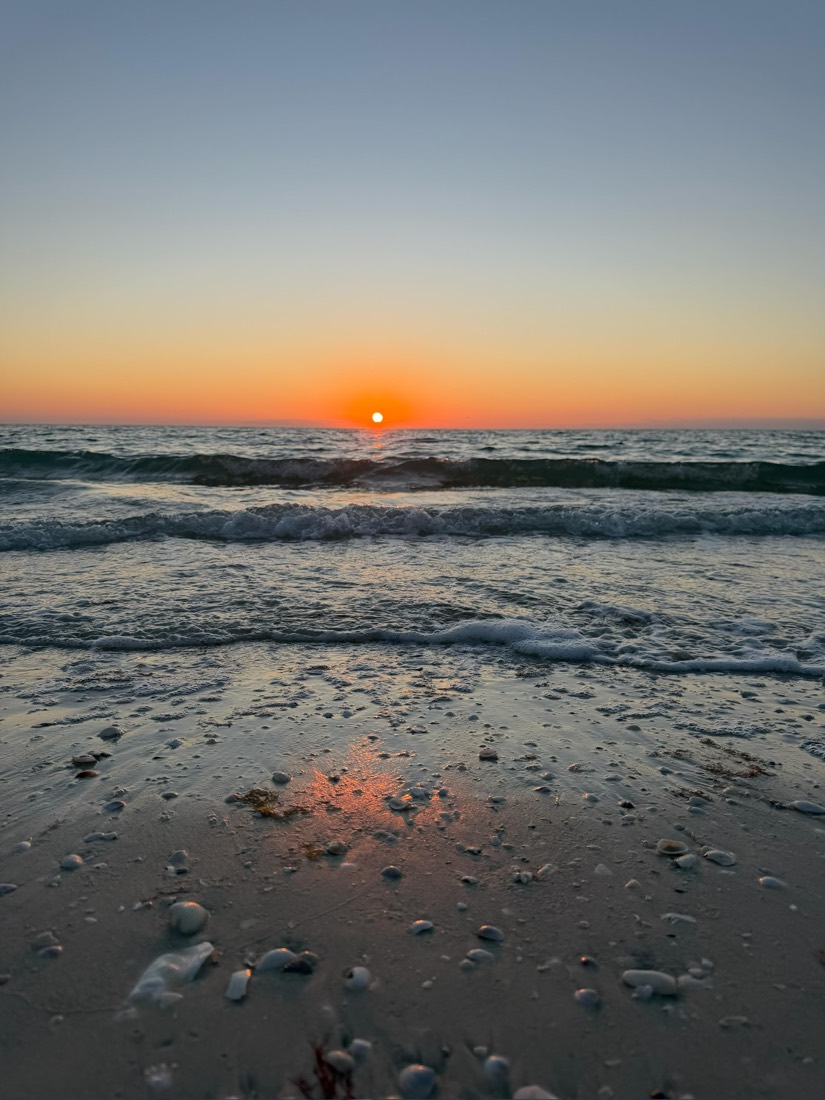
🐚 At a glance
- Water temp
- Upper 60s warming into the low 70s°F by month's end
- Wind
- The windiest month of the year, with cold fronts still moving through early on
- Tides
- Morning negative lows in early March, drifting toward midday by late March
- Crowds
- Spring break packs Tigertail; boat-only Keewaydin, Kice & Cape Romano stay open
- Best find
- Fresh whelks, olives & cockles wind-stacked on exposed banks after a front
- Rule
- Empty shells only in Collier & Lee County
Is March Good for Shelling on Marco Island?
Yes, with a real caveat worth knowing before you book. March is the windiest month of the year on this stretch of the Gulf, and it's also peak spring break — two facts that decide whether your trip feels crowded or wide open. Drive-up beaches like Tigertail fill in fast once school buses empty out for the week, towels lined up almost edge to edge by mid-morning. The barrier islands you can only reach by boat don't see that traffic at all. Our captains read the wind each morning and run to whichever bank it's been stacking shell against, which in March usually means tucking onto the lee side of an island most visitors never set foot on. The Gulf doesn't care that it's spring break — the tide still pulls fresh material in and drops it wherever the current and wind agree, and in March that's often a shoreline with zero footprints on it yet. If your dates are flexible, the middle of the week tends to thin the drive-up crowd even further, but a boat-only bank stays quiet on a Saturday too — it's simply harder for the towel crowd to get to.
March Wind, Tides & Weather
March earns its reputation. Cold fronts are still rolling through from the north through the first couple of weeks, and each one drags a stiff wind shift behind it that can run 15 to 20 knots on a rough day. Ahead of a front the wind usually swings southwest and softens the Gulf; behind it, the wind clocks around to the northwest and stiffens right back up. That wind is exactly what piles shell up on exposed banks — a front that makes the open Gulf choppy and uncomfortable is often the same front that refills a shoreline overnight. Our captains watch that pattern closely and pick whichever bank the current wind direction is loading, so the plan for your trip can shift a day or two out depending on what the forecast is doing. Water temperatures are climbing out of the 60s into the low 70s by the end of the month, still cool enough to keep the water clear on calmer days between fronts. Tide-wise, early March still runs on the winter script: morning negative low tides, often before 9 a.m., that expose the widest stretch of sand bar. By the back half of the month the low tide window starts drifting later, closer to midday, as the whole region eases toward its spring pattern. Booking the early tide while it's still on the calendar is worth setting an alarm for, since that extra sand bar exposure is where the best material tends to sit.
Spring Break Crowds vs. the Boat-Only Banks
Tigertail Beach and the other drive-up spots are doing exactly what you'd expect in March — filling a parking lot by 9 a.m. and staying busy through the afternoon. That's not a knock on Tigertail; its lagoon is genuinely good shelling most of the year. It's just not where you want to be if you're trying to find shell nobody's already picked over. Keewaydin sits right across the pass from Tigertail and gets a fraction of the foot traffic because you can only reach it by water. Kice Island and the stretch toward Cape Romano see even less — a handful of other shelling boats on a busy day, nothing like a packed beach. That's the whole case for a shelling tour in March specifically: you skip the walk past a hundred towels and step onto a strand that's only seen wind and tide since the last boat left.
What You'll Find on the Banks in March
March's wind-stacked banks tend to run heavy on the dependable Gulf regulars — lightning whelks, fighting conchs, olives, cockles and the occasional horse conch, Florida's state shell, worked up onto the drier sand where the wind piled everything together. Our full shell guide breaks down how to tell them apart if you're new to it. You'll also find plenty of keyhole urchins, the local sand dollar look-alike, scattered across the flats at low tide — take a photo and leave them where they lie, since Collier and Lee County only allow empty, uninhabited shells to leave the beach. A junonia is always a long shot in March; they live far offshore in deep water and mostly wash up after a real storm churns the bottom, so treat any sighting as a bonus rather than the plan. Sea beans and other drift material show up on the outer, Gulf-facing sides of the same islands, tossed there by the same wind that's stacking shell, so it's worth walking both the bay side and the Gulf side of whichever bank you land on. What March does reliably deliver is volume — the same wind that keeps casual beachgoers on the calmer drive-up side is busy refilling the exposed banks with fresh material daily, which is exactly why our captains treat a windy forecast as good news instead of a reason to cancel.
Best Beaches & Islands for March Shelling
Not every island shells the same way in March. Some genuinely light up when the wind is out of the right quadrant, others stay quiet until summer settles in. A private charter is the easiest way to hedge your bet in a windy month, since the captain can change the plan the morning of your trip instead of locking in a single beach from a hotel room the night before. Here's how our captains size up the main spots this month.
| Spot | Access | March crowd level | Why it works in March |
|---|---|---|---|
| Tigertail Beach | Drive-up | Busy, spring break peak | Reliable lagoon shelling, but shared with a packed beach |
| Keewaydin Island | Boat-only | Light | Wide, wind-exposed banks right across the pass from Tigertail |
| Kice Island | Boat-only | Very light | Farther run, less pressure, strong after a front comes through |
| Cape Romano | Boat-only | Very light | Remote point near the storm-toppled dome ruins, big wind-stack potential |
If you're weighing which one to book, our answer is usually the same: let the wind pick it. A captain checking the forecast the morning of your trip knows which of these banks is holding shell that day, which is the real advantage of going by boat instead of committing to one beach from a parking lot the night before. Pair a March shelling run with a broader look at what March offers on the water, or check the Seasonal Guide to see how other months compare before you lock in dates.