
🏝️ At a glance
- Access
- Drive-up, south-end Marco near Cape Marco
- Vibe
- Quieter than the north end; calm Gulf-front shore
- Best finds
- Lettered olives, fighting conchs, coquina, kitten's paws
- Best time
- Low tide, early morning, after a winter cold front
- Rule
- Empty shells only — live collection banned in Collier County
What you'll find at South Marco Beach
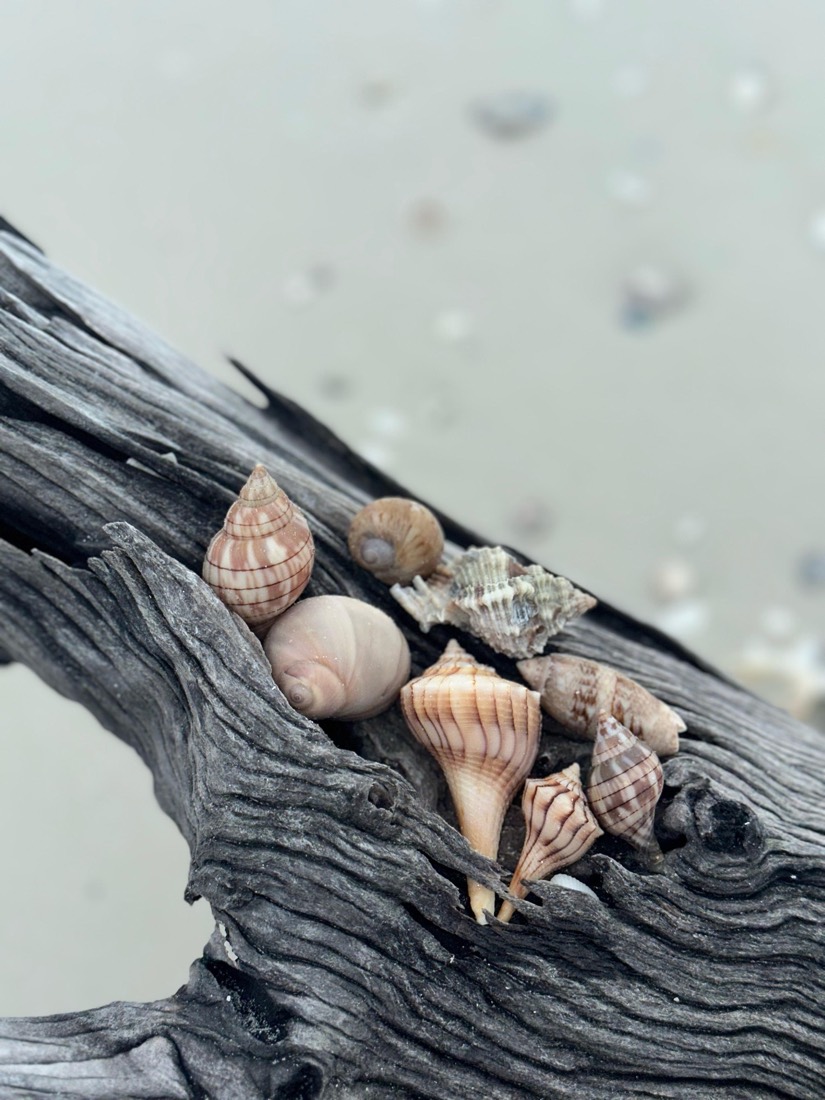
The south end of Marco runs as a soft, white-sand crescent with a shell line that gathers near the high-water mark instead of the wide flat at Tigertail. On a good morning you'll turn up lettered olives polished smooth, chunky Florida fighting conchs in burnt orange, fans of coquina, jingle shells, and kitten's paws tucked in the wrack. After a strong blow you might flip over a lightning whelk — the big left-handed Gulf snail that makes everyone on the beach come look.
It's a drive-up beach, so it can't match the volume of the boat-only islands, but it makes up for it in elbow room. You'll often have a clean stretch of shell line to yourself, which is half the fun.
Best tide and season for South Marco
Shell beaches all run on the same clock: go at low tide, ideally the first low after sunrise before the crowds and the heat. Winter is prime — November through March, the cold fronts churn the Gulf and dump fresh shells right up the slope. Walk the beach the morning after a front and you'll see why we run hard in the off-season.
Summer is quieter for shells but gorgeous for everything else. Either way, the south end stays mellow.
| Factor | What to know |
|---|---|
| Access | Drive-up, south-end Marco near Cape Marco |
| Best tide | Low tide, especially the morning low |
| Best season | Winter, after cold fronts (Nov–Mar) |
| Top finds | Olives, fighting conchs, coquina, whelks |
| Collecting | Empty shells only (Collier County) |
Getting there — and going one better by boat
South Marco is easy: park at the south-end access and walk down to the Gulf. Bring a mesh bag, water, and reef-safe sunscreen. If you'd rather compare your home beach to the tour-favorite north-end flat, read our Tigertail vs. South Marco shelling comparison.
Here's the honest pitch: the best shelling near Marco isn't on a drive-up beach at all. It's on the boat-only barrier islands like Kice Island and the Cape Romano shoals just south of here, where the Gulf piles fresh shells on shores almost nobody walks. That's exactly where our shelling tours run — we read the tide and drop you on the island the water just refilled.
From the Helm: South Marco Beach: dropping the ladder off Caxambas Pass
Before we ever nose a boat toward the boat-only islands south of Marco, our captains check how Caxambas Pass is running that morning, because South Marco Beach sits right at its mouth and the current there dictates more than most guests expect. A strong outgoing tide through the pass can kick up a short, choppy stretch of water exactly where you’d expect calm, so we time the run to either beat that peak flow or wait it out rather than push a boat through it just to hold a schedule.
For guests who’d rather stay on land, South Marco itself is an easy drive-up stretch, but our captains use it constantly as the last calm water before the real current starts, which makes it a natural staging point — we do a final gear check and hand out mesh bags right here, before anyone heads on toward the wilder islands beyond it.
South Marco actually has two faces worth knowing from the water: a Gulf-facing stretch that takes the open swell head-on, and a calmer bay-side edge tucked behind the point that barely moves even when the pass outside is churning. When conditions on the Gulf side look questionable, we’ll sometimes work that inside edge first and let guests get their footing before making the Caxambas crossing, rather than putting everyone straight into moving water first thing.
When the pass is running too rough for a comfortable crossing, we’ll often hold the group at South Marco a little longer, letting people work that shell line while we wait for the tide to ease, rather than rushing a landing at Coon Key that nobody aboard would actually enjoy. That short wait at South Marco is what turns a jarring bounce through the Caxambas mouth into an easy glide, and whoever’s braced at the bow always ends up glad we took it.
From the helm, the tell that the pass has settled is subtle: the standing waves at the mouth flatten out, and the water color evens from a churned tea-brown back toward clear green. That’s usually our signal to push on toward the quieter islands rather than linger at South Marco any longer than the group needs. A captain who pushes through too early only ends up doubling back once the ride gets uncomfortable, so patience at that mouth almost always pays for itself in a smoother rest of the trip.
If South Marco has you curious about what sits just beyond it, our Tigertail and Sand Dollar Island guide covers the next stop up the chain, and our shelling tours make that Caxambas Pass crossing for you, timed to whatever the tide is doing that day.