
📖 At a glance
- Local species
- Keyhole urchin, Mellita quinquiesperforata
- Alive
- Velvety spines, brown/green color, leaves yellow dye
- Empty
- White, smooth, bare, odorless — the only legal one to keep
- Tell-tale
- Five long “keyhole” slots through the disc
- Rule
- Live collection banned in Collier & Lee — empty only
Meet the local sand dollar
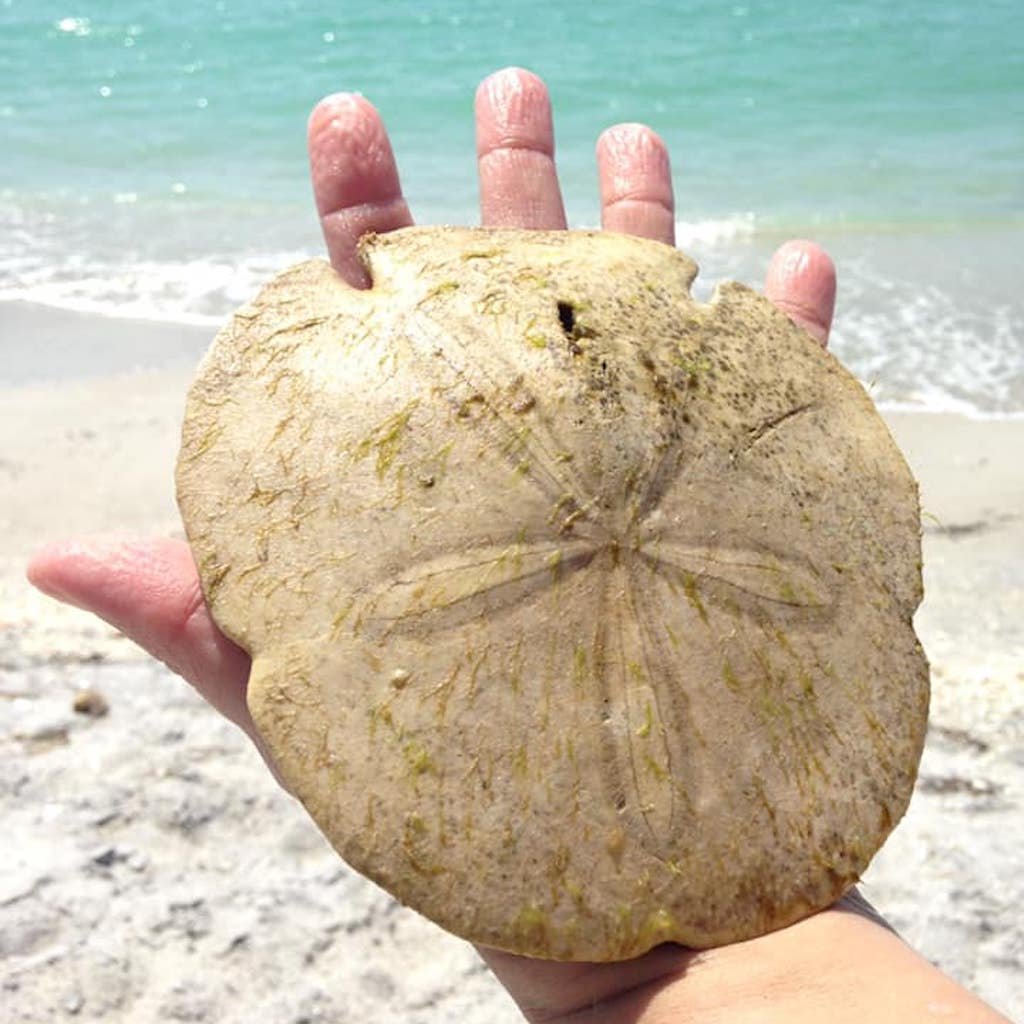
The flat, five-pointed disc everyone calls a “sand dollar” on our beaches is really a keyhole urchin, Mellita quinquiesperforata — a close cousin of sea urchins that lies just under the sand on the flats. The dead giveaway is right in the name: it has five long, narrow slots, or “keyholes,” cut clean through the disc, plus the classic five-petal flower pattern on top. Those slots are how it moves food and water when it’s alive. It’s a different beast from the thicker sea biscuit you’ll sometimes find tumbled up beside it.
Live vs. empty: the keep-or-leave test
This is the whole ballgame. A living sand dollar is covered in thousands of tiny spines that look like a fine, fuzzy velvet and actually move — rest one in your palm and you may feel a faint shimmer or see the spines wave. Its color runs brownish-green, purple-gray or tan, never bright white. And the clincher: rub it gently and a live one releases echinochrome, a harmless yellow-brown dye that stains your skin like weak iodine. Any of those signs means it’s alive. An empty sand dollar — the only one you’re allowed to take — is bleached chalk-white by the sun, smooth and bare with no spines, gives off no dye, and has no fishy smell. When in doubt, set it back down in shallow water spine-side down and let it be. We break the same call down further in live shell vs. empty.
| Clue | Alive — leave it | Empty — legal to keep |
|---|---|---|
| Surface | Velvety, moving spines | Smooth, bare, no spines |
| Color | Brown, green, gray, purple | Bleached white |
| Rub test | Leaves yellow-brown dye | No dye |
| Smell | Faint sea-life odor | Odorless |
Why this is the law here
In Collier and Lee County it is illegal to take a live sand dollar — the same rule that protects live shells and starfish. It’s not red tape; a sand dollar is a slow-growing animal, and a beach full of them collecting alive doesn’t stay full for long. So the move is simple: keep only the white, bleached, lifeless ones, and gently return anything that shows a sign of life. We cover the bigger picture in Collier County shelling rules and is it legal to take shells in Florida. Do it right and you carry home a real keepsake with a clear conscience.
The flats off our boat-only islands are prime keyhole-urchin country, and at low tide they’re thick with bleached discs the crowds never reach. On a shelling tour we’ll point out the live ones to leave and help you find the perfect white one to keep.
From the Helm: The Lagoon-Mouth Test We Run at Tigertail Before Anyone Picks One Up
The lagoon mouth at Tigertail is usually where it happens — a kid ankle-deep in the skinny water, already reaching down before anyone’s said a word. We’ve learned to get there first, gently, with a hand on the wrist and a simple ask: let’s check it before we grab it. It’s not about ruining the moment, it’s about making sure the moment doesn’t end with a live sand dollar back in someone’s beach bag by accident.
The test itself takes about five seconds once you know it. We ask guests to look at the color first — a live one out here is usually brownish-green or gray, sitting in a skim of water rather than bone-dry on high sand. Then we ask them to look for movement: those tiny velvety spines shift if you watch closely, almost like the surface is breathing. If either shows up, it goes right back where it sat, no debate.
Where people go wrong most often is the stain test itself. Guests have heard that a live one leaves a yellow-brown mark on your palm, so they’ll pick one up specifically to check for it — which is backwards, since handling a live animal at all is the thing we’re trying to avoid out here in Collier waters. We tell folks to look, not touch, first, and only handle one once it’s already clearly bleached white, smooth, and scentless.
In the lagoon shallows they don’t scatter evenly, they cluster in patches you can miss entirely if you’re only scanning the surface. Our mates will often find one first by feel underfoot before anyone spots it by eye — a coin-shaped edge, or a faint give in the sand as we wade the shallows. If we feel one, we call the group over rather than letting everyone spread out and step across the whole patch by accident.
When a shell is genuinely borderline — half-bleached, no obvious spines, but sitting in wet sand rather than dry — our mates default to leaving it. We’d rather guests set back three that might have already been empty than take home one that wasn’t, and nobody’s ever pushed back once we explain why.
By the end of a stop at Tigertail, most guests are doing the color-and-motion check on their own before we ever get there, which is exactly the habit we’re after. It travels, too — the same look-first instinct works whether you’re standing on this lagoon or any flat we run to along this coast. Our Collier County shelling rules page covers the legal side in full. Our shelling tours page spells out the trip specifics if you’d like to try the test yourself.