
🐚 At a glance
- Vase shell
- Vasum muricatum — heavy, spiky, vase-shaped; SE FL/Caribbean
- Spindles
- Slender elongated spires; often confused with tulips
- Honest odds
- Vase is occasional here, not common on the SW Gulf coast
- Where & when
- Wilder outer islands after fronts; the wrack line oddities
- Rule
- Empty shells only in Collier & Lee
The Florida (Caribbean) vase shell
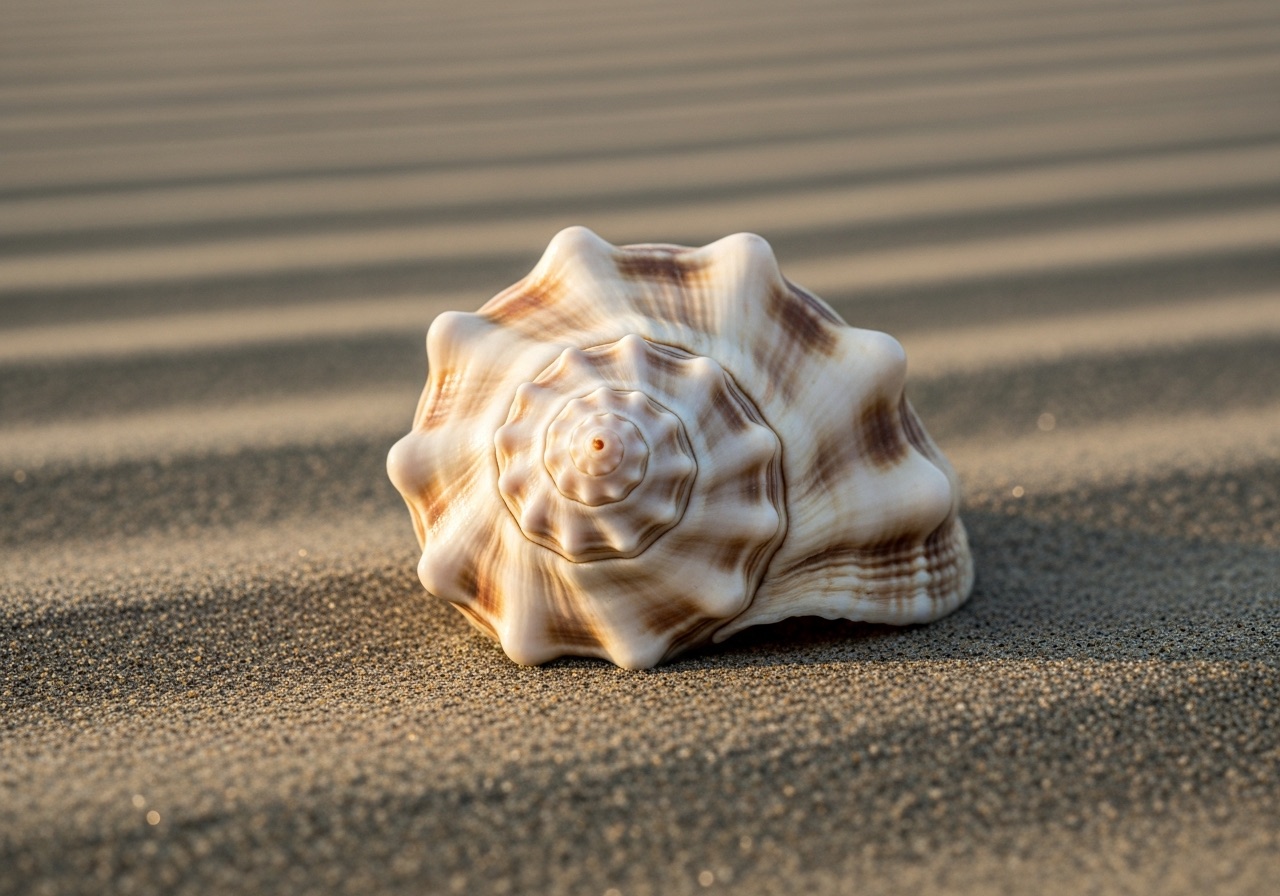
A vase shell looks exactly like its name: a stout, top-heavy shell shaped like an urn or a vase, gray-white to brownish, with a row of blunt spines or knobs at the shoulder and a thick, ribbed inner lip. Flip it over and you'll often see a couple of strong folds (called columellar folds) on the central pillar. It's a chunky, sculptural shell that feels heavy for its size. Here's the honest part: Vasum muricatum is centered in southeast Florida, the Keys and the Caribbean, so finding one on the SW Gulf coast is a genuine treat — an occasional washed-in stray, not something you'll bag every trip. If you turn one up near Cape Romano, you found something special.
Spindles and the shells they're confused with
“Spindle” describes a long, slender, sharply tapered spired shell — think of a fat sewing spindle — and the look turns up across a few groups. Most often, a shell people call a spindle here is actually a true tulip or banded tulip, which share that elegant elongated shape with smooth or banded coloring. True ornamental spindle species (the Fusinus group) are slender and very long-canaled, and they're an uncommon, mostly offshore find on this coast. The honest move is to compare your shell against the tulips first, since those are far more likely.
| Shell | Shape | Honest SW FL odds |
|---|---|---|
| Vase shell (Vasum) | Heavy, spiky urn shape | Occasional stray (SE FL/Caribbean) |
| Spindle (Fusinus) | Slender, very long canal | Uncommon, mostly offshore |
| True / banded tulip | Elongated spindle-like spire | Common — check here first |
Where we find them
Because these are the less-common spired univalves, your best odds are the wildest, least-walked beaches right after a front has pushed fresh material in — the boat-only outer islands and around Cape Romano and the Ten Thousand Islands rather than the crowded mainland. On our shelling tours we love a good mystery shell, and the wild beaches we reach are where the oddballs land. For the real trophies, see our rarest shells of SW Florida guide. As always, Collier County is empty shells only.
From the Helm: Sorting vase & spindle finds on Goodland’s wrack line, honestly
Someone hands us an odd spiky shell at the rail a few times a season, always with the same hopeful question — is this rare? — and honesty is the only fair answer we’ve got for them. Most of what turns up matching that description on our side of the Gulf is a spindle shell, a cousin of the tulips, not the true Caribbean vase shell people are quietly hoping for, and we say so plainly before anyone gets too attached to the idea.
The quiet coves along Goodland are where these odd, spiky finds tend to concentrate, but only after several days of steady east wind have had time to push loose debris up into one long, ragged wrack line along the shore. A single day of wind rarely does the job; we’re watching the forecast for a run of days, not one passing front, before we bother making this a dedicated stop on the day’s loop.
We’ll walk that line slowly with guests, working through the ordinary shell hash by hand, and we’re upfront the whole time that most of what turns up here is common material — broken whelks, worn clams, the usual mix of everyday debris — with a genuinely unusual spiky or spindle-shaped piece being the exception rather than the rule on any single pass. We’d rather guests hear that going in than feel let down coming off the ladder later.
When something spiky does turn up, our quick field test is weight and spine sharpness in the open palm — a true vase shell feels dense and its shoulder spines stay sharp and clearly defined, while the shells most often mistaken for it are lighter, thinner-walled, with spines already rounded soft by years of tumbling. We do that check right there at the rail before committing to calling it either way, out loud, in front of everyone watching.
We keep a small hand lens in the console for this exact moment, since the surest tell on a worn spindle shell is often a faint spiral line only visible up close under real light. It turns a five-second glance into a genuine little investigation, which guests seem to enjoy more than any quick yes-or-no verdict ever would, and whatever we decide, it goes in the bag as one more entry for the seashell guide once we’re back at the dock.
This stop works best folded into a longer loop rather than run on its own, since the odds favor patience over any single quick pass — the kind of unhurried pacing a fuller shelling tour allows for, where a slow stretch along one shoreline doesn’t cost the whole day if the wrack line turns out thin that particular morning.