
🐬 At a glance
- What it is
- A true dry-land tortoise (not a sea turtle or mangrove animal)
- Tell-tale
- Domed shell, stumpy elephant-like hind feet, shovel front legs
- Where
- High, dry, sandy island uplands & shell mounds like Keewaydin
- Why it matters
- Keystone species — its burrows shelter many other animals; give it room
How to identify a gopher tortoise
First, set your expectations right: this is a land animal. If it's swimming, it's a sea turtle, not a gopher tortoise. On dry ground a gopher tortoise is unmistakable — a high-domed, brown-to-gray shell about the size of a dinner plate to a hubcap, with stumpy, elephant-like hind feet and flattened, shovel-shaped front legs built for one job: digging. They move slowly and deliberately, grazing on low grasses and prickly pear, and they're easily startled, so if you see one it's already keeping an eye on you. It shares the islands' cast with the swimming reptiles you'll read about in our wildlife-by-season guide, but it's the one that stays firmly on land.
Where it lives: high and dry, not the mangroves
This is the part people get wrong. Gopher tortoises don't live in the wet mangrove islets — they need high, dry, sandy ground they can dig into. Around here that means the elevated uplands of certain barrier islands and the old Calusa shell mounds, where centuries of piled shell built up ground that sits well above the tide. The upland ridges of Keewaydin Island are exactly that kind of habitat. Out in the Ten Thousand Islands, the rare patches of true high ground — many of them ancient shell mounds — are where you'd look. If your feet are in mangrove muck, you're in the wrong spot for a tortoise.
The keystone digger
Here's why this slow, quiet reptile matters more than almost anything else on the island: it's a keystone species. A gopher tortoise digs a long, deep burrow — sometimes thirty or forty feet of tunnel — and that burrow becomes a refuge for an astonishing roster of other animals. Burrowing owls, snakes, frogs, mice, insects and many more shelter in tortoise burrows from heat, cold, drought and fire. Pull the tortoise out of the picture and a whole little community loses its home. So when we point one out on a beach walk during our wildlife tours, we're really pointing at the landlord of the upland.
| Gopher tortoise | Sea turtle (e.g. loggerhead) | |
|---|---|---|
| Where | Dry land & burrows | In the water; females nest on the beach |
| Feet | Stumpy legs, shovel front feet | Flippers |
| Diet | Grasses, prickly pear | Crabs, jellies, seagrass |
Giving it room
Gopher tortoises are protected in Florida, and so are their burrows — it's against the law to disturb either. The right thing to do is the easy thing: enjoy one from a respectful distance, never block its path to its burrow, and never poke around a burrow entrance. They're shy and slow, and a little space lets a tortoise go calmly about its grazing. It's the same hands-off respect we bring to the sea turtles nesting on these same islands and to every creature we visit out here.
From the Helm: Spotting gopher tortoise burrows on Panther Key’s high ridge at high tide
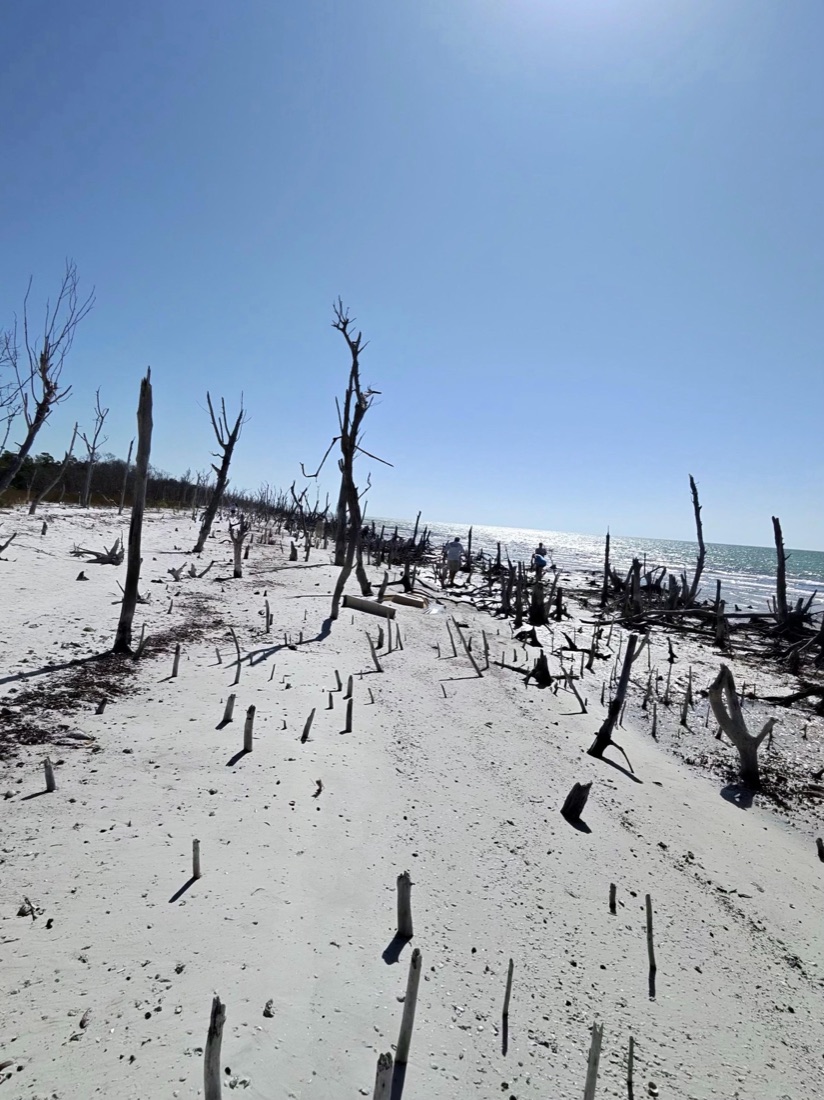
When we beach the boat on Panther Key at the top of the tide, the first stop on the walk isn’t the water at all — it’s the low sandy ridge back from the shell mound, the one patch of high, dry ground on an island otherwise ringed in mangrove. That’s where we slow the group down and start pointing out the signs of a gopher tortoise burrow before anyone spots the animal itself. Timing the stop to a high tide matters here, since it’s when the lower mangrove flats sit underwater and the dry ridge is the only ground worth walking.
The tell is the apron: a fan of loose, pale sand pushed out from a dark burrow mouth, sometimes wide enough to lie down in. We’ll crouch and let guests feel how loose and dry that sand is compared to the packed beach sand a few steps away — a texture difference you notice with your hand before you ever see a tortoise. Fresh drag marks and claw prints across the apron tell us whether the burrow is currently active, and we’ll point those out rather than disturb the entrance trying to get a look inside.
Midday heat usually means the tortoise itself is tucked deep in the burrow rather than out grazing, so we bias these walks toward the cooler stretch of a morning trip, when there’s a better chance of one sunning near the entrance or working through the low scrub. It’s never guaranteed — plenty of stops turn up a burrow and no visible tortoise at all — but the read on timing improves the odds more than guests usually expect from what looks like a quiet patch of sand.
Once guests understand what an active burrow looks like, we’ll often point out other tracks crossing the same apron — smaller prints belonging to whatever else has been using the tunnel as shelter that week. We keep this part honest: we can tell you what track shapes we’re seeing that morning, but we won’t claim to know exactly what animal made each one without a clearer print. It keeps the walk grounded in what we can actually show you rather than turning into a guessing game we can’t back up.
We ask everyone to stay off the apron itself and keep a few feet back from any burrow mouth — it’s a protected species, and a collapsed entrance is a home lost for more than just the tortoise. If a quiet island walk like this sounds like your speed, it’s built into several of our beach and island tours, and you can see how the rest of the upland wildlife fits together on our wildlife guide.