
☀️ At a Glance: Shelling in February
- Gulf water temp
- Low-to-mid 60s°F, sometimes dipping into the 50s after a sharp front
- Tide script
- Winter pattern: the best low tides fall in the morning, often negative
- Strategy
- Let a cold front blow through, then shell the first calm morning after
- Top zone
- Kice Island’s outer bar and other boat-only barrier islands
- Crowd level
- Quiet on the water — snowbird season fills the mainland, not the outer islands
- Rule
- Empty shells only in Collier & Lee County
Is February a Good Month for Shelling on Marco Island?
Yes, February is genuinely one of the better months to go shelling around Marco Island and Naples — but the honest version of that answer comes with an asterisk. This isn’t summer shelling, where warm water and calm afternoons make almost any morning worth a walk. February shelling runs on the weather, not the calendar. The month brings Southwest Florida’s driest, clearest stretch of the year, with the haze of summer long gone and the water often glassy calm between fronts. That clarity means you can actually see what you’re walking over, which matters more than people expect. The catch is that a strong high-pressure ridge can sit over the Gulf for days at a time, and when the water goes flat and undisturbed for too long, the sandbars stop turning over new material and the shelling gets thin. The fix is the same one our captains use all winter: watch the front calendar, not the vacation calendar. Our shelling tours run every morning of the month, but the mornings right after a front blows through are the ones worth building your whole trip around. If you want the fuller month-by-month picture beyond just shelling, the Seasonal Guide breaks down what February looks like for every kind of trip we run, or see the dedicated February boat tours guide for everything else on the water that month.
Why Cold Fronts Are Your Friend in February
A February cold front in Southwest Florida is a pretty predictable animal. Wind swings out of the north or northwest and picks up for a day, sometimes two, pushing chop into the passes and stirring up the shallow flats along the barrier islands. That’s the ugly part, and it’s not a great day to be out shelling — the water’s murky and the wind makes walking a beach miserable. But that churn is doing real work underwater. It’s digging shells out of the sand they’ve been buried in for months and redistributing them onto the outer bars. Then the front passes, the wind swings around to the east or calms out entirely, and you get one of those flat, blue-sky mornings this stretch of the Gulf is famous for in winter. That first calm morning after a front — especially if it lines up with a negative low tide — is when our captains run straight for whichever island just got reloaded. It’s the single best predictor of a good shelling day we have, better than the date on the calendar by a wide margin. This is also when the bigger, more dramatic finds show up: full lightning whelks, the big left-handed Gulf sea snails, tend to wash out onto the bars after exactly this kind of blow. We can’t promise any specific shell — nobody honest can — but the front-then-calm pattern is the closest thing to a sure bet the Gulf offers.
Gulf Water Temps in February & What They Mean
February brings the coldest Gulf water of the year around here, typically sitting in the low-to-mid 60s°F, sometimes dipping into the upper 50s after a sharp front. That’s cold enough that most guests wear a light jacket or windbreaker on the ride out, even though the Florida sun usually makes the actual island stop feel warmer than the thermometer suggests. It’s not wetsuit weather for most people, but you’ll want closed-toe water shoes and a layer you can peel off once you’re walking the flats. The cold water has one nice side effect: it pushes manatees into the warmer, calmer passes near Rookery Bay to wait out the chill, so it’s not unusual to spot one gliding along quietly while you’re shelling. They show up as dispersed individuals or small groups here, not the packed winter herds you’d see farther north, and a sighting is always a bonus, never something we can promise. Bottlenose dolphins, on the other hand, are around the Ten Thousand Islands year-round regardless of water temperature.
Where Our Captains Run After a February Front
Where we run depends entirely on which island the last front hit hardest, but a few spots earn repeat visits all winter. Kice Island’s outer bar is the one our captains talk about most in February — it’s boat-only, faces open Gulf, and takes the full brunt of every front, which is exactly why it gets reloaded so reliably. Keewaydin Island, closer to Naples, is another regular winter stop, especially on mornings when the wind has swung enough to make the Kice run less comfortable. Both are barrier islands with no roads, no bridges and no way to reach them except by boat, which keeps foot traffic low even during the busiest weeks of snowbird season. That matters more in February than any other month, because the mainland fills with winter visitors while the beaches most people can drive to get picked over early. Ours don’t work that way. Our captains check the tide tables and the wind forecast the night before and adjust the run accordingly, so you’re never walking a beach a hundred people already worked over the day before. That’s the whole advantage of a boat-based shelling tour in a month like this one.
What You’ll Find Shelling in February
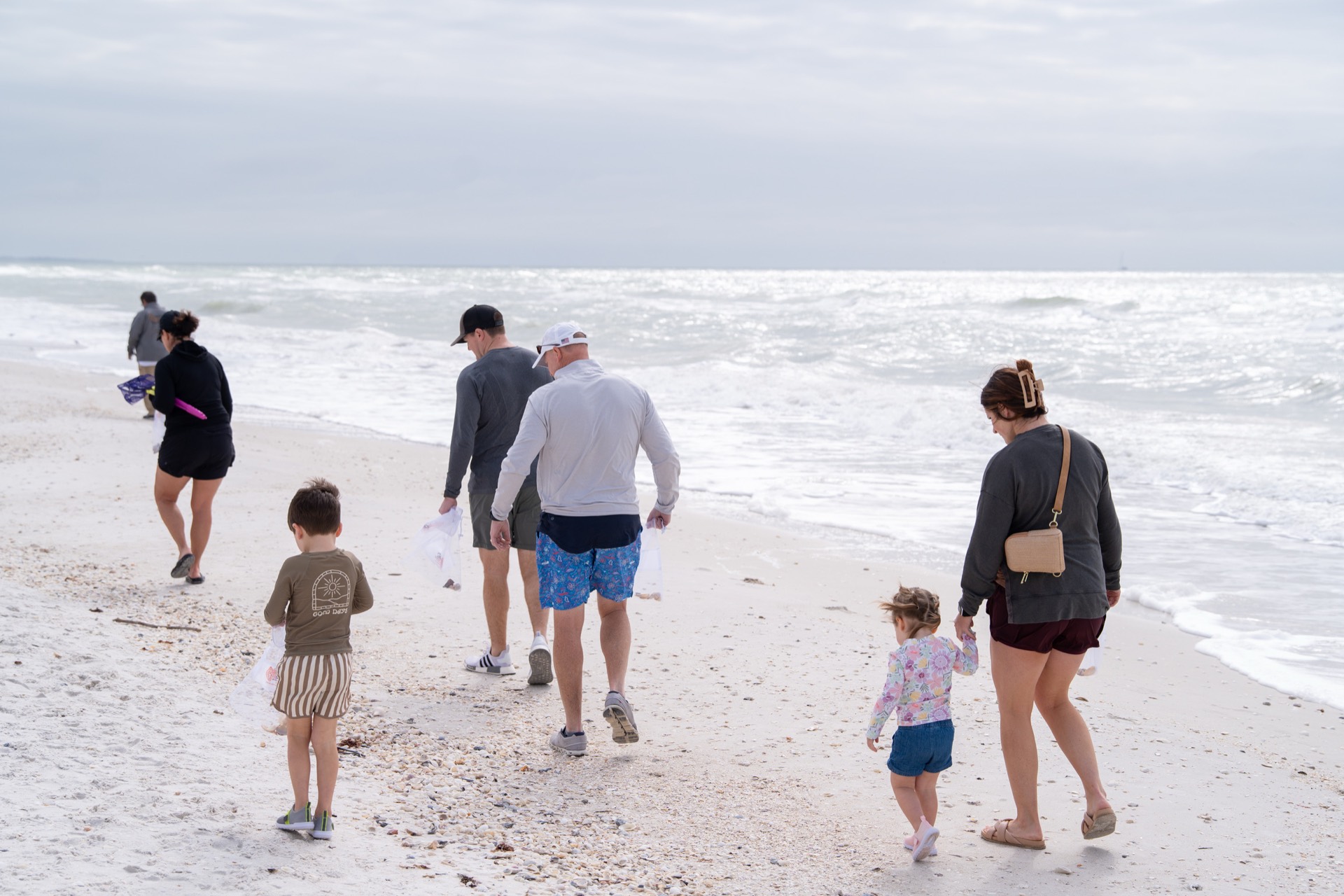
Winter in Southwest Florida runs on morning tides, which is the opposite of what you’ll find here come summer. The lowest water of the day in February typically falls before noon, often at or near a negative low, and that’s the window our captains build shelling stops around. A negative low means several extra feet of sandbar exposed that stays underwater the rest of the day — and that extra real estate is exactly where the good stuff tends to sit after a front. What you actually find is never guaranteed, and anyone who tells you otherwise is selling something. But a good February morning after a blow regularly turns up lightning whelks, fighting conchs, olive shells and plenty of keyhole urchins — the local sand dollar — along with the occasional horse conch, Florida’s official state shell. The true holy grail, a junonia, lives in 100 to 425 feet of water and only washes ashore after a serious storm churns the deep Gulf; if you find one, you’ll know it, and you’ll want a photo before anyone else on the boat sees it. Whatever you pick up, remember the rule that protects all of this for next winter: Collier and Lee County require empty shells only — no live shells, sand dollars or starfish leave the beach.
| Shell | Likelihood in February | Tell-Tale Feature |
|---|---|---|
| Lightning whelk | Good, especially after a front | Sinistral — spire up, opening on the left |
| Fighting conch | Common | Ridged shoulders, flared outer lip |
| Keyhole urchin (sand dollar) | Common, empty only | Five-petal pattern, thin and flat |
| Horse conch | Occasional | Florida’s state shell; orange-brown, often large |
| Junonia | Rare, storm-dependent | Spotted pattern — the holy grail find |