
🏝️ At a glance
- Top global picks
- Sanibel (FL), Jeffreys Bay (South Africa), Shell Beach (Australia)
- SW Florida's claim
- Sanibel + boat-only Marco islands; 250+ species region
- Why it ranks
- Calm Gulf + barrier islands = whole, varied shells
- Holy grail here
- The junonia, after storms
- Rule
- Empty shells only in Collier & Lee Counties
The world's great shell beaches
Every list is a little subjective, but a few names show up on almost all of them. South Africa's Jeffreys Bay mixes world-class surf with a wild trove of shells, including the prized pansy shell. Australia's Shell Beach in Shark Bay is barely sand at all — it's a beach made of billions of tiny cockle shells piled tens of feet deep, a genuine wonder. The Philippines and parts of the Caribbean draw collectors for sheer tropical diversity. And then there's Sanibel, the one American beach that lands on every global list.
| Beach | Where | Known for |
|---|---|---|
| Sanibel Island | Florida, USA | East-west scoop; 250+ documented species |
| Jeffreys Bay | South Africa | Pansy shells, huge variety, big surf |
| Shell Beach (Shark Bay) | Australia | A beach made entirely of cockle shells |
| Boat-only Marco islands | Florida, USA | Whole whelks & conchs, quiet & restocked |
Where southwest Florida really sits
Here's the honest read: southwest Florida belongs firmly in the global top tier, and Sanibel is the headliner that puts it there. Sanibel's east-west orientation acts like a scoop, raking in shells from the Gulf, and the Bailey-Matthews National Shell Museum documents well over 250 species in the region. We won't pretend Marco itself matches Sanibel's species count — it doesn't — but the Ten Thousand Islands and the boat-only spits off Marco add something Sanibel can't: wild, lightly-walked beaches the tide keeps restocking. Put Sanibel's scoop and Marco's untouched islands together and you have one of the planet's great shelling stretches. Even the famous Sanibel six and the legendary junonia are on the table here.
Why the Gulf coast earns its ranking
The reason this corner of Florida competes with beaches half a world away is the same reason its shells arrive whole: calm water and barrier islands. The sheltered Gulf lets large, fragile shells ride ashore unbroken, and the chain of islands catches them. Add a sub-tropical climate that supports huge mollusk diversity, and you get both quantity and quality — the rare combination that defines a world-class shelling beach. The catch is access: the very best Florida spots are the ones you can't drive to. That's the whole reason our shelling tours exist — to put you on the islands the tide just refilled. And wherever you collect, keep it empty-only: Collier and Lee Counties are strict about live shells.
From the Helm: what a dead-low stop at Dollar Bay adds to that world ranking
Drop anchor off Dollar Bay on a dead-low morning and you’ll understand why we don’t flinch when someone brings up Sanibel or Jeffreys Bay in the same breath as our water. The flat runs on for what feels like acres, skimmed thin by the falling tide, and the shell line laid across it isn’t picked over the way a drive-up beach gets picked over by lunchtime. It’s just us, whoever’s aboard that morning, and a stretch of sand nobody walked an hour before us.
What sets a spot like this apart from the famous names isn’t drama, it’s consistency. Every outgoing tide restocks the flat with whatever the Gulf carried in overnight, so the ground you’re standing on is functionally new even if we ran the exact same trip last week. We like to let guests spread out here rather than cluster, because a flat this size rewards patience over speed — the good olives and cockles tend to be a few steps from where everyone else stopped first.
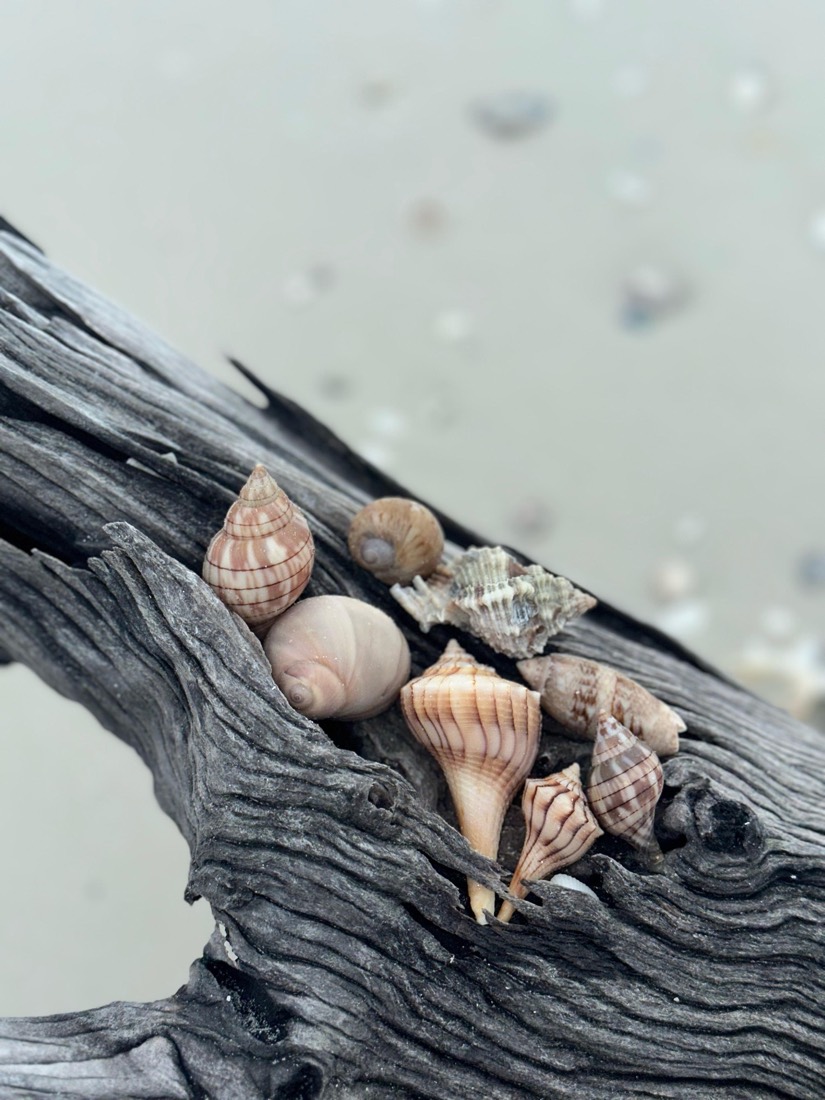
Hand us a fresh olive shell off that flat and you’ll feel the difference before you even look at it — it’s cool, slightly damp, with a glassy sheen that a sun-bleached, surf-worn one from a busier beach simply doesn’t have anymore. That sheen is also your cue that the shell’s long since empty and fine to keep, since anything still occupied won’t have dried out enough to shine that way in the first place.
We time these stops around the bottom of the tide on purpose, not the middle of it, because the extra exposed sand at dead low is what actually separates a good flat from a great one. Ten extra minutes of tide can be the difference between a thin strip of shells and the whole apron of the bay opening up in front of you, which is why we’d rather wait offshore a few minutes than land early and work a smaller strip.
A flat like this doesn’t always load the same from one trip to the next, either. After a stretch of calm weeks with no real front to stir things up, Dollar Bay can run thinner than usual, and when that happens we won’t force the stop — we’ll swap to a different flat along the same run, since restocking rates vary noticeably even between bars only a mile or two apart. Reading that ahead of time, before anyone’s already off the boat, is most of the job.
Whether Sanibel or a beach on the far side of the world deserves the global crown is a fun argument to have on the ride home. What we can promise from the helm is a flat like Dollar Bay’s, worked at the right minute of the tide. Bring a mesh scoop and see for yourself on one of our shelling tours, or read more about the water we run in our destinations guide.