
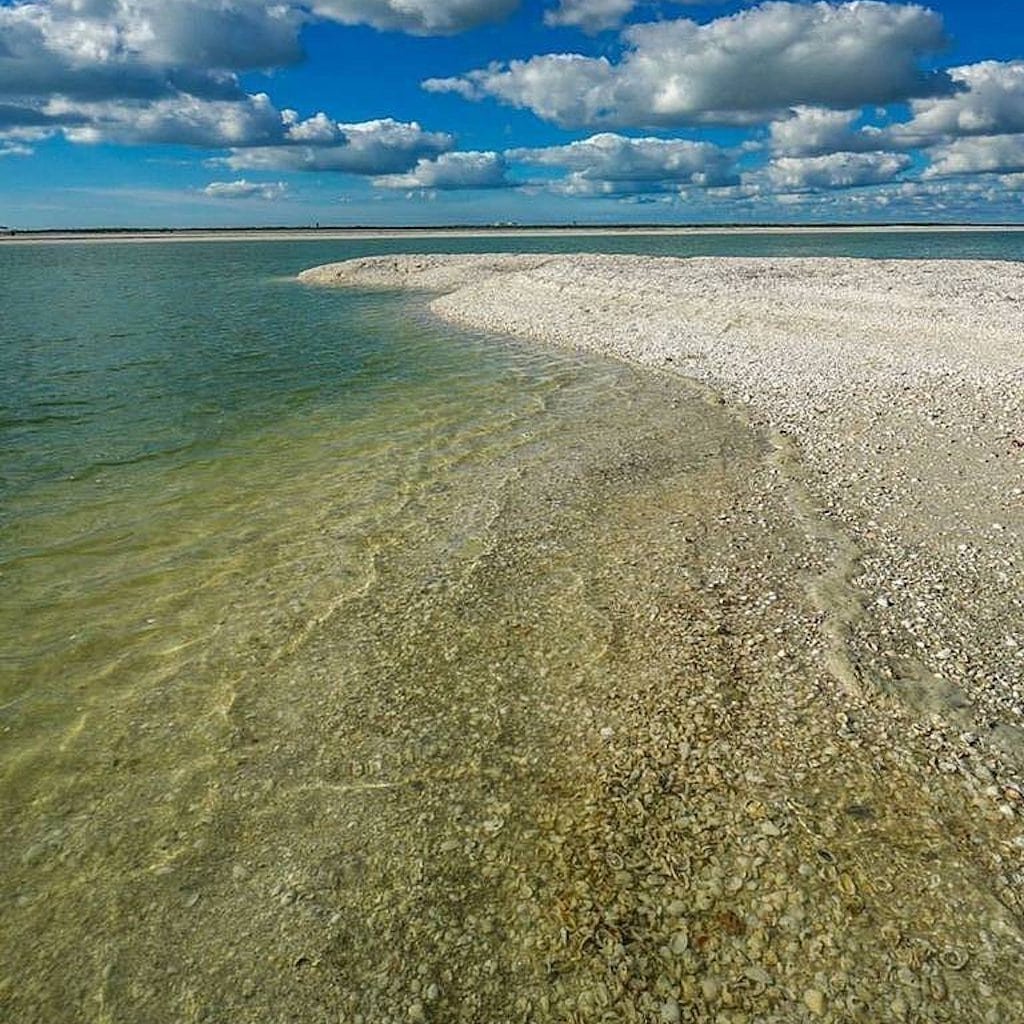
🏝️ At a glance
- Location
- Just north of Sanibel, across Blind Pass
- Access
- Drive-up; quieter and more upscale than Sanibel proper
- Hotspot
- Blind Pass / Turner Beach at the south tip
- Best time
- Low tide, morning after a winter cold front
- Rule
- Empty shells only — Lee County, nothing live
Why shell on Captiva
If Sanibel is the headliner, Captiva is the quieter encore. It's a narrow, low-key island of cottages, sea-grape shade and resort beaches, and that mellow vibe carries down to the sand. The shells are the same cast you'd find on Sanibel — fighting conchs, lettered olives, calico scallops, the odd lightning whelk — because the same Gulf currents sweep both islands. The difference is the crowd. On a weekday morning you can have long stretches of wrack line nearly to yourself, which is exactly what a serious sheller wants.
Where to go on Captiva
The number-one stop is the south tip, where Captiva meets Blind Pass at Turner Beach. The pass currents there concentrate intact, rarer shells — it's the best single spot on the island and the one to hit first. Beyond that, the public-access points up the Gulf side (near the village and the resort areas) all drift shells, so don't be shy about walking a stretch nobody else is on. The further you get from a parking lot, the fresher the wrack line tends to be.
Best tide & season
The rules are the same as the rest of this coast: shell at low tide and lean on winter. December through March brings the cold fronts that churn the Gulf and stack fresh shells on the beach overnight, and the morning after a front is the prime window. Get to the small Turner Beach lots early — they fill fast, and the dawn crowd thins the best line by mid-morning.
| Factor | Captiva | Sanibel |
|---|---|---|
| Crowd | Quieter, more upscale | Busier, more famous |
| Top spot | Turner Beach / Blind Pass | Bowman's, Lighthouse, Blind Pass |
| Shell mix | Same Gulf species | Same Gulf species, 250+ documented |
Empty shells only
Captiva is in Lee County, so it's empty shells only — no live shells, no live sand dollars, no live starfish. Check every promising shell for a tenant before it goes in the bag; if there's a soft foot or a closed trapdoor, set it back in the wet sand. The upscale calm of Captiva doesn't change the rule one bit. When you're unsure, our quick live-vs-empty guide settles it fast.
Captiva is lovely, but it's a long way from Marco and Naples, and the same Gulf shells wash our home islands too. If you'd rather skip the drive entirely, our captains run guided shelling tours to Keewaydin and Kice — boat-only barrier islands with fresh, unpicked shell lines. Curious how the islands stack up? Read Sanibel vs. Captiva.
From the Helm: Reading Blind Pass’s current before we’d ever aim for Captiva
Before we’d ever point a hull toward Captiva, we’d be reading Blind Pass the way we read any inlet we don’t run every day — current speed, depth over the shoal, which side of the channel still holds water. It’s a real tidal cut between Captiva and Sanibel, and cuts like that run swift on a strong exchange, which matters more to us than the shelling itself. In practice we don’t make that run; Captiva sits north past Sanibel, outside the water our boats cover on a normal day.
What draws people to Captiva is close to what we chase closer to home — a quiet stretch with fewer footprints than the big drive-up beaches get. We find that same quiet on our own boat-only islands, reached without a bridge or a parking lot in sight. The back-bay lagoon mouth on the far side of Keewaydin does the same job Blind Pass does for Captiva: a narrow gap where the current stalls at the tide change and shell collects instead of washing on through toward the Gulf.
We time that lagoon mouth for the last of an incoming tide, once the current’s slowed enough that fresh shell sits along the inside edge instead of dragging back out. We hold the boat just outside the mouth and send guests in on foot, water shoes on for the broken shell, a mesh bag looped on one wrist so both hands stay free. Wading it slow beats wading it fast — most worth picking up sits half-buried at that current line, not scattered loose on the sand.
When the wind swings around to the west and starts pushing chop into Keewaydin’s lagoon mouth, we don’t fight it — we move that stop north to Tigertail instead, where the shallow lagoon behind Sand Dollar Spit sits mostly out of a west wind and still sorts shell the same way. It’s the call we make most mornings before we leave the dock: which lagoon is calm enough to hold a boat and let people wade comfortably, not which one has better shells that day.
A shell picked out of that slack-current line still carries the wet shine and weight of the Gulf — cooler and noticeably heavier in the hand than one that’s tumbled up the beach and dried in the sun for a few days. Guests usually notice it the moment they flip a fresh one over in the shallows, before it’s even out of the water. That’s typically the difference between what someone finds standing in that gap and what’s scattered on the open sand fifty yards either side of it.
We’re not going to pretend our lagoon is Captiva, and we won’t pretend the shelling is guaranteed either — wind and the last few tides decide what’s sitting in that gap on any morning, same as at Blind Pass. What we can promise is a comparable stretch of quiet water, empty shells only, without the causeway traffic Captiva’s known for. If that quiet, current-sorted shell was really the draw, that’s what we build into a standard shelling tour out of Marco, or the boat-only run to Cayo Costa for the same feel farther out.