
🏝️ At a glance
- Access
- Boat-access only — ferry or private charter, no bridge
- Beach
- ~9 miles of wild, undeveloped Gulf shoreline
- Why it's special
- Near-untouched shell lines; far less foot traffic
- Best time
- Low tide, morning after a winter cold front
- Rule
- Empty shells only — state park, nothing live
Boat-access only (the payoff)
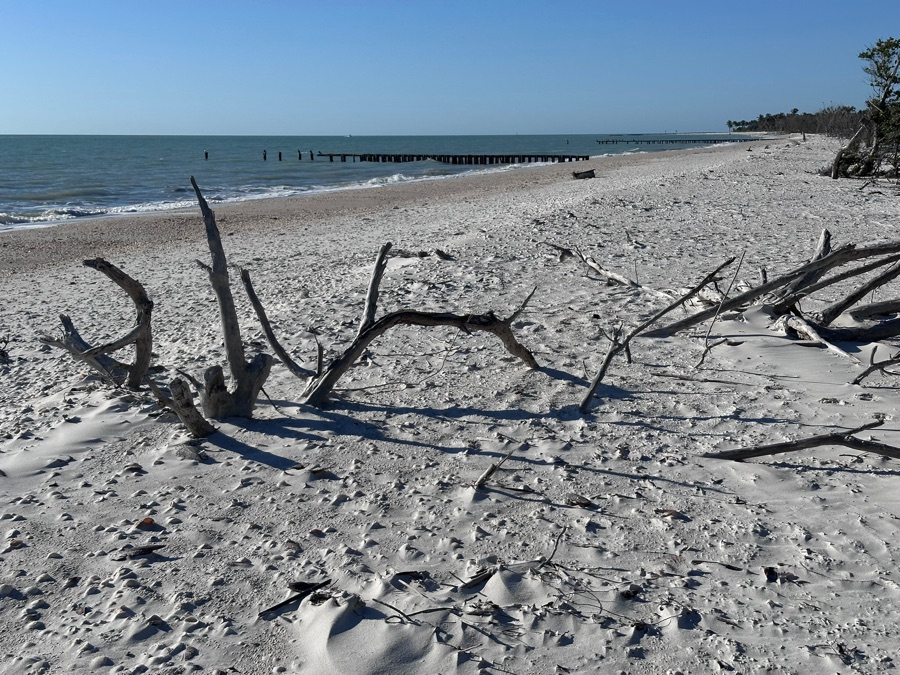
This is the whole reason Cayo Costa is special: you can't drive here. The island is reachable only by ferry or private boat, which acts as a natural filter. Drive-up beaches like Sanibel get combed at sunrise by hundreds of people; Cayo Costa gets a fraction of that. So the same Gulf currents that stock the famous islands also stock Cayo Costa — but here, fewer hands beat you to the wrack line. After a good tide you can walk fresh shell lines studded with fighting conchs, lightning whelks, horse conchs and, after a storm, the rare stuff that gets snapped up instantly on the mainland beaches.
Where to shell on the island
From the boat dock and bay side, a short trail or tram crosses to the Gulf beach — that's where the shelling is. With nine miles to choose from, the move is simple: walk away from the access point. The further you get from where the ferry lands, the fresher and less-picked the line becomes. The north end, near the pass at Boca Grande, sees current-sorted shells like a smaller version of Blind Pass. Bring water, sun cover and a hat — there's no concession stand around the corner out here, and that's exactly the point.
Best tide & season
Cayo Costa follows the same Gulf rhythm as the rest of this coast. Shell at low tide to expose the most beach, and lean on winter (December through March), when cold fronts churn the Gulf and restock the sand overnight. The morning after a front is the dream. Plan your boat timing around the low tide so you arrive when the shell bars are uncovered — a good captain or the ferry schedule can help you line it up.
| Factor | Cayo Costa | Drive-up beach |
|---|---|---|
| Access | Boat/ferry only | Park and walk |
| Foot traffic | Low — line stays fresh | High — combed early |
| Beach length | ~9 wild miles | Shorter, busier stretches |
| Shell line | Near-untouched | Picked over by sunrise |
Empty shells only
Cayo Costa is a state park, and the rule is firm: empty shells only — no live shells, live sand dollars or live starfish, plus the usual state-park protections on plants and wildlife. Flip every shell and check for a living animal before it goes in your bag. A wild, near-untouched island like this stays wild because everyone leaves the living things in place. Pack out what you pack in, and take only empty shells and photos.
Cayo Costa proves the boat-only rule of shelling: the beaches you can't drive to are the ones worth the trip. The same logic powers our home water — Keewaydin, Kice and the Ten Thousand Islands are boat-only too, with shell lines almost nobody touches. Our captains run guided shelling tours straight to them from Marco and Naples. Want the full case for boat-only? Read our best boat-access shelling beaches roundup.
From the Helm: Cayo Costa’s nine miles, and the half-day run we make at Kice instead
Cayo Costa is genuinely worth the trip — nine miles of boat-access-only beach with shell lines that don’t see the traffic any drive-up beach does. It’s also a commitment: a ferry reservation or a private charter, most of a day, and a run north past Captiva that sits outside our normal territory. When guests want that same boat-only payoff without giving up a full day of vacation, we run the idea in miniature at Kice Island instead.
Getting to Cayo Costa means working around someone else’s ferry schedule and a full day set aside. Getting to Kice means we leave Caxambas Pass, run maybe twenty-five minutes, and time the approach for the top of the outgoing tide rather than dead low — firm enough sand to hold the boarding ladder steady, without waiting on a tide that might not fully drop during a half-day window.
We nose the bow in on the leeward side out of the current, drop the boarding ladder straight onto packed sand, and guests step off dry instead of wading through soft bottom the way plenty of boat-only islands make you. That firm footing at the top of the ebb is the whole reason we favor that tide stage over waiting on a lower one that would expose more beach but cost us the ladder access.
Shell off that stretch at Kice still carries the wet shine of the Gulf, heavier and cooler in the hand than anything that’s had a few hours of direct sun. It’s the same fresh-off-the-tide feel Cayo Costa is known for — the real difference is we can have you there and back before lunch instead of committing the whole day to a ferry schedule.
Guests usually turn up lightning whelks and fighting conchs along that firm stretch, with the occasional horse conch worked into the drier sand above the tideline. We won’t promise a full bag every trip — the shelling swings from thick to thin like it does on any of these islands — but the boat-only access means whatever’s there hasn’t been picked through by a beach full of walkers.
We won’t claim Kice has nine miles of beach the way Cayo Costa does — it doesn’t, and it’s a smaller island by a wide margin. What it shares is the same boat-only access that keeps the shell line from getting picked over daily, and the shelling there is exactly as unpredictable as anywhere else: some runs are thick with whelks, some are thin, and we’d rather undersell a quiet morning than oversell one before anyone’s untied the lines.
For guests set on the real Cayo Costa experience, we’re happy to point you toward the ferry and its reservation system. For everyone else, that same boat-only feel is standard on our shelling tours, and a private charter can build a longer version of that same run if half a day isn’t enough.