
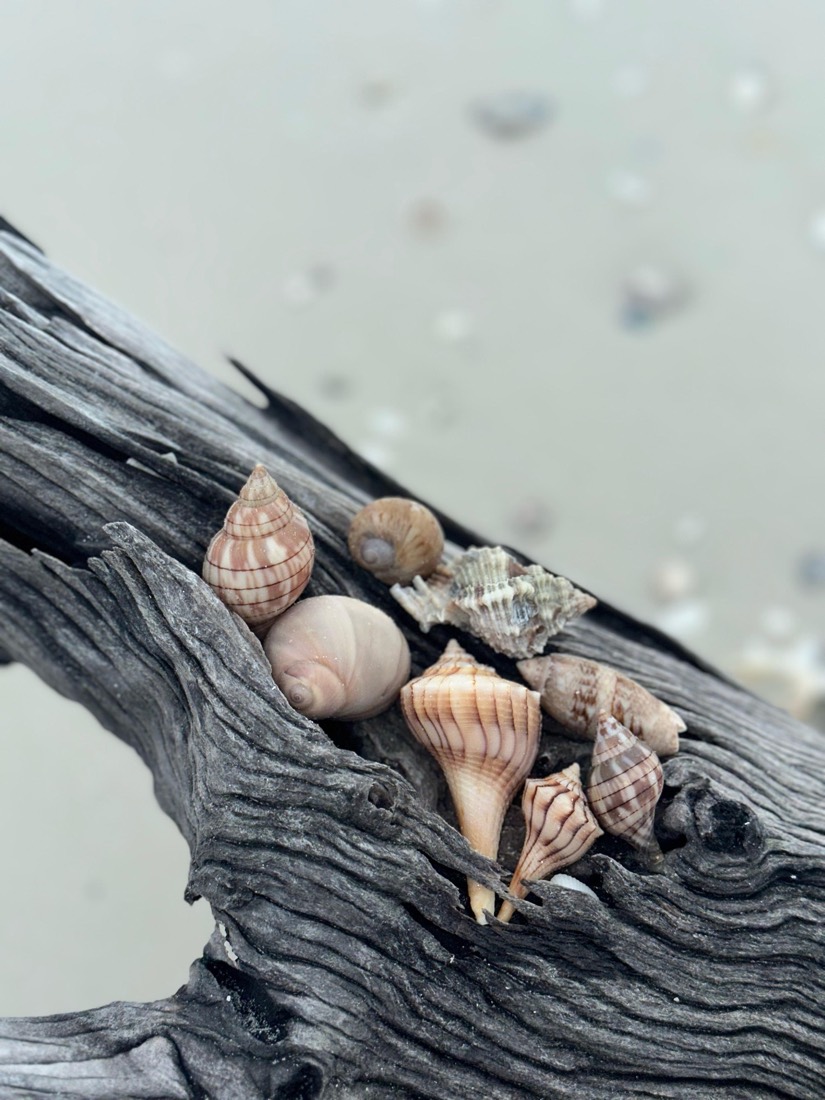
🐚 At a glance
- Location
- The pass between Sanibel and Captiva (Turner Beach side parking)
- Access
- Drive-up; small lots fill early
- Why it works
- Pass currents concentrate intact, rarer shells
- Best time
- Low tide; best after a storm or winter cold front
- Rule
- Empty shells only — Lee County, nothing live
Why the pass concentrates shells
A pass is a pressure point. Every time the tide changes, a huge volume of water squeezes through the narrow gap between Sanibel and Captiva, and that rushing current carries shells with it. When the flow slows at the edges and slack tide, it drops its cargo — and because the heavier, more intact shells settle out fastest, Blind Pass tends to deliver fewer broken bits and more keepers per square foot than an open beach. This is the kind of spot where folks find true tulips, horse conchs and the dream shell itself, a junonia, after the right storm. Currents do the sorting you'd otherwise do by hand.
Where to stand
Park on the Turner Beach side at the Captiva end of the bridge, then work the sand right where the pass meets the Gulf. Watch the seam where moving pass water hits the open beach — that transition zone is where the current drops its load. Walk the freshest wet wrack line, poke through the little shell piles in the troughs, and keep an eye on the swirling edges near the jetty rocks. Respect the current itself: the channel runs fast and is no place to wade or swim. You're here to comb the beach, not the channel.
Best tide & season
Two ingredients: low tide and recent weather. Low water exposes the most shell-sorting beach, and a storm or winter cold front is the engine that loads the pass in the first place. The morning after a front (December through March is peak) is when Blind Pass earns its reputation. Get there early — the small lots fill fast, and the early-bird shellers thin the wrack line by mid-morning.
| Condition | Why it matters |
|---|---|
| Low tide | Exposes the current-sorted shell piles |
| After a storm/front | Loads the pass with fresh shells |
| Early arrival | Small lots fill and wrack thins by midday |
| Stay out of the channel | Pass current runs dangerously fast |
Empty shells only
Blind Pass straddles the Sanibel/Captiva line in Lee County, so the rule is firm: empty shells only. Flip every shell and check for a living animal — a soft foot, a closed trapdoor, anything moving means it goes back. Same for sand dollars and starfish. The intact, glossy shells the pass produces are tempting, but a shell with a tenant is off-limits no matter how perfect it is. Learn to tell live from empty and you'll never have to guess.
Blind Pass is a genuine treasure, but it's a haul from Marco and Naples, and those same shell-sorting pass currents run through our home waters too — Capri Pass, Big Marco Pass, the cuts between the Ten Thousand Islands. Our captains know which ones fired overnight and run guided shelling tours to the freshly stocked islands beyond them. Want the full comparison? Here's Sanibel vs. Captiva.
From the Helm: what Blind Pass’s current teaches us about our own Caxambas Pass eddy
Any pass that squeezes a strong tidal current through a narrow gap is going to concentrate shells, and Blind Pass is a textbook version of that mechanism — the water speeds up in the throat of the channel, then slows and drops whatever it was carrying the moment it opens back out. We watch for the same physics at our own Caxambas Pass, where the current running between Marco and the Ten Thousand Islands does the identical squeeze-then-drop job, just without the drive-up parking lot.
The tell we look for from the boat is the back-eddy, a slower ring of water that spins off the main current on the downstream side of the pass. That’s where the heavier, denser shells settle out first while the current keeps carrying the lighter debris further along, so we’ll often idle the boat right along that eddy line and let a guest reach down at exactly the spot where the water visibly slows.
If the current through Caxambas Pass is running harder than we’d like that day — enough to make holding a boat steady over the eddy line uncomfortable — we’ll work the calmer eddy off Coon Key Pass instead, since the same squeeze-and-drop mechanism holds there on a smaller scale. Guests rarely notice we’ve swapped passes; the shells coming up at the rail look the same either way, and the briefing at the ladder doesn’t change either.
Timing matters as much as location. We favor working this eddy over the closing two hours before dead low, the same stretch that makes a pass like this fire for anyone working it on foot, since that’s when the maximum volume of water has already moved through and had time to sort material by weight. Get there too early on the tide and the good stuff is often still buried under a layer that hasn’t settled.
In the hand, a pass shell tends to feel heavier for its size than one off an open beach — denser, less chipped, the aperture usually still sharp instead of rounded soft by surf. That weight is the first thing we teach guests to notice, well before they’ve had a chance to really look at what they’re holding. Run a thumb along the lip and you can usually tell within a few seconds: a worn edge has gone smooth and rounded, while a fresh pass find still catches slightly, almost like a coin that hasn’t been in circulation long.
The rule doesn’t change just because the water’s moving faster — anything with a resident still inside goes straight back to the eddy it came from. Feel that weight difference firsthand aboard one of our shelling tours, and bring anything you keep home to identify in our shell guide.