
🐚 At a glance
- Scientific name
- Petricolaria pholadiformis
- Size
- ~2 in — much smaller than a true angel wing
- Build
- Sturdier, more compact, tougher shell
- Decisive tell
- Short & hardy vs. the large, fragile true angel wing
- Where & when
- Sandy & muddy flats off the boat-only islands
How to identify a false angel wing
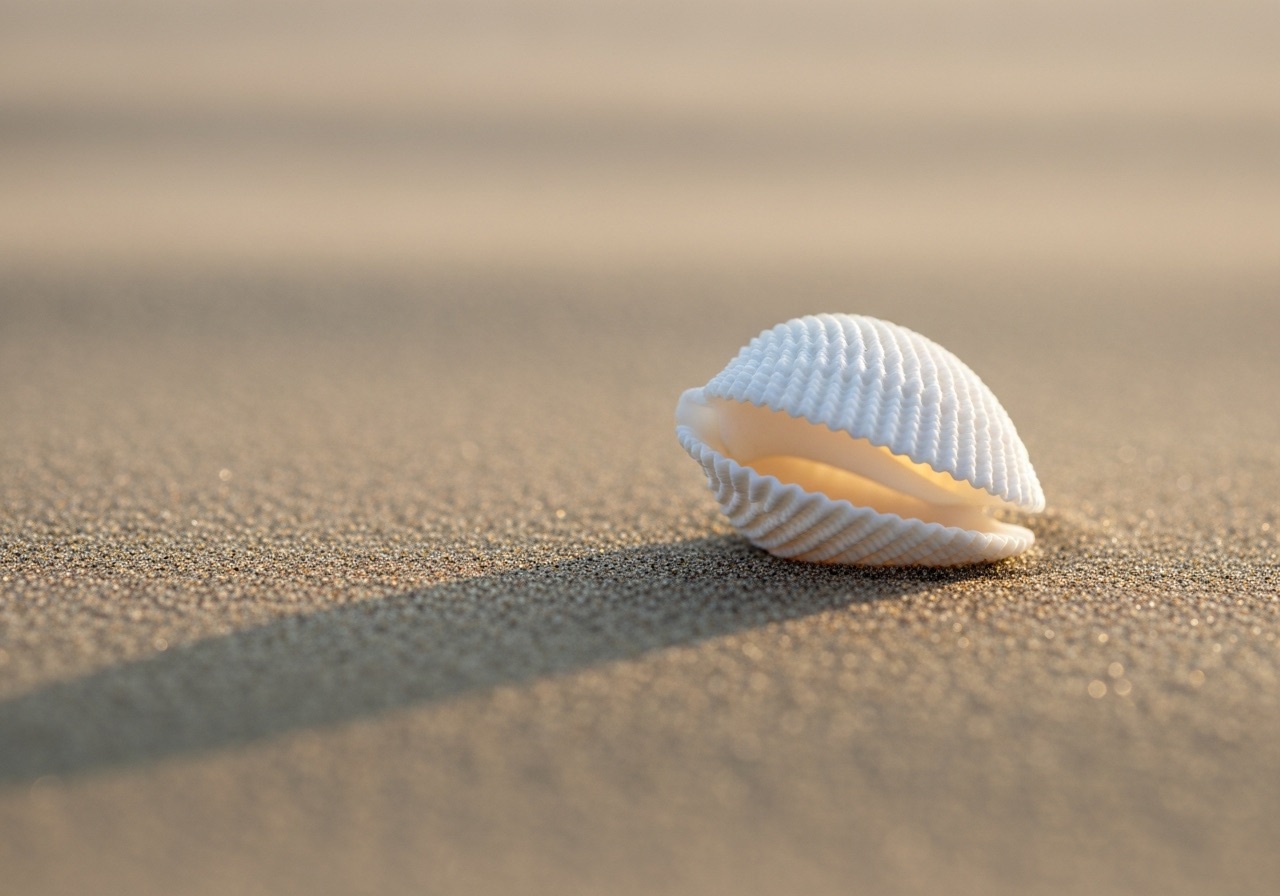
On its own, a false angel wing looks the part: a white, elongated, ribbed bivalve with that wing-like outline. What gives it away is the build. It's small — only around two inches — and noticeably stockier and tougher in the hand than the airy, brittle true angel wing. The ribs are coarser and the whole shell feels more durable, which is exactly why so many of them survive the surf intact while real angel wings arrive broken.
If you find a whole white “wing” that feels solid and is only a couple inches long, odds are good it's the false. A true angel wing that survives whole is bigger and so delicate you'll handle it like glass.
False vs. true angel wing
Three quick checks settle nearly every case: size, sturdiness and sculpture. The true angel wing runs larger (often four to seven inches), feels paper-thin and fragile, and wears finer, more elegant ribbing. The false runs small, feels solid, and shows coarser ribs. Hold the two together once and you'll never confuse them again.
| Check | False angel wing | True angel wing |
|---|---|---|
| Size | ~2 in | Often 4–7 in |
| Sturdiness | Sturdy, compact | Thin, fragile |
| Sculpture | Coarser ribs | Fine, delicate ribs |
| How it arrives | Often whole | Usually broken |
Where we find them
False angel wings live in sandy and muddy bottoms and, being tougher, survive the wash to the open beach better than the true angel wing does. On our shelling tours we find them along Keewaydin, Kice Island and the Ten Thousand Islands, often whole and clean. They're a great teaching shell — once you've sorted a false from a true, the rest of the wrack line gets easier to read. Collier County is empty-shells-only, so keep only the empties.
From the Helm: Working the Peat Bank Behind Panther Key for False Angel Wings
Both angel wing species burrow into soft peat and clay banks rather than open sand, so we need a low enough tide to expose the bank itself before this stop is worth running at all. We check the peat bank behind Panther Key against the tide chart the night before, because even a half-foot of extra water leaves the whole burrowing zone submerged and the stop turns into fifteen minutes of nothing to look at. Wind barely enters into it back here — it’s a protected bank, so tide alone makes or breaks the plan.
We don’t dig into the bank itself to find these — that’s where live animals are still working, and it crumbles the peat for no good reason. Instead we work the loose fall of sediment and shell hash right at the base of the bank, where wave action and the tide have already freed empty shells and washed them a few feet clear. It’s a slower method than digging, but it keeps the bank intact for the next tide and the next boat that comes through.
A shell straight out of the peat still carries a faint sulfur smell from the mud it’s been sitting in, and it’s often stained a soft gray until it dries in the sun and lightens back toward white. We let guests know not to judge color too fast at the base of the bank — give a shell a few minutes in open air and the gray staining common to a freshly freed peat-dweller fades enough to see its true finish underneath.
Handle whatever you find here with a light touch, because even the sturdier false angel wing chips at its growth edge if you close your fist around it the way you might a thick clam shell. We tell guests to cradle it flat in an open palm instead of gripping it, the same way you’d hold a cracker you didn’t want to snap. That light touch matters even more with the true angel wing, which breaks even easier still — a reason we’re glad the false version turns up here more often for guests to practice on.
If the base of the bank is picked clean from a recent charter, we’ll work a little further along the same shoreline where a smaller peat outcrop sits just past the mangrove line, since both species tend to colonize any soft bank in this stretch rather than just the one spot everyone already knows about.
This stop tends to ride along inside a longer shelling tour or a private charter that’s already working the backwaters, since it’s a quick add-on rather than a destination on its own. It’s one of our favorite five-minute stops for guests who like a good compare-and-contrast puzzle in hand.