
🐚 At a glance
- Scientific name
- Mercenaria campechiensis
- Size
- Heavy — up to about 6 in across
- Tell-tale
- Thick, weighty valve; deep purple staining inside the margin
- History
- Purple interior historically carved into wampum
- Rule
- Empty shells only in Collier & Lee
How to identify a southern quahog
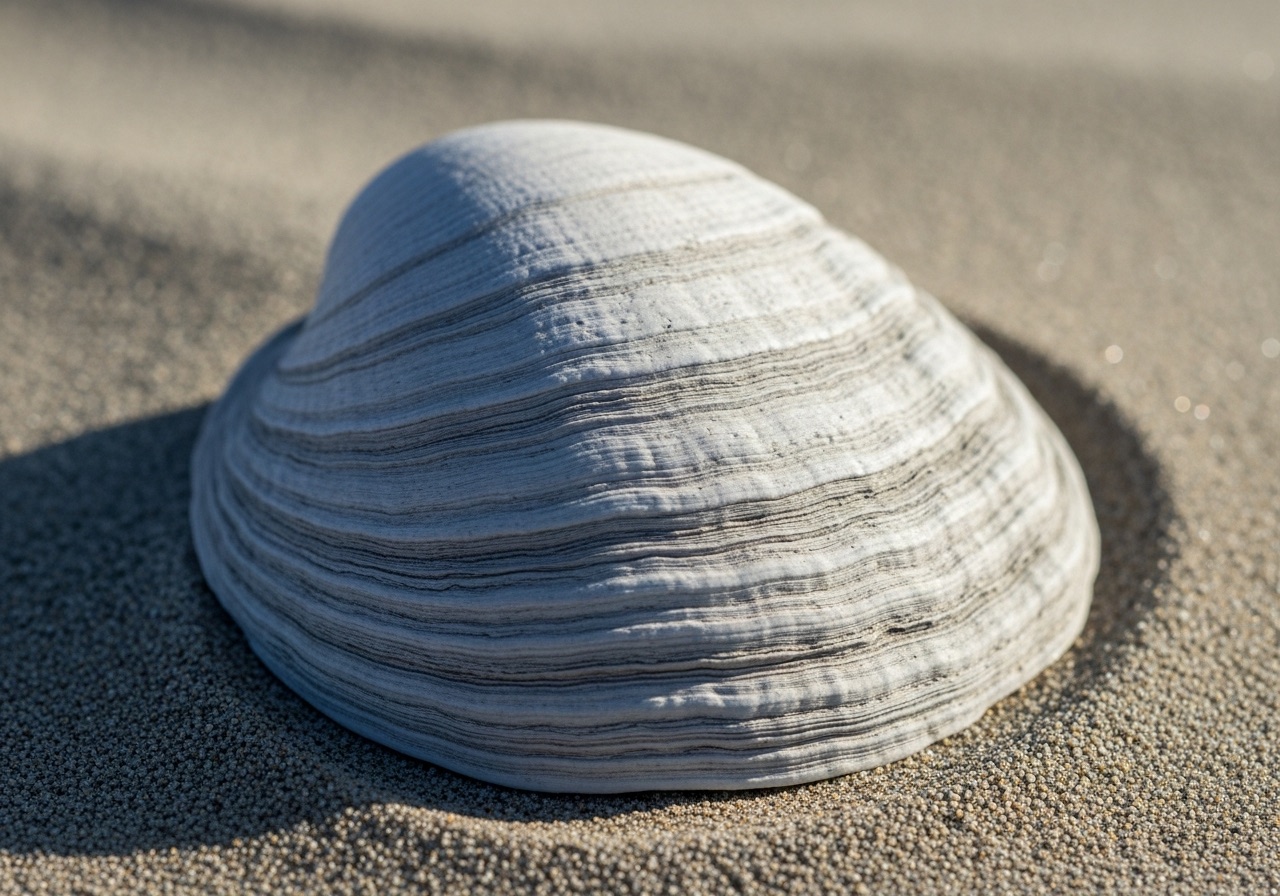
Weight is the first tell. The southern quahog is a thick, heavy clam — pick one up and it feels like it means business compared to the lightweight coquina or even the cross-barred venus. The shape is a stout, rounded triangle with a high domed back, and the exterior is dull off-white to gray with fine concentric growth lines. Turn it over and look at the inside edge: many show a rich purple or violet stain along the margin, the giveaway of the hard-clam family.
This is the southern cousin of the northern quahog you might know from chowder. Down here it's the heavyweight of the clam pile — common, but you'll always feel it before you see it.
The wampum connection
That purple inside isn't just pretty. For centuries, Native peoples along the Atlantic and Gulf coasts carved the purple portions of quahog shells into wampum — small polished beads strung into belts that carried meaning, recorded agreements and served as a medium of exchange. The purple beads were the most valued of all. Holding a quahog and seeing that color, you're looking at the very material of one of the continent's oldest trade goods. It's a nice reminder that these shells were treasure long before any of us filled a beach bag.
Where to find them
Southern quahogs bury in sandy and muddy bottoms throughout our bays and passes, so their heavy empty valves wash up along the barrier-island beaches our captains reach by boat — Keewaydin, Kice and the Ten Thousand Islands. Because they're so sturdy, whole valves survive the surf and turn up often, even if a perfect matched pair takes a little luck. Our shelling tours put you on those quiet stretches with time to comb. Keep the empties, leave anything living inside, and remember Collier County is empty-shells-only.
From the Helm: Reading the wind before we probe Rookery Bay’s quahog flats
Picking where to stop for quahogs is less about the chart than about the last few days of wind. A quahog bed likes packed mud-sand, not soft muck, and the flats along Rookery Bay’s edge water only firm up enough to walk after a stretch of east or north wind has pushed the water down and let the bottom set properly. Blow a week of strong southwest wind first and that same flat turns into a shin-deep sponge nobody wants to wade through, so we’ll shift the whole stop rather than fight conditions that morning.
Once we’re anchored on a firm stretch, the search is by feel more than sight — a slow shuffle across the flat until a bare toe catches something solid and rounded under the sand. A quahog just pulled up still carries bay mud packed into its growth rings and feels almost stone-heavy for its size; leave one bleaching on a beach for a year and it lightens noticeably, the purple stain at the hinge fading from deep violet toward a dusty, washed-out lilac. We let guests weigh both in one palm to feel that difference honestly.
We keep a mesh bag and a blunt-tipped probe stick aboard the boat for this stop, since digging bare-handed in packed mud around a shell that’s already there is exactly how thumbnails get bent back. The probe lets a guest tap the bottom ahead of each step instead of guessing blind, which turns the hunt into a slow, deliberate scan rather than a careless stomp, and it’s gentler on a flat that’s also home to worms, small crabs and the occasional buried moon snail we’d rather not crush underfoot. Whatever we turn up empty goes in the bag; anything still holding a live animal gets nudged back into its print in the mud, since Collier County shells have to come home empty or not at all.
Dead low is the only real window here; an hour either side of it, the flat’s still under a foot of water and probing turns into pure guesswork. We’ll often pair this stop with a run through nearby shelling beaches on the way back in toward the dock, since a quahog flat rarely fills a whole afternoon on its own but layers nicely onto a bigger loop through the islands and passes.
A big, sound quahog shell, the kind with a fully intact purple hinge stain, is heavy enough that first-timers usually ask if it’s a rock before we hand it over to them. That weight, more than the color, is what surprises people most standing in the mud with one in their palm, and it’s the detail we let them discover on their own before explaining any of the history baked into that stain.