
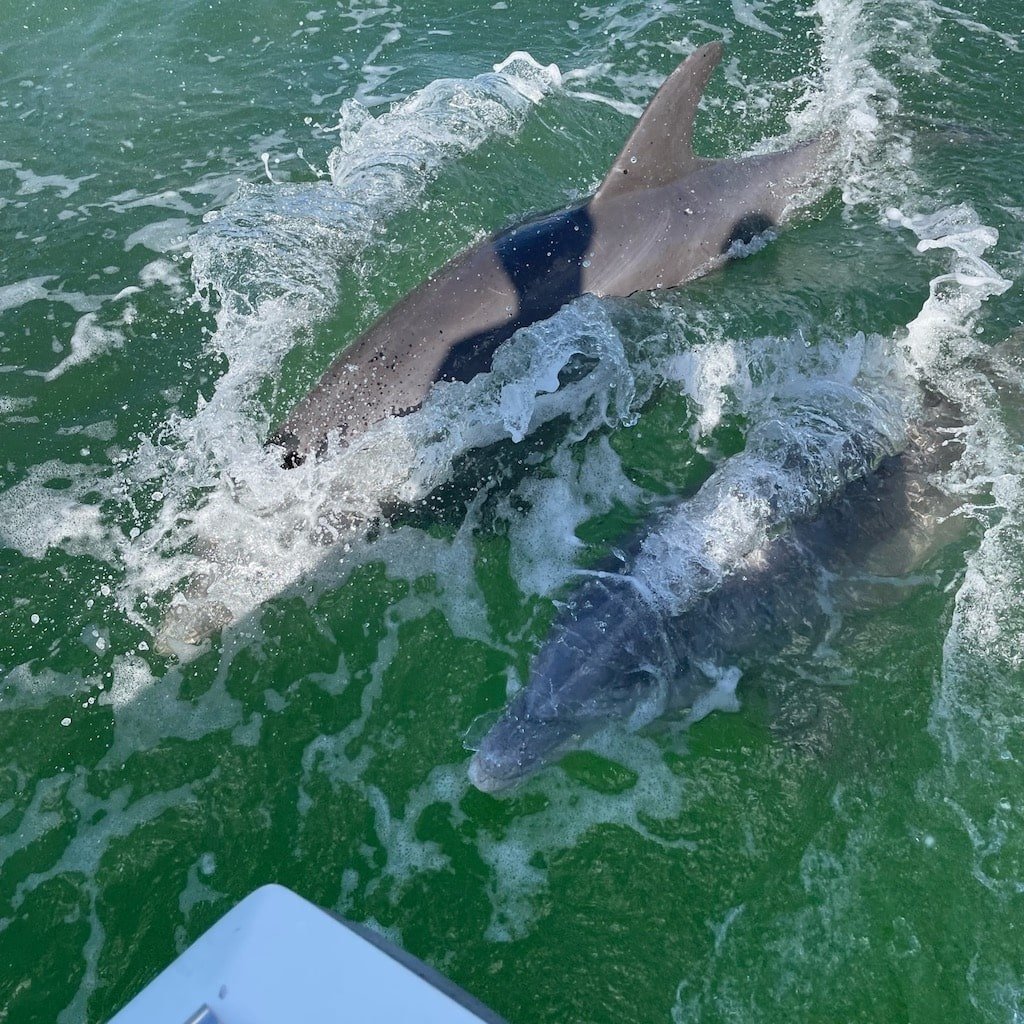
🐬 At a glance
- What it is
- A dolphin surfing the wave a boat pushes ahead of its bow
- Why they do it
- A free, energy-saving push — and, by all appearances, play
- Where we see it
- Off the bow in Naples Bay, Capri Pass & the passes near Marco Island
- Trained?
- No — it's natural wild behavior, grounded in research
- Etiquette
- We hold a steady course and speed; we never chase
The free ride: how a bow wave works
Picture the boat plowing forward. The hull doesn't just slip through the water — it shoves a hump of water ahead of itself, a moving wall of pressure that travels along with us. A dolphin slides into the forward face of that wave and tips its body just so, letting the wave's energy do the swimming. It's the same trick a surfer uses on a breaking wave: position yourself on the steep face and gravity (plus the wave) carries you. Researchers who've studied it find dolphins can ride for long stretches while barely beating their tails.
They didn't invent this for boats, either. Long before outboards existed, dolphins rode the pressure waves pushed by large whales and the swells rolling toward shore. Our hull just makes a convenient, predictable wave.
Energy savings — and a whole lot of fun
The physics explain the how, but anyone who watches a dolphin twist sideways to eyeball the people on the bow will tell you there's play in it too. They'll switch the lead, dart from one side to the other, and sometimes throw in a spin. That mix of efficiency and what sure looks like fun is classic bottlenose behavior — the same curiosity you see in our behavior glossary moves like spy-hopping and porpoising. To meet the species itself, start with our bottlenose dolphin profile.
Where and when you'll see it
Bow-riding happens when dolphins are around and the boat is moving at a comfortable cruising speed — not idling, not flying. The passes are prime: we see it most in Capri Pass, at the mouth of Naples Bay and out toward the Ten Thousand Islands, where resident pods cruise the moving tide. Because bottlenose are here year-round, there's no off-season for it. It's still a wild encounter, though, so we never promise it — we just give it every chance on our dolphin & wildlife tours.
How we do it right
The golden rule is simple: let the dolphins choose. We don't speed up to chase a pod or swerve toward them. We hold a steady, predictable course and speed, and if dolphins want the ride, they come to us — which is exactly how they prefer it. Sudden moves break the wave they're surfing and can be dangerous for the animals, so a calm, consistent captain is what keeps that magic bow-ride going. It's the same respect we give mothers steering tiny calves through the passes.
From the Helm: holding our line off Big Marco Pass so a bow-wake dolphin can find us
When we see a dorsal fin angling toward our bow near Big Marco Pass, our first move is to do almost nothing — hold the throttle steady, hold the heading, and resist the urge to slow down out of courtesy. A dolphin lining up on a hull is reading our wake from underwater, and a sudden change in our speed or course just makes that wave harder to catch. We’ll only ease off gradually, a little at a time, if we want to invite a closer look rather than run past at cruising speed.
Wind and boat traffic both matter more than most guests expect. A choppy afternoon with wind against tide tends to build a messier bow wave that’s less inviting to ride, while a clean morning run with light air usually produces the smooth pressure wave dolphins seem to prefer. We’ll also watch our angle relative to other boat wakes crossing the pass, because a dolphin working a following sea sometimes switches from our bow to a passing wake and back again, chasing whichever wave does the least work for the most glide. A single-engine hull throws a rounder, more forgiving wave than a twin-outboard rig running trimmed too high, and we adjust trim first before we ever think about touching the throttle.
At the rail, we tell guests to look straight down rather than out ahead — a bow-riding dolphin often tucks in so close you lose it in the white water unless you’re looking almost vertically over the side. You’ll usually feel it before the shape resolves: a shadow rockets forward under the hull, tilts on its side, and an eye rolls up toward the rail like it’s checking who’s watching. We keep voices down and hands off the gunwale edge, since a startled lean overboard does more to end the ride than the dolphin ever would.
We often see the same animal peel off after thirty seconds or so, drop back, and let another take a turn, especially when a small group is traveling together rather than one dolphin alone. It’s a free ride they choose, not one we can trigger on command, so some passes produce nothing at all no matter how clean the wake is running that morning. We’d rather tell you honestly that it’s a strong likelihood on the right morning than promise a bow full of dolphins on every single crossing.
Big Marco Pass is one of several stretches where the geometry tends to work in our favor, and our dolphin tours run this water specifically because the current and boat traffic set up bow-riding conditions more often than most of the bay. However close a dolphin tucks under the bow, the choice is always theirs — our wildlife viewing etiquette covers exactly how we keep it that way.