
📖 At a glance
- Sanibel's edge
- East-west scoop = the famous capital, biggest volume of shells
- Marco's edge
- Tigertail plus boat-only islands = far less picked-over
- Access
- Sanibel: drive-up. Marco's best beds: by boat
- Crowds
- Sanibel busy & competitive; boat islands near-empty
- Rule
- Empty shells only — live collection banned in Collier & Lee
Why Sanibel earns its crown
Sanibel got famous for a reason most beaches can't copy: it lies east-to-west instead of north-to-south. That sideways orientation acts like a giant scoop, catching shells the Gulf pushes in and piling them up on the beach. The result is volume — cockles, scallops, whelks, olives, the whole cast — and the chance, after the right storm, at a junonia, the holy grail. The famous bent-over posture of shellers there even has a name, the Sanibel Stoop. If you want the legendary, everybody-knows-it shelling experience, Sanibel delivers.
The honest catch: everybody knows it. The good beaches fill fast, the tide line gets worked over early, and on a sunny winter morning you're shelling shoulder-to-shoulder with a crowd that read the same guidebook.
What Marco Island and the islands south offer
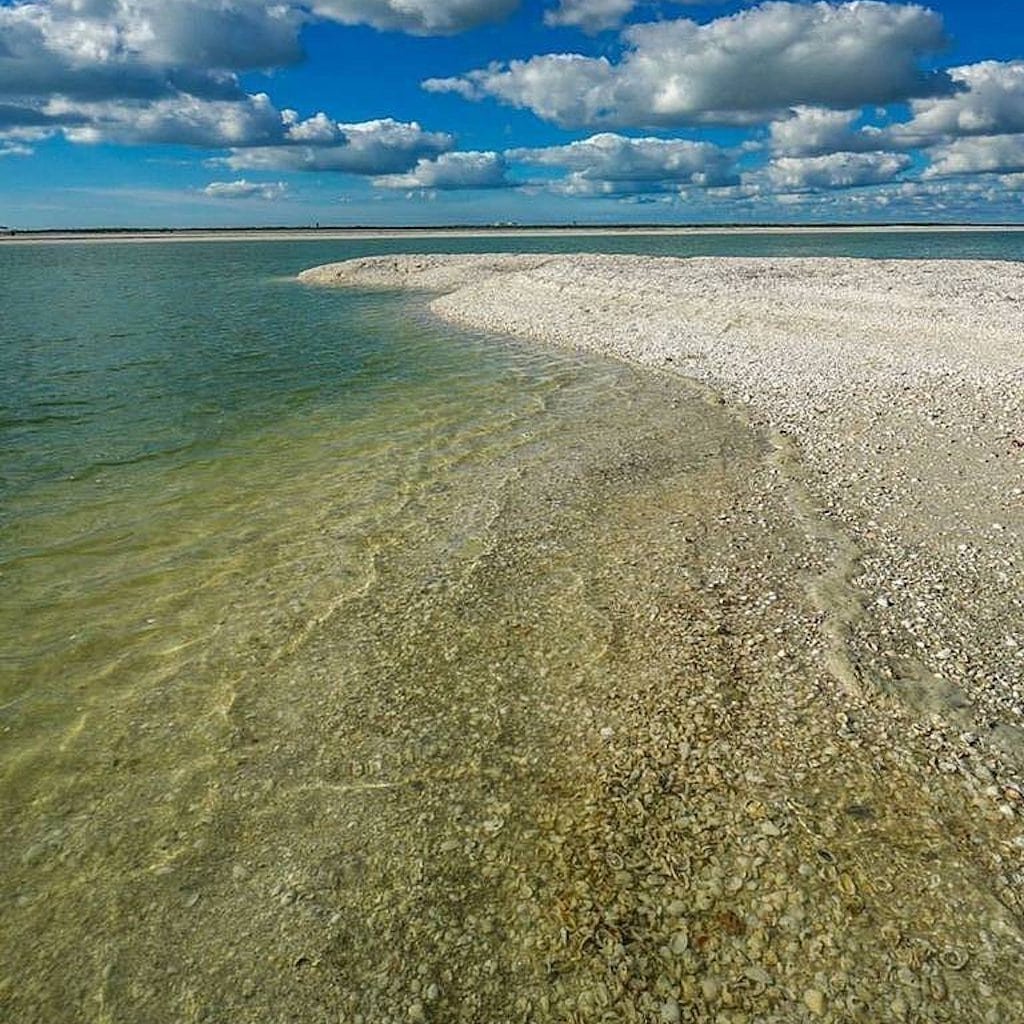
Marco's own Tigertail Beach and its lagoon-fed sandbar are a terrific, easy walk-in spot. But the real prize sits just south, where the road ends and the boat begins: Keewaydin, Kice, and the Ten Thousand Islands. These are undeveloped, boat-only barrier islands — no parking lot, no crowd, no one beating you to the line. The tide refills the beds overnight and you're the first one there in the morning.
You won't out-volume Sanibel here. What you get instead is a fresher, unpicked tide line and the genuine feeling of having a Gulf beach to yourself — which, for a lot of shellers, beats a big pile any day. That's exactly what our shelling tours are built around: running to the island the tide just reloaded.
| Factor | Sanibel | Marco & islands south |
|---|---|---|
| Shell volume | Highest (the capital) | Good, but fewer per beach |
| Crowds | Busy, competitive | Quiet to nearly empty |
| Access | Drive-up | Best beds by boat |
| Tide line | Picked over early | Fresh, unworked |
| Best for | The famous big haul | Solitude & first-on-the-beach |
Which one should you pick?
If your bucket list says “shell the most famous beach in America” and you don't mind company, drive to Sanibel — it earns the hype. If you'd rather trade a little volume for a beach almost nobody walks, point south to Marco and the boat-access islands. The two aren't really rivals; they're different days. And if you want the best of the quiet side without owning a boat, that's where we come in — we run the passes to the islands the crowds can't reach, drop you on a fresh tide line, and help you ID every shell you pocket. Just remember: in Collier and Lee, it's empty shells only.
From the Helm: why we run to Panther Key instead of chasing Sanibel’s crowds
Panther Key sits at the soft southern edge of the Ten Thousand Islands, a low, boat-only spit that most visitors never hear named, let alone visit. We like running there on a falling tide, the last two hours before dead low, when the bar off its western side lays itself bare a little at a time. It isn’t famous the way Sanibel is, and it never will be — there’s no bridge, no rental-car crowd, no gift shop selling shell books. That obscurity is exactly the point.
That plan changes the moment the wind swings onshore out of the south or west and starts pushing real surf onto Panther Key’s exposed side. On those mornings we won’t fight it. We’ll tuck instead into the calmer lee on the bay side of the same island, or shift the whole stop toward a quieter pass mouth nearby where the water lies down. You give up a little of that ocean-scoured freshness, but the group stays comfortable at the waterline instead of getting knocked around by a chop nobody came out here for.
Guests sometimes ask, straight up, why we don’t just run them over to Sanibel and let them shell where the postcards were taken. The honest answer is distance and water: Sanibel sits across open Gulf from our home ports in Marco Island and Goodland, a crossing we’d rather not put a family boat through for a bucket of shells we can find closer to home. Our advantage isn’t Sanibel’s famous orientation — it’s a stretch of coast most people can’t reach without a boat and a captain who already knows the tide.
What we hand guests at Panther Key looks different from a Sanibel haul, too. Fewer bins-full, more one-at-a-time finds — a whelk still showing its spiral sheen, a scallop with both valves intact, the odd sand dollar test bleached white in the wrack. Pick up a shell straight off that morning’s tide and one that’s been tumbling in the surf for a week, and the difference sits right in your palm: the fresh one still carries a faint shine and a sharp lip before the sand has a chance to sand it smooth. We always remind folks before they step off the ladder: empty shells only, nothing living goes in the bag, and that rule travels with us to every island we visit, not just this one.
The trade we’re making is candor, not competition. Sanibel earned its reputation honestly, and we won’t pretend otherwise to anyone booking a shelling tour with us. What we offer instead is a fresher, less-picked-over stretch of the boat-only beaches south of Marco, reached the way it’s meant to be reached — by water, on a tide our captains already have circled on the chart before your group ever boards.
If solitude matters more to you than a name you recognize, that trade favors Panther Key every time. If you want to stand where the shelling world crowned its capital, you’ll want a different trip than the one we run. We just think it’s fair to tell you which kind of morning you’re actually booking before you climb aboard.