
🏝️ At a glance
- What it is
- Roadless, uninhabited barrier island in the Ten Thousand Islands
- Where
- Just past Panther Key, off Goodland via Coon Key Pass
- Beach
- Curving Gulf-front sugar sand backed by gnarled buttonwood
- Shelling
- Whelks, fighting conchs & pen shells on a falling tide
- Access
- Boat-only; no docks, shade or facilities once you land
- Rule
- Empty shells only — Collier County bans live collection
What is White Horse Key?
White Horse Key is one of the outer barrier islands strung along the northern run of the Ten Thousand Islands, sitting a short hop past Panther Key in the water our captains work out of Goodland. It’s roadless and uninhabited — no homes, no docks, no bridges, nothing holding the shoreline together but sand, scrub and mangrove. You won’t find it marked with a street address because there isn’t a road within miles of it; the only way in is a boat that already knows the cuts through Coon Key Pass and the shallow bays beyond.
Like most of this coast, White Horse Key exists because the islands out here never really stop building and unbuilding themselves. Storms push sand from one key to the next, currents carve new cuts and fill old ones, and the shape you see on a chart today is really just this decade’s version. That’s part of why it’s worth visiting with someone who runs it often — the island our captains beached on last winter isn’t necessarily the same shape it’ll be next year, and knowing the current sandbar layout is half the job of getting a boat onto it safely.
The Gulf-front beach and buttonwood spine
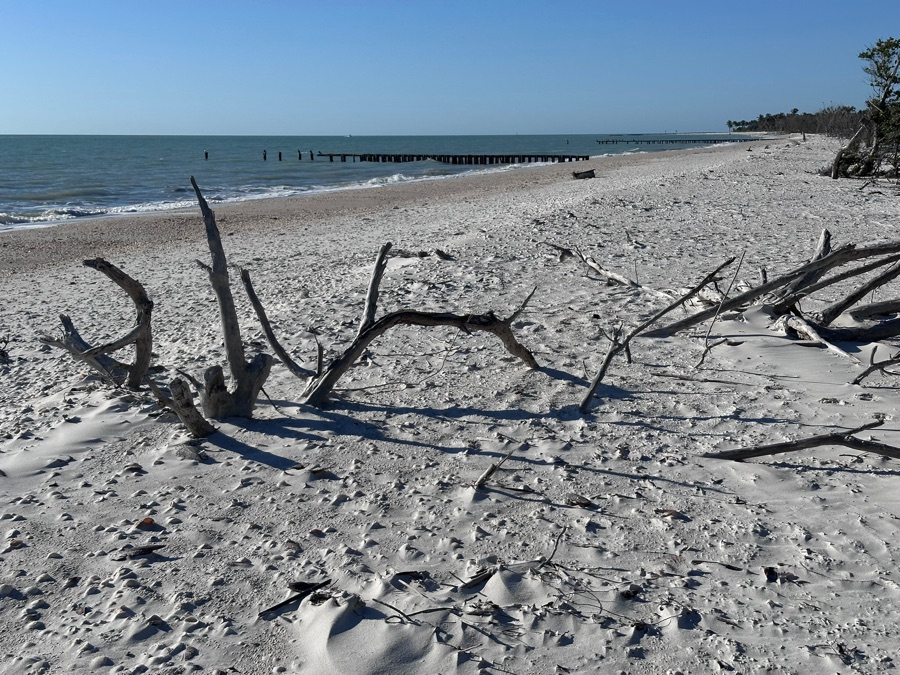
The island’s shape is a long, curving spit — a crescent of pale Gulf sand that bends around into calmer water on the back side and faces the open Gulf on its front. Walk the spine and the open sand gives way to a low, tangled stand of buttonwood, the salt-tough shrub that anchors most of these outer keys against wind and storm surge. It’s not a shade tree in any useful sense — more a thicket than a canopy — so don’t plan on ducking under it for relief from the sun.
There’s no dock to tie up to, so depending on the tide our captains either beach the boat directly on the sand or anchor just off and wade guests in. Once you’re standing on White Horse Key, that’s it for infrastructure: no restroom, no trash can, no covered pavilion, nothing. Whatever you carry onto the island, you carry back off — the same leave-no-trace rule that applies to every wild key we visit through the Ten Thousand Islands. Bring water, bring real sun protection, and go in expecting an hour or two of open beach with essentially nobody else on it.
Shelling White Horse Key on a falling tide
White Horse Key earns its spot on our shelling runs precisely because so few people ever comb it. As the Gulf tide falls off the beach, it uncovers a fresh band of sand that the last high tide buried, and that’s where the shells tend to show up. Look for the heavy spiral shape of a lightning whelk or knobbed whelk half-buried right at the waterline, the ridged little shoulders of a Florida fighting conch tumbling in the wash, and the long, brittle wedge of a pen shell standing up out of the sand like a fin. Cerith shells, olives and the odd scallop turn up in the wrack line too, especially after a blow.
None of it is guaranteed — what washes up depends on the storm before it, the tide that day, and a fair amount of luck — but the low foot traffic on a boat-only key like this one stacks the odds in your favor compared with the drive-up beaches closer to town. Whatever you pick up, remember the rule that covers every inch of this coast: Collier County allows empty shells only. If there’s still something living inside — a shell, a sand dollar, a starfish — it goes back in the water. Our captains will help you tell an empty shell from an occupied one before it goes in your bag, and if you want a deeper primer before you go, our seashell guide covers the species you’re most likely to find along this stretch.
| Island | Beach? | Best for |
|---|---|---|
| White Horse Key | Yes — curving Gulf-front spit | Quiet shelling, low foot traffic |
| Panther Key | Yes — Gulf-front | Remote shelling & the Gomez legend |
| Camp Lulu Key | Yes — sandy stretch | Another wild beach along the same run |
| Round Key | Smaller, storm-worn | A quick stop when the tide favors it |
Wildlife you might see along the way
You don’t have to step off the boat to get something out of a run to White Horse Key. The bays and cuts between Goodland and the island hold ospreys working the shallows, wading birds — herons, egrets, sometimes a roseate spoonbill — picking along the oyster bars, and bottlenose dolphins that live in these waters year-round and often show up working a tide line or riding a bow wake for a stretch. None of it is scripted or guaranteed; this is genuinely wild water, and what you see depends on the day, the season and a bit of timing. That unpredictability is part of the appeal — you’re moving through the same backcountry the wildlife actually uses, not a stocked exhibit.
Once you’re on the beach itself, keep an eye on the wrack line for more than shells — horseshoe crab molts, the occasional sea star (leave it, it may still be alive), and tracks from shorebirds that worked the sand ahead of you at the last low tide. It’s a small, quiet window into how much life actually moves through a beach that almost no person ever sets foot on.
Getting to White Horse Key from Goodland
There’s no public boat ramp anywhere near White Horse Key, and the water between there and the mainland is the same skein of skinny bays and unmarked oyster bars that makes the northern Ten Thousand Islands a place you want a local hand on the wheel. Most runs leave from Goodland, thread through Coon Key Pass, and work north through the bays until the beach opens up a short run past Panther Key. Tide matters more than distance out here — the same stretch that’s a foot of water at high tide can be dry sand at dead low, so our captains plan the run around the stage of tide rather than the clock on the wall.
Because it’s remote, shallow and unmarked, White Horse Key isn’t a spot for a rental pontoon without local knowledge of the current bar layout. It’s the kind of key we build into a shelling tour or a longer private charter out of Goodland, where the whole point is exactly this: an empty beach, a falling tide, and nobody else’s footprints ahead of yours. If you’re weighing it against the closer, better-known beaches, our destinations hub lays out the full lineup of islands, passes and bays our captains actually run.