
🐚 At a glance
- Water temp
- Upper 50s to mid-60s°F — water shoes recommended
- Best tide
- Morning negative lows around the new & full moons
- Cold fronts
- Frequent through January — each one reloads the west-facing beaches
- Top beaches
- Keewaydin Island & Kice Island, boat-access only
- Crowd level
- Busy on land (snowbird season) but quiet on the water at sunrise
- Rule
- Empty shells only — Collier County prohibits taking live shells, sand dollars & starfish
Is January a good month for shelling on Marco Island?
If you’re staring at a calendar trying to decide when to book, here’s the honest read: January is one of the strongest shelling months of the year on Marco Island and in Naples. This is the heart of dry season, when cold fronts roll through the Gulf every week or so, stack up northwest wind and swell, and dump fresh shell material onto the beaches that face that direction. Pair that with the year’s lowest tides — January’s new and full moons pull the water back further than almost any other month — and you get mornings where sandbars that are normally underwater sit fully exposed before most visitors have finished coffee. Our captains build January departures around that tide table, not the clock, timing shelling runs for the morning after a front blows through and skies clear. January also means Southwest Florida’s classic dry-season weather — blue skies, low humidity and highs in the 70s between fronts — so the days you’re not fighting wind tend to be about as pleasant as Florida gets. Check the month-by-month guide if you’re weighing January against other months, but if you can be flexible by a day or two and let the tide chart pick your morning, January rewards you.
How January’s cold fronts and tides work in your favor
Here’s the mechanism, because it actually matters for planning your trip. A cold front pushes through Southwest Florida every five to ten days in January, and behind each one the wind swings hard out of the northwest for a day or two. That wind stacks up swell against the Gulf side of the barrier islands and stirs up the sand flats offshore, and when it lays back down it leaves fresh shell material piled on the upper beach — material that was sitting in deeper water the week before. The trick is timing: the day of the front itself is usually too rough and cold to shell comfortably, but the first calm morning after it, paired with a negative low tide, is when the beach is at its best. January negative lows cluster around the new and full moons and tend to hit in the early morning, so the two things you actually want — fresh shell material and maximum exposed sand — line up more often in January than in almost any other month. By the second or third calm day after a front, the freshest material has usually been picked through, which is why our captains watch the forecast days out and adjust departure times rather than running the same schedule all winter.
Where to go: Keewaydin, Kice and the boat-only strands
Not every beach benefits equally. The islands that face open Gulf and can only be reached by boat — Keewaydin Island and Kice Island chief among them — catch the brunt of that northwest swell and hold onto fresh material longer than the drive-up beaches, which get picked over by mid-morning. Cape Romano, further south, gets its own share after a strong front, though the current running past the toppled dome houses can shift the sand from trip to trip. Because these strands only load by boat, the shell line resets less often than anywhere you can walk to, which is exactly why a January morning trip out to the barrier islands tends to outperform beachcombing from a Marco Island hotel. Running out of Goodland, on the edge of the Ten Thousand Islands, shaves real time off the ride to these barrier strands, which means more minutes with your feet in the sand once you arrive. Our shelling beaches guide breaks down what each island typically holds if you want the full rundown before you go.
What you’ll find shelling in January
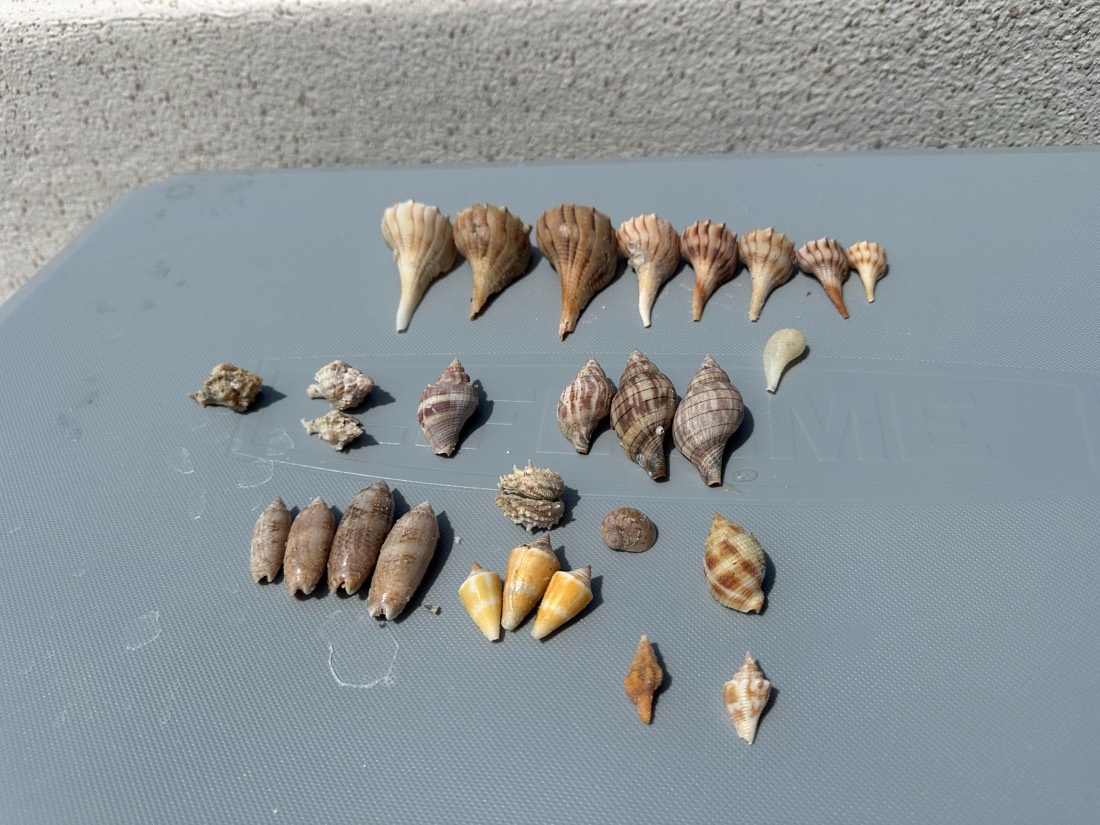
January’s beaches usually turn up the Gulf’s reliable regulars in good numbers: lightning whelks (hold one spire-up and the opening on the left is the tell), fighting conchs, olive shells, cockles, and after a good front, clusters of sand dollars — remember, if it’s still soft and gray with tiny hairs, it’s alive and stays on the beach; empty, bleached-white ones are fair game. You’ll also find plenty of keyhole urchins, the Gulf’s local relative of the sand dollar, especially in the sand flats a strong front just stirred up. The prize nobody can promise you is a junonia — it lives 100 to 425 feet down and only shows up on the beach after a storm pushes one in from deep water, so January’s frequent rough weather actually improves your odds without ever guaranteeing anything. Whatever you pick up, it has to be empty: Collier County prohibits taking live shells, sand dollars or starfish, full stop, and our captains will help you tell the difference on the boat. It’s also a solid month to turn up a horse conch, Florida’s state shell and one of the largest sea snails in the world — look for its orange-tinted body peeking out of a heavy, ridged shell in the same sand flats. For a full identification rundown before your trip, the seashell guide covers the species you’re most likely to find.
What to wear and bring for a January shelling trip
Dress for the water, not the sky. Gulf temperatures in January run in the upper 50s to mid-60s, cold enough that bare feet on a sandbar get uncomfortable fast, so water shoes are the one piece of gear we’d never skip. Mornings on the boat can be brisk before the sun gets up over the mangroves, so bring a light jacket or windbreaker you can shed once you’re shelling in full sun — Florida winter sun is still strong enough to burn, so sunscreen and a hat earn their keep even in January. A mesh bag for your finds keeps your hands free for the walk back to the boat, and a small towel is worth having for the ride home. Keep your eyes on the water on the ride out, too — bottlenose dolphins live in these waters year-round, and our captains often spot them working the passes on the way to the shelling grounds. Beyond that, the packing list is the same as any month: bring a bag, bring water, and book a shelling tour and let the tide do the work.
| Month | Cold Fronts | Water Temp | Best Tide Window | Crowd Level |
|---|---|---|---|---|
| December | Building — first fronts of the season | Mid-60s°F | Morning negative lows | Moderate, holiday bump |
| January | Most frequent of the season | Upper 50s–mid-60s°F | Morning negative lows, new & full moons | Busy on land, quiet at sunrise |
| February | Still frequent | Low-to-mid 60s°F | Morning negative lows | Busy — snowbird peak |
| March | Tapering off | Mid-60s–low 70s°F | Morning lows shifting later | Very busy, spring break |