
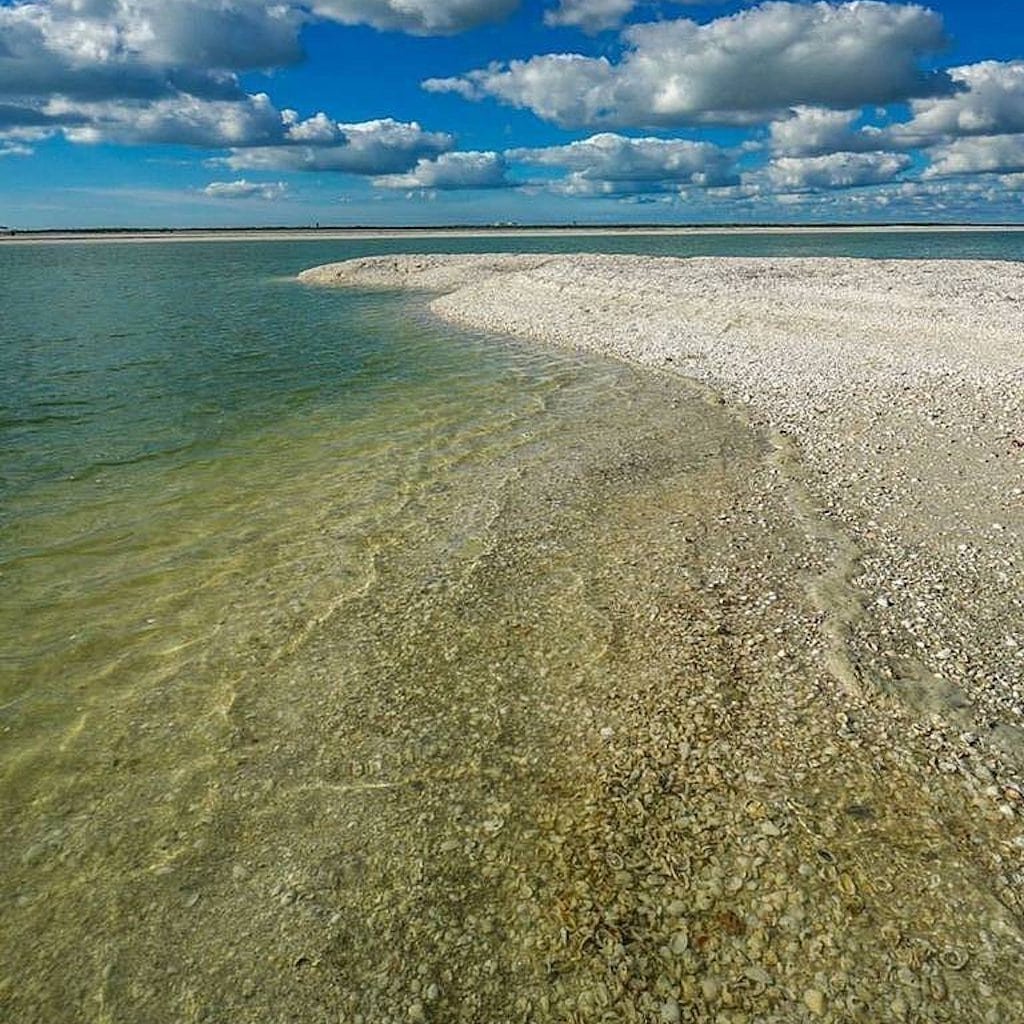
🏝️ At a glance
- Access
- Boat-only — water taxi or private vessel, no car access
- Why it's good
- Low foot traffic = fuller, less-picked shell lines
- Best haul
- Low tide after a winter cold front or storm
- Top finds
- Fighting conchs, whelks, olives, scallops, cockles
- Rule
- Lee County — empty shells only
Getting there is the whole point
North Captiva — locals call it Upper Captiva — sits just across Redfish Pass from the north tip of Captiva. There is no bridge and no public road, so you arrive by water or you don't arrive at all. Most visitors take a water taxi or run their own boat across, and that single barrier is the reason the shelling holds up. On Sanibel and Captiva, a thousand people stoop through the same wrack line by mid-morning. Out here, the Gulf restocks the sand and far fewer hands sort through it.
That's the same logic our captains live by closer to home. We can't run you all the way to Lee County, but we put you on the same kind of low-pressure, boat-only sand on our shelling tours — remote islands like Keewaydin and Kice in the Ten Thousand Islands, where the tide does the same restocking trick.
What washes up on North Captiva
This is true Southwest Florida Gulf shelling, so expect the classic cast: Florida fighting conchs by the dozen, lightning and knobbed whelks, lettered olives, calico scallops, cockles, and the occasional left-handed lightning whelk that makes the whole trip. After a real blow, deeper-water shells get pushed up that you almost never see on a calm-day beach — that's when people quietly hope for a junonia, the holy-grail shell that only rides in on storm energy.
| Factor | North Captiva | Drive-up beach |
|---|---|---|
| Access | Boat or water taxi only | Car & parking lot |
| Foot pressure | Very low | High by mid-morning |
| Shell line | Fuller, less sorted | Picked over fast |
| Best window | Low tide, post-front | Same, but you're racing the crowd |
Best tide and season
The rule is the same all along this coast: work the low tide, and chase the weather. The richest shelling on North Captiva follows a winter cold front or any strong onshore wind that churns the Gulf and drops a fresh line on the beach. Winter into early spring is prime — cooler water, frequent fronts, fewer people. Get on the sand right as the tide bottoms out and walk the wrack line slowly. The whole-shell keepers hide under the broken stuff.
One thing that never changes: North Captiva is in Lee County, which is empty-shells-only. Flip every shell and check for an animal inside. If something's living in there, set it back in the water. Take the empties, leave the residents.
From the Helm: North Captiva: the long, skinny-water run through Pine Island Sound
When a guest asks whether we can just run them up to North Captiva for the day, our captains give the same honest answer: it’s a beautiful island, but it sits well north of our home water, past Sanibel and Captiva, deep into Pine Island Sound. We’d rather explain exactly what that trip involves than treat it as a quick add-on to a Marco-based charter. Getting there by boat means threading channel markers through skinny water, watching the depth sounder over grass flats, and timing the crossing so an outgoing tide doesn’t leave a hull pinned against an oyster bar.
The island itself has no bridge, which is exactly why the shelling holds up, but the water around it isn’t forgiving of a rushed approach. Boats coming in from the sound typically favor the marked channel over cutting corners near Captiva Pass, where sand builds and shifts from one season to the next. A captain reading that water watches for the color change from green to tea-brown that flags a skinny patch, and backs the throttle down well before the chart says it’s necessary. That habit comes from years on skinny Gulf-coast water, not from a chart plotter alone.
We don’t run scheduled charters that far north, but our captains make nearly the same call every week on the shoals guarding the barrier islands off our own dock in the Ten Thousand Islands. The instinct is identical: idle speed until you’re sure of the bottom, eyes on the water instead of the plotter, and a second landing spot ready in case the first approach looks tighter than the tide chart promised. That’s the craft behind reaching any boat-only island, whether it’s three hours up the coast or twenty minutes from home.
Guests who’ve made that longer run up to North Captiva on their own often mention the quiet as the real payoff — no golf carts, no bridge traffic, just wind and shorebirds working the wrack line. We hear something similar from our own passengers stepping off onto a boat-only island after a short run instead of a long one: the water goes from a working channel to empty barrier island in the space of a few boat-lengths, and that shift is usually what people remember days later, not which pass they crossed to get there.
If what draws you to North Captiva is the idea of a shell line nobody’s picked over, we’d point you toward our own shelling tours before we’d send you on a half-day tow up the coast. You’ll get the same boat-only quiet, the same fresh wrack lines, and a captain narrating the approach instead of a water-taxi schedule. Browse the rest of our shelling beach guides to see how the closer islands stack up against the ones worth the longer drive.