
🏝️ At a glance
- Sanibel's edge
- East-west scoop; 250+ documented species
- Marco's edge
- Variety + boat-access to wild, untouched islands
- Sanibel access
- Drive-up beaches (Lighthouse, Bowman's, Blind Pass)
- Marco access
- Tigertail by foot; the best spots are boat-only
- Rule
- Both empty-shells-only (Lee & Collier)
The case for Sanibel
Sanibel earns its fame honestly. The island runs east-west instead of north-south, so its beaches face the Gulf head-on and scoop up shells the way no other Florida island does. That geography, plus the gentle slope of the shelf, is why the Bailey-Matthews National Shell Museum documents well over 250 species there. You'll see collectors bent into the famous Sanibel stoop from Lighthouse Beach to Bowman's, and it's the spiritual home of chasing the Sanibel six. If you want a legendary drive-up beach with the best documented diversity in Florida, Sanibel is it.
The case for Marco Island
Now the honest part: we're not going to inflate Marco's species count to beat Sanibel, because that's not where Marco wins. Marco's superpower is that it's the gateway to wild, boat-only islands that almost nobody walks. From here, our boats run to Kice Island, Cape Romano and the Ten Thousand Islands — uninhabited spits where the tide restocks the sand and you might be the first person to walk it that day. On Marco itself, Tigertail and its sand-dollar spit give you a strong drive-up option. The variety is excellent and the untouched-ness is the real prize. That's the niche our shelling tours are built for.
| Factor | Sanibel | Marco Island |
|---|---|---|
| Documented species | 250+ (Bailey-Matthews) | Excellent variety; not a higher count |
| Beach geography | East-west scoop | Tigertail spit + boat-only islands |
| Best access | Drive-up | Boat-only for the best spots |
| Crowds | Famous, busier | Quiet once you leave the mainland |
| Rule | Empty only (Lee) | Empty only (Collier) |
The honest verdict
Pick Sanibel if you want the iconic drive-up beach with the deepest documented species list in the state and don't mind sharing the sand. Pick Marco if you'd rather trade a famous name for a quiet, boat-reached island the tide just refilled — the kind of beach where a whole whelk is still sitting there because nobody else got to it. There's no wrong answer; they're two of the best in the world. The deciding factor is usually access: Sanibel rewards the walker, Marco rewards the one with a boat. Either way, keep it empty-shells-only — both counties require it.
From the Helm: Sanibel vs. Marco Island: trading the causeway for an outside-bar run at Kice
Most mornings we’re not crossing a causeway at all — we’re idling along the outside bar off Kice Island, watching the swash line for the darker, fresher shells a falling tide just uncovered. That’s the practical difference between shelling Marco’s way and shelling Sanibel’s way: one starts with a bridge and a parking lot, the other starts with a boat ride through the Ten Thousand Islands and a captain reading a sandbar that has no fixed shape from one season to the next.
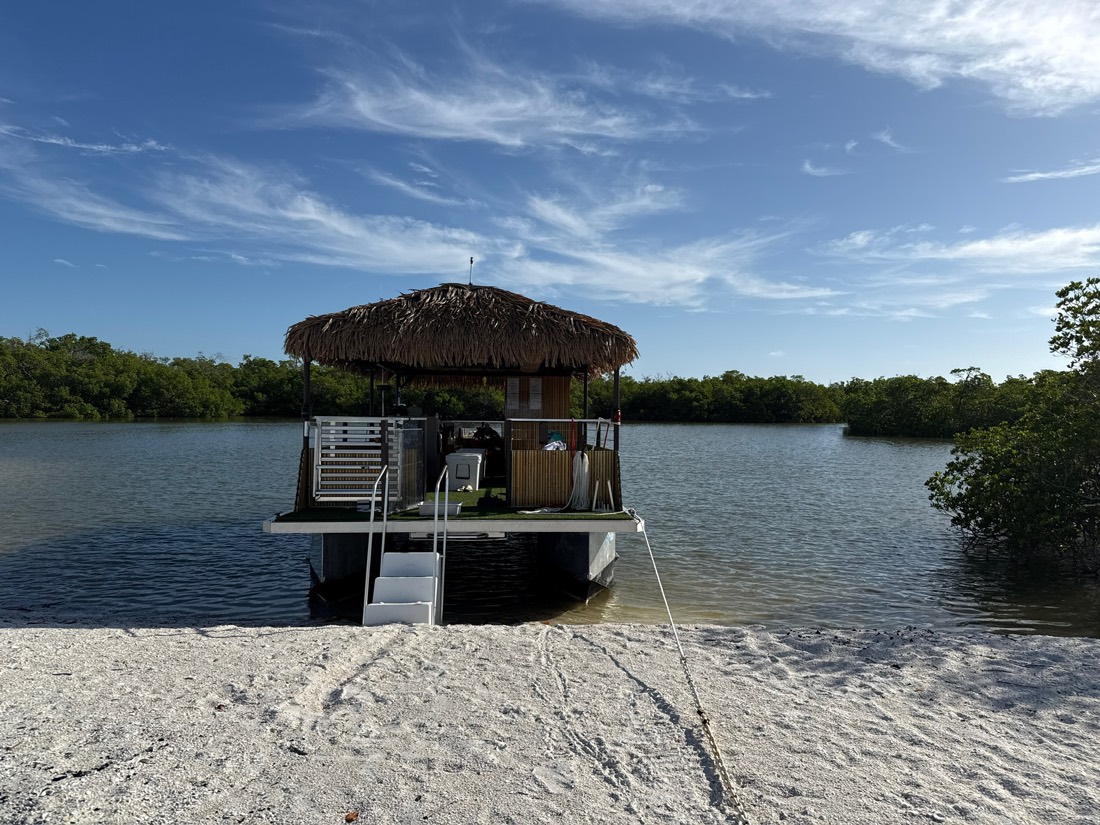
Working that outside bar means keeping the boat well off the shoal itself and running guests in by the ladder once we’ve found water that won’t shift under the hull with the next set of waves. We carry a push-pole aboard for exactly that reason — checking depth by feel along the bar edge before committing the boat any closer, rather than trusting the sounder alone in water this skinny and this changeable.
A stiff onshore wind can stack chop right across that same bar and turn a clean approach messy in under an hour, so our captains build in a second option — usually the calmer lagoon side of Kice, or a run over to Cape Romano’s shoals instead — rather than forcing a landing on a bar that’s turned rough. Sanibel’s fixed shoreline doesn’t hand you that same decision; the beach is exactly where it was yesterday, for better or worse.
What you trade for that flexibility is a slightly longer stretch of boat time before your feet ever touch sand, and a shell line that depends on tide and wind lining up rather than simply showing up whenever the parking lot opens. Guests who’ve tried both tell us the approach itself becomes part of the memory, in a way a drive-up beach rarely manages.
A shell picked straight off that outside bar often still carries a faint smell of the Gulf and a gritty film of sand tucked in its folds, different from the sun-bleached, powdery feel of something that’s tumbled in a drive-up surf zone for days. Guests notice the weight too — a freshly uncovered whelk feels heavier in the hand, still holding a little moisture, before it dries out over the next day or two on the ride home. It’s a small, tactile difference, but it’s usually the first thing people mention once they’re back aboard.
If that outside-bar version of shelling sounds like the better trade, our shelling tours run that exact water, and our Sanibel guide is worth a read first if you’d rather make the honest case for the longer drive instead.
| Sanibel | Marco Island (boat-only islands) | |
|---|---|---|
| How you arrive | Drive over the causeway, park, walk to the beach | Boat ride through the Ten Thousand Islands to an outside bar |
| The read before landing | Tide table and parking availability | Wind, current, and how the bar itself has shifted since the last run |
| What guests carry | A mesh bag from the car | A mesh bag handed over at the rail, plus a push-pole check on skinny water |
| Landing spot | A fixed beach access point | Wherever the tide and bar allow that day |