
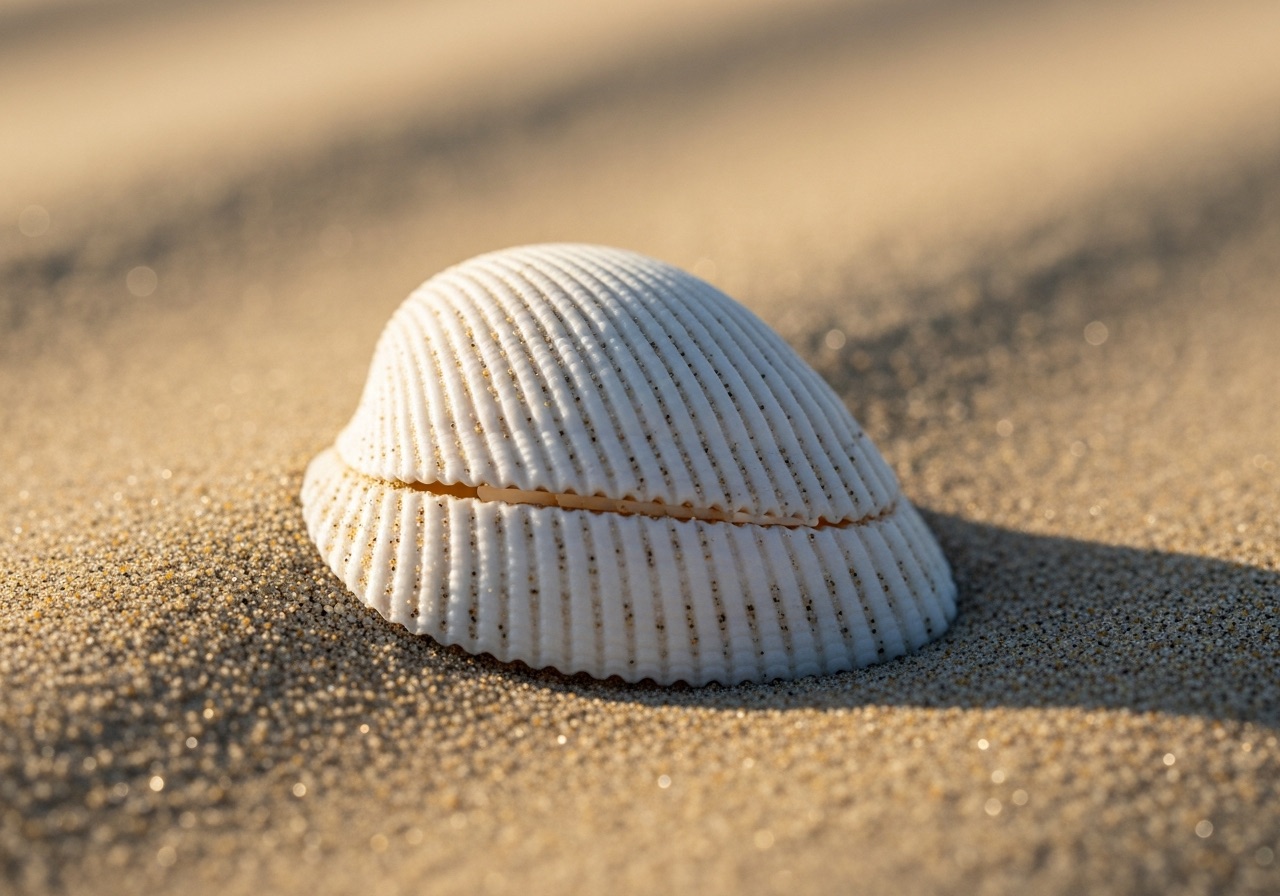
🐚 At a glance
- Family
- Arcidae — the arks
- Shape
- Boxy, heavy, often rectangular bivalves
- Decisive tell
- Long, straight hinge lined with many small teeth
- Common locals
- Ponderous, blood, mossy & turkey wing arks
- Where & when
- Sandy Gulf flats off the boat-only islands, year-round
How to identify an ark shell
Forget color for a second and go to the hinge. Turn an ark over and look along the straight top edge: you'll see a long, level line set with a comb of many small, evenly-spaced teeth. No other common Gulf bivalve has that. A cockle has just a couple of interlocking teeth and a heart shape; a scallop has little ears and no comb. Once you see the toothy straight hinge, you know you're holding an ark, and then it's just a matter of which one.
Arks are generally thick and heavy for their size, and many keep a dark, fuzzy coating (the periostracum) until it wears or rinses away.
Telling the arks apart
Four show up most. The ponderous ark is the heavyweight — thick, white and chunky. The blood ark is named because the living animal has red blood, and its shell is rounded with strong ribs. The mossy ark often keeps a shaggy, moss-like coating and tends to grow lopsided where it attached to rock. And the turkey wing is the easy one, the long boxy ark wearing bold reddish-brown zebra stripes.
| Ark | Look | Quick tell |
|---|---|---|
| Turkey wing | Long, boxy, striped | Reddish-brown zebra stripes |
| Ponderous | Thick, white, chunky | Heaviest of the local arks |
| Blood | Rounded, strong ribs | Animal had red blood |
| Mossy | Lopsided, shaggy coat | Mossy periostracum; grew on rock |
Where we find them
Arks live in and on the sandy and rocky bottom out in the Gulf, and their tough shells survive the trip to shore better than fragile ones, so they're some of the most reliable finds on the islands. On our shelling tours we comb Keewaydin, Kice Island and the Ten Thousand Islands, where the tide reloads the wrack line all day. Arks turn up year-round and stack up after a winter front. Collier County is empty-shells-only, so keep only the empties.
From the Helm: Working Goodland’s oyster bars on a falling tide for the ark family
Choosing Goodland’s oyster bars over a Gulf beach for arks is a call we make on tide stage more than anything else. Arks live and wash in right around oyster clusters, so we need the bar exposed enough to walk its edge without wading open water, but not so low that anyone’s climbing over sharp clumps barefoot — water shoes go on before the ladder drops, every time, no exceptions on this stop. We’ll idle past the bar first and watch how much of it the falling water has actually uncovered before committing the group to stepping off.
Once we’re out on the bar, we work the sand pockets between oyster clusters rather than the clusters themselves, since that’s where a falling current drops shells after picking them loose from the reef above. The damp collar of sediment right at the base of each clump, left behind as the water pulls back, is where we tell guests to slow down and look close rather than kick through the whole flat at a walking pace. A boot dragged too fast through that collar buries as much as it turns up.
We teach a quick habit out here before anyone starts filling a bag: run a thumb straight along the hinge first. That long, straight row of teeth confirms an ark before it’s worth carrying, and it saves guests from hauling home a pocketful of unrelated bivalves they picked up on shape alone. It’s a two-second check that turns into muscle memory by the second stop of the day, and most guests are correcting each other by the third.
A shell that came straight off this bar often still carries a faint tannin smell from the mud it sat in, and a slightly greasy feel across the ribs that a shelf shell never has. That’s as good a tell as any that you found it yourself rather than bought it somewhere — and it’s the detail guests remember more than any Latin name we hand them at the rail. We’ll often hold two side by side, one dull from the flat and one already sun-bleached from an earlier stop, so the contrast sinks in fast.
When the tide hasn’t dropped enough to expose the bar safely, we shift to the back creek edge nearby, where current still delivers loose ark shells to a mud bank without anyone needing to set foot near an oyster clump at all. It’s a quieter version of the same hunt, slower to produce but easier on bare ankles. Either way it’s a close-in, low-key stop we like folding into a shelling tour alongside a swing through the rest of the seashell guide back on deck.