
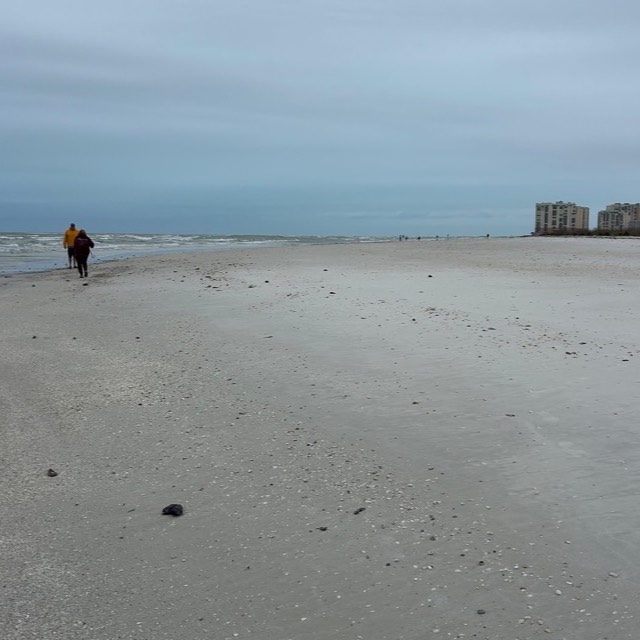
🏝️ At a glance
- Access
- Drive-up; gated preserve parking, then a beach walk
- Vibe
- Wild, undeveloped barrier island — dunes & tortoises
- Best haul
- Low tide after a winter front; walk away from the lot
- Top finds
- Fighting conchs, whelks, olives, coquinas, scallops
- Rule
- Empty shells only
Getting there: a drive-up that feels remote
Barefoot Beach Preserve sits at the south end of Bonita Springs, just over the Lee–Collier line, and unlike most of this coast you can actually drive to it. The preserve gates a limited lot, and from there you walk — which is the trick. The crowd clusters near the access point, so every hundred yards you put between yourself and the parking lot, the shell line gets a little fuller. Keep an eye on the dunes too: this is protected gopher tortoise habitat, and you'll often spot one lumbering across the path.
It's a beautiful walk, but it's still a mainland beach — meaning by mid-morning the easy ends are sorted. For the truly untouched wrack line, you need water under you. That's the gap our shelling tours fill, running to boat-only islands like Keewaydin that no car can reach.
What washes up at Barefoot Beach
This is classic Southwest Gulf sand, so the cast is familiar: fighting conchs, lightning and knobbed whelks, lettered olives, calico scallops, cockles, and a steady scatter of coquinas doing their little burrowing dance in the swash. After a real blow, the preserve's wild ends can serve up deeper-water surprises before anyone's there to grab them — the kind of post-storm line where the occasional whole lightning whelk turns up intact.
| Spot | Crowd | Shell line |
|---|---|---|
| Near the parking access | Busy | Picked over by mid-morning |
| 10–20 min walk south | Light | Fuller, fresher wrack |
| Post-storm, far ends | Sparse | Best shot at whole shells |
Best tide and season
Time it to the low tide and chase the weather. The richest shelling at Barefoot follows a winter cold front or a strong onshore wind that churns the Gulf and drops a fresh line. Winter into spring is prime season — fewer crowds, more fronts, cooler water. Get there at the bottom of the tide, walk past the access cluster, and read the wrack line slowly.
And keep it legal: Barefoot Beach is on the Collier line, so it's empty-shells-only. Flip everything and check for a living animal — especially live sand dollars and starfish, which you can never take. Empties only go in the bag.
From the Helm: Barefoot Beach, Wiggins Pass, and why we run you to Keewaydin instead
Guests ask about Barefoot Beach more than you’d expect, usually after reading how wild and undeveloped it still is. Here’s the honest call our captains make: it sits north of Wiggins Pass, outside the water we run every week, and getting a charter boat up there means crossing open Gulf swell that has nothing to do with a shelling trip. We’d rather spend that fuel and that tide window putting you on ground we know cold. So when someone asks for Barefoot Beach, we usually steer the conversation toward a boat-only island instead.
That alternative is almost always Keewaydin Island, reached out of the Marco River rather than any Gulf-front run. We like the protected water on approach — following the markers past Marco Island until the barrier island opens up on the beam, then working shallow along the shoreline with the outboard trimmed up. Our captains watch the depth sounder drop through single digits before cutting speed and letting the hull drift the last stretch. When the sand shoals up under the keel, that’s the cue to kill the motor, swing the bow parallel to the beach, and drop the boarding ladder.
Most mornings we’ll idle that approach on the back half of a falling tide, because a dropping tide widens the sandbar guests step onto and keeps the wrack line fresh where the outgoing water just uncovered it. You’ll feel the boat go quiet before you see why — that’s usually the moment a captain points over the bow at color already visible in the shallows. It’s a different rhythm than pulling into a parking lot at Barefoot Beach and walking a public shoreline that dozens of others walked that same morning.
We hand out shelling mesh bags for exactly this stretch, because sand this fine holds onto shells guests want to look at twice before deciding what stays and what goes back. Same rule applies whether you’re standing on Barefoot Beach’s public sand or the boat-only shoreline we’ve just nosed into: empty shells only, nothing living goes in a pocket. It’s a rule our captains repeat at the rail without making it a lecture, because most guests already know it — they just need the reminder before the excitement of a good find takes over.
If a drive-up beach and a short walk from the parking lot is genuinely what you’re after, Barefoot Beach earns its reputation and we’d never talk you out of it. But if you want the version where nobody else touched that morning’s wrack line, that’s the same logic behind every boat-only island we run guests to, Keewaydin included. Book a shelling tour out of Marco and we’ll make that same call for you — not because Barefoot Beach isn’t worth the drive, but because the water we run best sits a little farther south.