
🏝️ At a glance
- Top picks
- Barefoot Beach Preserve, Bonita Beach, Lovers Key
- Best tide
- Low tide, especially after a winter cold front
- Wildest beach
- Barefoot Beach Preserve — least developed, most natural
- Boat-only upgrade
- Keewaydin, Kice & the Ten Thousand Islands south
- Rule
- Empty shells only in Collier & Lee
The three beaches worth your morning
Barefoot Beach Preserve is the gem here — a protected, undeveloped stretch where the dune line is still wild and the wrack line stays fresher because fewer feet work it over. Bonita Beach, just north of the public access, is easier to reach and good for a quick fill of cockles, coquinas and the occasional whelk. Lovers Key, straddling the line into Lee County, is the most scenic of the trio and shells well right after a blow, when the Gulf throws up fresh shells before the crowd arrives. All three live and die by the tide chart: catch the bottom of a low tide and you'll see twice the beach.
What washes up here
This stretch of Gulf coast is a bivalve haven — expect calico scallops, cockles, coquinas, jingle shells and pen shells, with whelks and the odd fighting conch mixed in after rougher weather. The real prizes, the big intact lightning whelks and the holy-grail junonia, turn up far more often on beaches that don't get walked clean every morning. That's not a knock on Bonita and Estero — it's just the math of foot traffic. The farther you get from a parking lot, the better the odds.
Why our shellers ride south to the islands
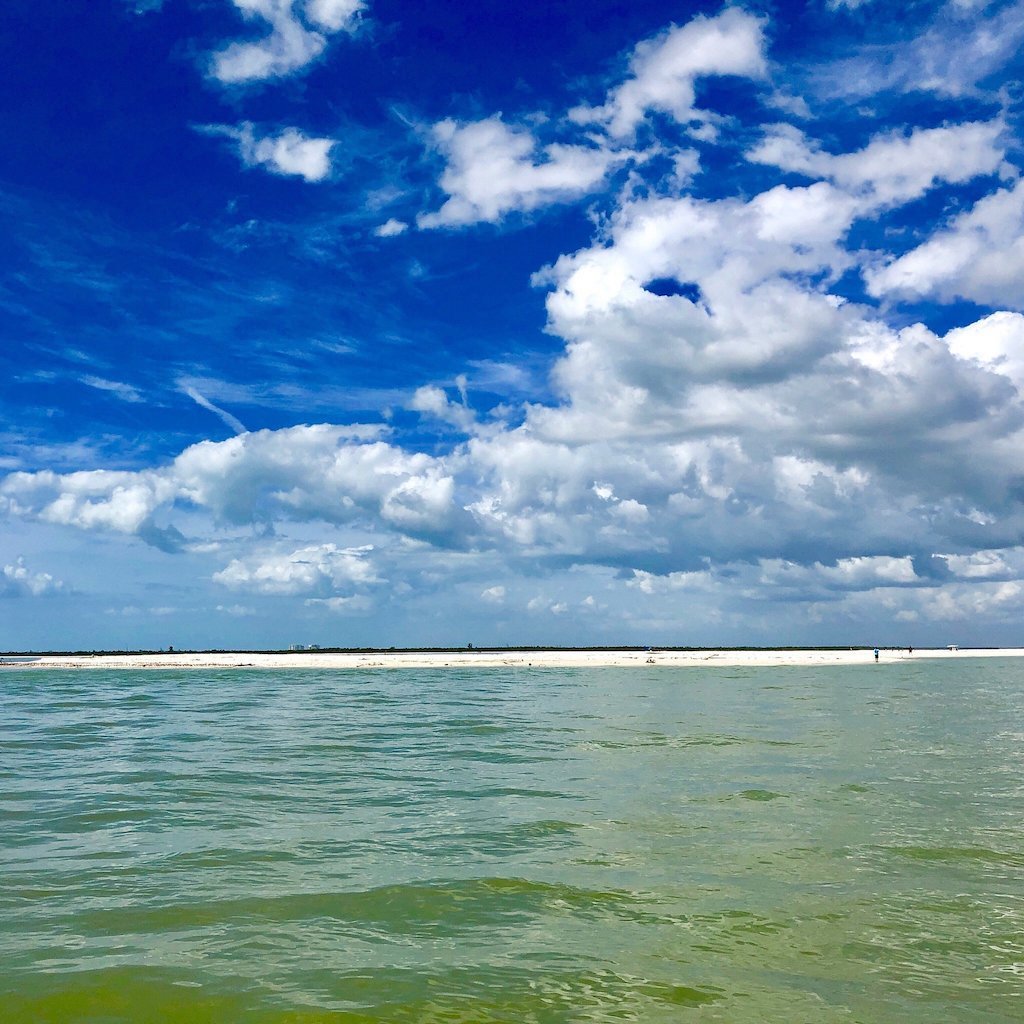
You're in the perfect launching spot. Our captains run out of Marco Island and Goodland, a short ride down the coast, to islands you simply can't drive to: Keewaydin, Kice and the maze of the Ten Thousand Islands. There's no road, no bridge, no morning rush — just tide-fresh sand that restocks twice a day. On a shelling tour we beach the boat at the freshest wrack line and hand you a scoop, and the difference is immediate. You're not picking through what a hundred people already passed over; you're finding the first whole shell of the day. If you want to compare options up and down the coast, our Southwest Florida roundup ranks them all.
| Beach | Access | Best for |
|---|---|---|
| Barefoot Beach Preserve | Drive-up (limited parking) | Wild wrack line, fewer crowds |
| Bonita Beach | Drive-up | Quick fill, cockles & coquinas |
| Lovers Key | Drive-up | Post-front variety, scenery |
| Keewaydin / Kice | Boat only | Whole, un-picked whelks |
The one rule that keeps these beaches good
Both Collier and Lee counties run the same playbook: keep all the empty shells you like, but leave the living ones where you found them. Flip each shell and look in the opening — if there's a critter home, a hermit crab in residence, or it smells alive, set it back. Live sand dollars and starfish stay too. It's a small courtesy that keeps the wrack line worth walking, and our captains live by it. The full rundown is in our guide on taking shells legally in Florida.
From the Helm: Threading Coon Key Pass across Gullivan Bay on the ride south from Goodland
We could point a Bonita Springs guest to Barefoot Beach and call it a day, but if someone’s already booked a boat with us, we’d rather show them what the drive-up beaches can’t touch. That means a longer ride south out of Goodland, down through Coon Key Pass and across the open stretch of Gullivan Bay, before we ever throttle down. It costs extra runtime we could spend idling closer to the dock, but the islands on the far side of that crossing haven’t been walked by anyone since the last outgoing tide.
Gullivan Bay can kick up a short, choppy wind swell on a breezy afternoon, so we favor running that crossing early, before the sea breeze fills in, and we watch the color of the water off the bow the whole way — a lighter green patch usually means a bar close enough to the surface to matter. Our center consoles ride that chop better than a low-freeboard skiff would, which is part of why we save the bigger crossings for boats built for open water and keep the shallow runs for calmer days. We also keep everyone in polarized sunglasses on this leg, since the glare off the bay’s surface hides those color changes from anyone not wearing them, and it’s usually a guest at the bow who spots the lighter patch before we do.
On the falling half of the tide we favor tucking behind an oyster bar on the bay side rather than beaching straight on the Gulf front, since the current there slacks off first and the footing stays firmer longer. If that stretch is already marked up with another boat’s wake line in the sand, our plan B is simple: run another quarter mile to the next bar down, because on these islands a few hundred yards is usually the difference between a picked-over stretch and a fresh one.
A lightning whelk that’s only been out of the water an hour still has a faint brine smell and grit that hasn’t dried into the grooves yet; you can feel the difference against a sun-bleached one in about two seconds. We hand guests the fresh one first, then remind them — same as everywhere in Collier and Lee — if there’s anything still living inside, it goes right back where it came from.
If Bonita Springs and Estero are your home base for the week, book the trip as one of our shelling tours out of Goodland or Marco and let us handle the crossing; it’s a longer ride than the beach out your front door, but it’s the difference between a bucket of fragments and a bucket of whole shells. Browse the rest of the shelling beaches guide for how the other islands south of here compare.