🏝️ At a glance
- Why the Gulf
- Shallow shelf → gentle waves → intact shells
- Best stretch
- Sanibel south to the Ten Thousand Islands
- Peak window
- Low tide, 1–2 days after a winter cold front
- Boat-only gems
- Keewaydin, Kice, Cape Romano
- Rule
- Empty shells only in Collier & Lee
Why gentle Gulf waves matter
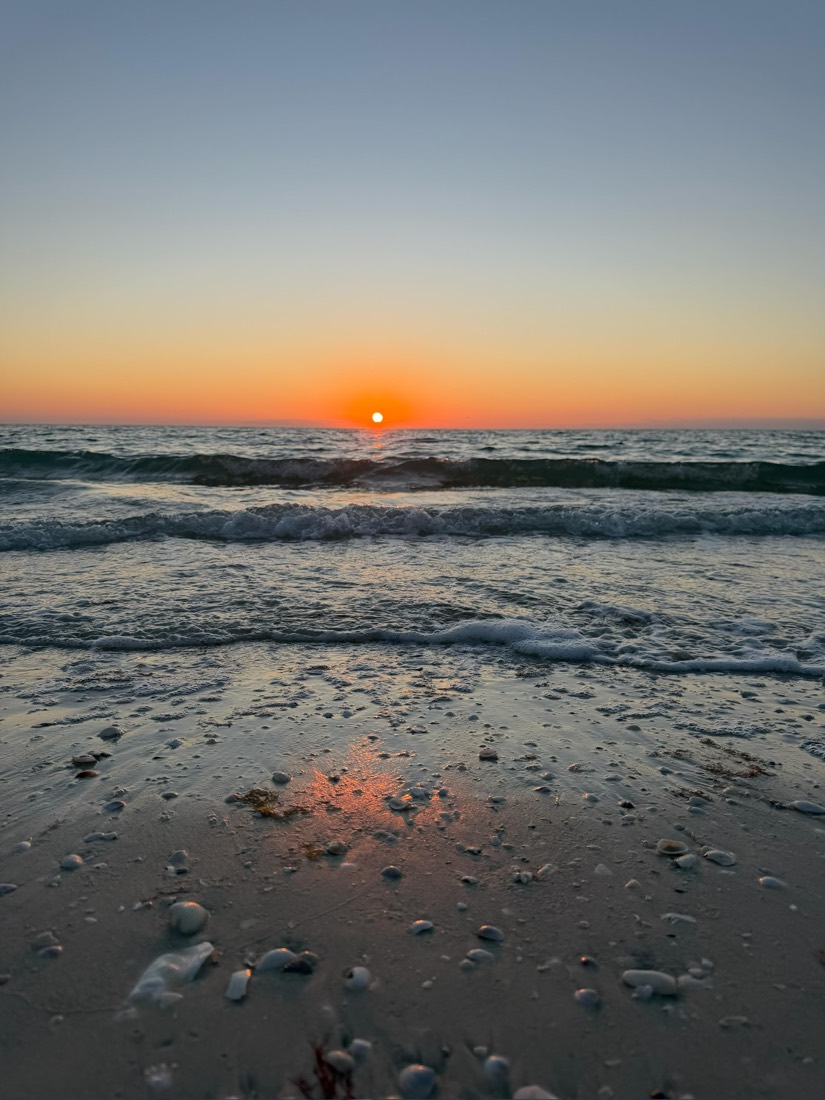
The Gulf of Mexico sits over a wide, shallow continental shelf that stretches miles offshore before the bottom really drops. That shallow apron drags energy out of incoming swells, so by the time a wave reaches the beach it's slow and low. A gentle wave lifts a shell and lays it down; a violent one shatters it. That single difference — calm delivery instead of a hard break — is why the Gulf coast hands you whole lightning whelks and intact scallops while steeper coasts hand you fragments. Time your trip to the right tide and you'll be standing on sand the Gulf just gently restocked.
The barrier-island scoop
Now add the islands. Florida's southwest barrier islands — Sanibel, Captiva, Cayo Costa, and the chain of boat-only islands south of Marco — sit at the corner where the peninsula bends. Longshore currents drift shells northward up the coast, and these islands sit broadside to that flow, catching everything like a string of baskets. Sanibel famously runs east-west, which makes it the biggest scoop of all. The same effect feeds the wild islands we visit on our shelling tours — Keewaydin, Kice and the outer Ten Thousand Islands — where there's no crowd to clear the catch before you arrive.
Timing: front, then tide
Here's the formula every local lives by. A winter cold front blows through, stirs the Gulf for a day or two, and pushes a fresh load of shells toward shore. The morning after the wind lays down, you go — and you go at low tide, when the most beach and the most wrack line are exposed. Get both right and you're shelling at the absolute peak. Get them wrong and you're walking a thin, already-picked strip. See our breakdown of shelling after a storm or cold front for the full play.
| Factor | Why it helps | Best condition |
|---|---|---|
| Tide | Exposes the wrack line | Low tide, falling |
| Cold front | Churns & delivers fresh shells | 1–2 days after |
| Wind | Onshore stacks the drift line | West / southwest |
| Crowd | Fewer hands = fuller line | Boat-only island |
Where the Gulf delivers best
The famous names — Sanibel and Captiva — deserve their reputation, but they're drive-up and they're busy. The Gulf's mechanics work just as hard on the islands you can only reach by boat, where the same gentle waves and island scoop stack shells with nobody around to grab them first. That's our whole pitch on the boat-only beaches. Wherever you go, the rule holds: in Collier and Lee, take empty shells only.
From the Helm: Reading the Cape Romano shoals before a straight north wind does the sorting
A straight north wind for a day or two after a front is the one we watch for on this stretch of coast, because it pushes water off the shoals and lines up shell hash right at the last high-water mark before it drops again. That’s the call we make from the helm before we ever pick a beach for the day — wind direction first, then which pass gets us there without a fight. On the Gulf side, the shoals shift enough season to season that we treat every approach as a fresh look, chart or no chart.
The shoals off Cape Romano are the trickiest water we run on this whole stretch, a shifting maze of sandbars that can be four feet deep in one spot and inches in the next, twenty yards over. We idle through on the falling tide with someone on the bow watching the color change in the water, because the chart shows where the shoal was, not necessarily where it is this month. It’s slower going than running straight across, but it’s the honest way to keep the keel off the sand.
When that shoal water is stirred up and cloudy after a blow, we skip it and run the inside route instead, threading behind the barrier islands where the water stays calmer and the visibility holds up enough to spot a bar before we’re on top of it. We also pick a landmark ashore — a stand of Australian pines or a break in the mangrove line — and hold a steady bearing on it rather than eyeballing the water alone, since a straight line through stirred-up water beats a wandering one. It costs a longer ride, but it beats guessing at water we can’t see through. Either way we’re aiming for the same thing — a beach that got a fresh delivery from the last tide change, not one that’s been picked over all week.
Fresh shell hash at the tideline crunches differently underfoot than an older, sun-baked stretch — sharper, looser, still a little damp — and that sound alone tells our captains whether a spot is worth stopping the boat for. We’ll walk a stretch first before we call the guests off the boat, because there’s no point beaching for a picked-clean line when the one around the point hasn’t been touched yet.
This is the kind of water that rewards patience and a boat willing to work it, and it’s why a shelling tour booked with us leans more toward a hunt than a drop-off — a search across the coast until we find where the Gulf actually delivered. For the wider run of islands we favor along this coast, the destinations guide covers the ones we visit most.