
🏝️ At a glance
- Top region
- Southwest Gulf coast (Lee & Collier counties)
- Famous names
- Sanibel, Captiva, Cayo Costa, Marco Island, Ten Thousand Islands
- Our edge
- Boat-only islands — Keewaydin, Kice, Cape Romano
- Best timing
- Low tide after a winter cold front
- Rule
- Empty shells only — live collection banned in Collier & Lee
Why Florida's southwest Gulf coast wins
It comes down to geography and physics. Florida's Gulf coast faces a wide, shallow continental shelf, so the waves that reach shore are gentle — they roll shells up onto the sand instead of smashing them. The barrier islands here also bend east-to-west right where the peninsula turns the corner, which means Sanibel and the islands south of it act like a giant scoop, catching shells the currents carry up from the south. The Atlantic side, with its steeper drop-off and harder surf, breaks more of what it delivers. That's not Florida-pride talk; it's why national shelling lists are top-heavy with southwest names. If you want the real mechanics, our Gulf-coast shelling guide goes deeper on the hydrology.
The honest statewide ranking
Here's how we'd rank Florida's shelling, knowing this water the way we do. Sanibel and Captiva earn their legend — the famous “Sanibel stoop” is real — but they're also the most picked-over beaches in the state, because everyone knows about them. The quieter winners are the islands you can't drive to.
| Beach / island | Access | Why it ranks |
|---|---|---|
| Sanibel Island | Drive-up | The legend — but crowded and picked early |
| Captiva Island | Drive-up | Sanibel's quieter, sandy sibling |
| Cayo Costa | Boat-only | State-park island, far less foot traffic |
| Keewaydin Island | Boat-only | Eight wild miles, restocked by every tide |
| Kice Island | Boat-only | Tiny, remote, fuller shell lines |
| Cape Romano | Boat-only | Shifting shoals south of Marco |
The boat-access edge
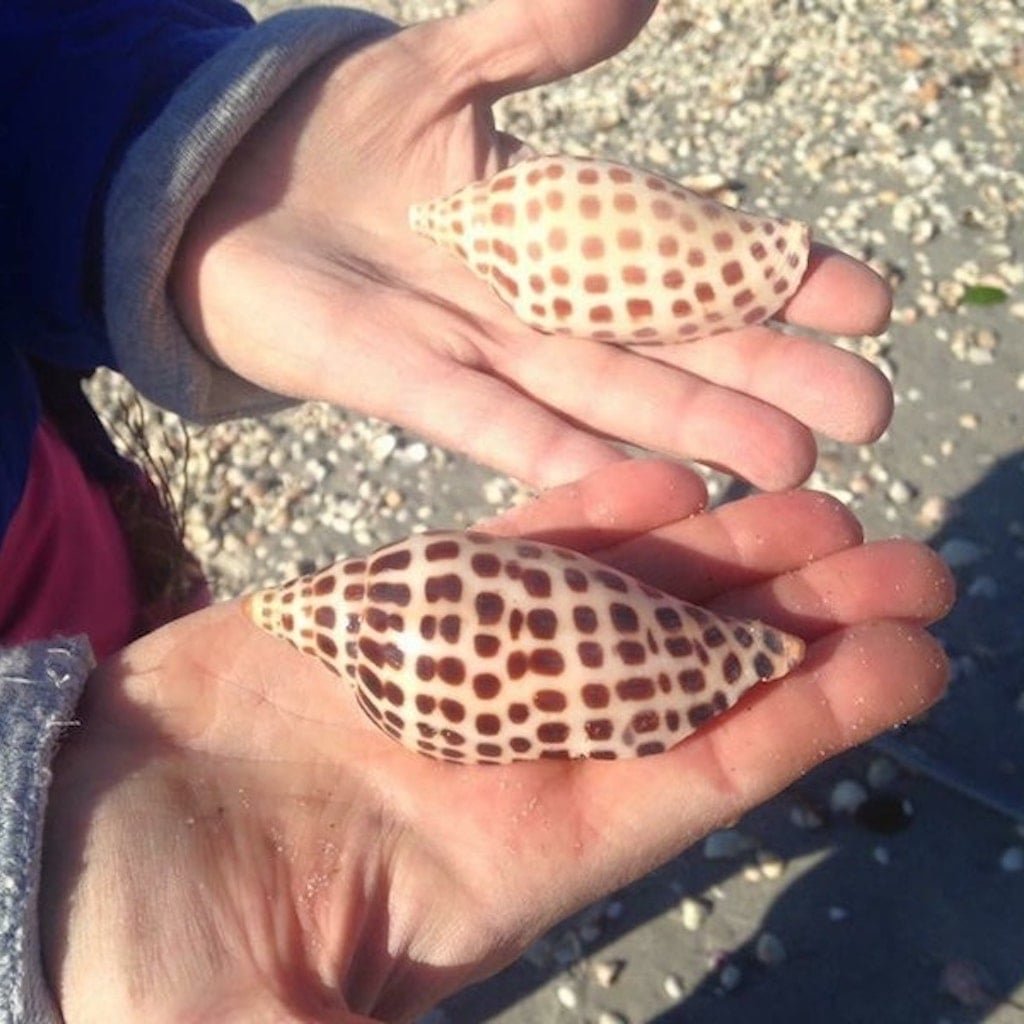
Here's the part the guidebooks gloss over: the best shelling in Florida isn't a beach you park at — it's a beach the public can't reach. On a drive-up beach, the wrack line gets walked by hundreds of people before lunch. On the boat-only islands south of Marco, the only footprints might be yours. Our shelling tours leave from Goodland and Naples Bay and run out to Keewaydin, Kice and the Ten Thousand Islands, dropping you on sand the tide refilled an hour ago. You'll hunt lightning whelks, fighting conchs and — if you're lucky after a storm — the holy-grail junonia.
What you can keep
One rule travels with you across the whole southwest coast: in Collier and Lee Counties you may take empty shells only. Live shells, live sand dollars and starfish stay where they are — flip anything over, and if something's living inside, set it gently back in the water. It's the law, and it's also why these beaches still produce. Read the full Florida shell-collecting rules before you fill a bag.
From the Helm: Running out Caxambas Pass at first light, while the tide’s still on its way out
First light at Caxambas Pass looks the same most mornings — flat calm, a little fog burning off the mangroves, maybe a mullet jumping somewhere off the bow — and it’s the moment we like best on a shelling run, before the wind fills in and while the tide’s still on its way out. Any statewide ranking of beaches is really a ranking of who can get somewhere first, and running out of Caxambas gets us to water most vehicles simply can’t reach, ranking or no ranking.
From the pass we usually choose the inside route down through the back bays rather than punching straight out into open Gulf, because the water stays glassier and we can spot a shoal from thirty yards out instead of guessing at whitecaps. If the outside run looks sloppy that morning, that inside line becomes our plan A instead of our backup, and it costs maybe fifteen extra minutes for a much easier ride with guests aboard who’d rather not get bounced around before they’ve had coffee.
If the first bar we reach already has another boat’s anchor line cut into the sand, our second choice runs a little further, tucked behind Panther Key, where the current moves harder and keeps the shell line turning over faster than a stretch that’s gone still. It’s not always the prettier beach, but faster current usually means less standing time before a fresh batch of hash replaces whatever the last tide carried off.
We carry a mesh scoop bag rather than a hard bucket for the walk back to the ladder, because it drains as you go and doesn’t get heavy with trapped water the way a bucket does by the twentieth shell. Anything with a foot or an eye still working goes straight back in the sand where we found it — that’s not negotiable on any of these islands, empty shells only, every time, no matter how good it looks.
A horse conch pulled fresh off the bottom is heavier in the hand than people expect — some run close to a foot and a half — and the orange of the animal inside, when there’s still one home, is a startling color against all that pale sand. We hold it up at the rail so everyone can see it, then it goes right back exactly where it sat.
That firsthand access is the real edge a boat brings to any ranking of Florida’s beaches, and it’s most of what a shelling tour with us is built around. If you’re weighing where else along this coast to add to the list, the southwest Florida rundown breaks down how our home water stacks up against the rest.