
🐬 At a glance
- Main players
- Herons, egrets, white ibis, roseate spoonbill, wood stork
- Best tide
- Falling to low — exposed mud and oyster bars concentrate the food
- Best season
- Year-round; peak variety in the cool dry season (Dec–Apr)
- Where
- Mangrove edges, oyster bars and shoals through the Ten Thousand Islands
- Bring
- Binoculars and a zoom lens — we idle close, not on top of them
Who you'll meet along the mangroves
Start with the big one. The great blue heron stands four feet tall, slate-gray, and stalks the shallows like it owns them — the heron everybody knows. Beside it you'll often see the all-white great egret, taller and leaner than the dainty snowy egret with its bright yellow feet (the locals call them "golden slippers"). The white ibis travels in loose flocks, heads down, that long curved red bill stitching through the mud.
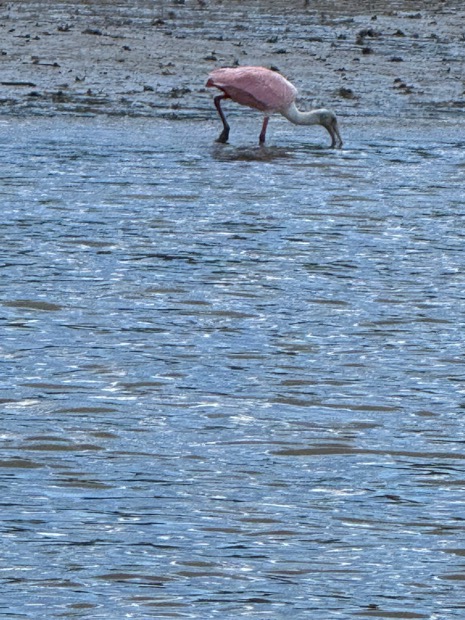
Then come the showstoppers. The roseate spoonbill is the pink one that makes the whole boat gasp, sweeping its spatula bill side to side. The wood stork — bald gray head, heavy bill — is our only native stork and a true mangrove specialist. And keep an eye out for the reddish egret, which actually dances and lurches across the flats chasing bait, and the smaller little blue and tricolored herons tucked into the shadows.
Why the tide decides everything
Wading birds are tide hunters. On a high tide the water covers the mud flats and the oyster bars, the bait fish and shrimp scatter wide, and the birds spread out or rest in the mangroves. On a falling or low tide all that food gets trapped in shrinking pools and along the exposed bank — and the birds pile in. That's when you'll see a single shoal lined with herons, egrets and ibis all working at once. We plan our bird-watching runs around that window whenever we can, the same way we read the tide for all the low-tide wildlife.
| Bird | Spot it by |
|---|---|
| Great blue heron | Huge, slate-gray, stands stock-still |
| Great egret | Tall, all white, yellow bill, black legs |
| Snowy egret | Smaller white egret, black bill, yellow feet |
| White ibis | Flocks, curved red-orange bill, black wingtips |
| Roseate spoonbill | Pink, flat spatula-shaped bill |
| Wood stork | White body, bald gray head, heavy bill |
Where we find them
The mangrove maze of the Rookery Bay Reserve and the back bays of the Ten Thousand Islands is wading-bird country. We slow to an idle along oyster bars and shoals where the birds gather, give them room, and let you take it in. Some islands hold nesting colonies, or rookeries, that erupt with activity in spring. Most of these tours go out as part of our dolphin & wildlife tours, so it's common to drift past a spoonbill, then look up and find dolphins working the same pass. If you want the full picture of what shows up when, our wildlife-by-season guide lays out the whole calendar.
From the Helm: Timing a Falling Tide for Wading Birds Off Coon Key
Two hours before dead low off Coon Key is when we start angling the boat toward the mud flats instead of the open channel, because that specific window is when a fresh band of exposed mud gives itself away before a single bird has actually moved onto it. It’s the freshness of the exposure we’re watching for, not just the general state of the tide — a bar that’s been dry for an hour has already been picked over, while one just breaking the surface hasn’t.
Once a bar starts producing, we cut the engine well off the edge and let the current carry us into position instead of idling straight at the birds, since a wading bird locked onto a school of finger mullet will hold its spot through almost anything except a boat closing the distance too fast. Drifting in sideways with the engine dead gives guests a much longer look than motoring up ever would — the strike itself, the sudden stab of a bill into the shallows, instead of just a flush of wings lifting off ahead of the bow.
The mix on any one bar tells its own story if you watch it a minute. A stack of white birds working shoulder to shoulder is usually egrets and ibis crowding the same bait pocket, while a single reddish egret off on its own, wings half-spread and stumbling in a strange little dance, is almost always working alone, since that odd shuffle-and-strike routine only pays off if nothing else is crowding its patch. We’ll point that dance out specifically, since it’s one of the few behaviors distinctive enough to name the bird from a hundred feet out.
We often see roseate spoonbills hold back from the noisier crowd, working a quieter pocket of shallow water on their own with that side-to-side sweep of the bill through the mud, and that patience usually gets rewarded before the tide finishes falling. Which bar produces and which sits empty depends on where the bait got stranded that particular morning, so nothing repeats the same way twice — but a falling tide off a key like this one gives the whole crowd enough to work that we’re rarely watching an empty flat for long.
The same falling water that strands bait for the birds is exposing the oyster bars the whole food chain depends on, worth a look if the birds get you curious about what’s under the surface too. For a slower look at why the roots behind these same flats hold so much of what the birds are hunting, our mangrove ecosystem page covers the nursery function in full, and it pairs naturally with a stop here on the same falling tide.